
Home cook discovers the joys of charcuterie
Cooking talent aside, at some point in the culinary journey one begins taking risks. Even college students will set about spicing up their nightly ramen noodles with a squeeze of lemon, a can of tuna or a sprinkling of Parmesan. My own culinary risks have grown exponentially during the past five years. Artisan breads, stocks, jellies, homebrew beer and handmade cheeses often make an appearance in my kitchen, and recently I set out on a grander culinary journey: the world of charcuterie.
Charcuterie, the art of "chair cuit" — which translates as "cooked meat" — was born out of a need to preserve meat centuries before the invention of the deep freeze. Meats and fish were salted, smoked and cured into bacon, ham, smoked salmon and sausages to be stored for later use.
Early settlers brought the practice of charcuterie to America. Pennsylvania became known for sausage making and Virginia for ham. Today, increasing numbers of chefs and butchers throughout the United States are introducing the complex art of charcuterie to American cuisine. In comparison to the rich culinary traditions found throughout regions of France, Germany, Italy and Scandinavia, we are just beginning to take hold of what European's have savored for centuries through this timeless practice.
Until recently, I hadn't considered that as a home cook I could make pâté, terrines and bratwurst in my kitchen. I jumped at the chance to use local meats to try my hand at foods previously out of our budget. My newfound charcuterie skills have undoubtedly elevated me to domestic goddess status with my husband and children.
And why wouldn't it? Curing thick slabs of bacon in our refrigerator and roping long links of chicken sausages for dinner are certainly worthy of Superwoman distinction. Although preserving meat at home might not appeal to everyone, many will find, as I did, the process gratifying, enjoyable and delicious.
While this new culinary world was drawing me in, I was equally thwarted by the complexities of confit and the intricacies of mortadella. So I kept it basic. Starting with the first recipe in Michael Ruhlman and Brian Polcyn's book Charcuterie, I bravely set out to cure a slab of pork belly into homemade bacon.
On a lazy Sunday afternoon the local butcher and I talked meat. He was jovial, kind and extremely knowledgeable. As I bombarded him with meat-curing questions, he brought out several frozen pork belly pieces for me to choose from. Still feeling somewhat leery about conquering homemade bacon, I selected the smaller, 3-pound piece and headed home.
The transformation of pork belly to bacon takes roughly a week. In addition to the meat, pink curing salt and kosher salt are essential to the process; both can be found in specialty food stores or online. Meticulously following Ruhlman and Polcyn's recipe, the actual hands-on work of preparing the pork belly took less than 10 minutes. From there, it went into a resealable bag and was tucked away in my refrigerator for seven days.
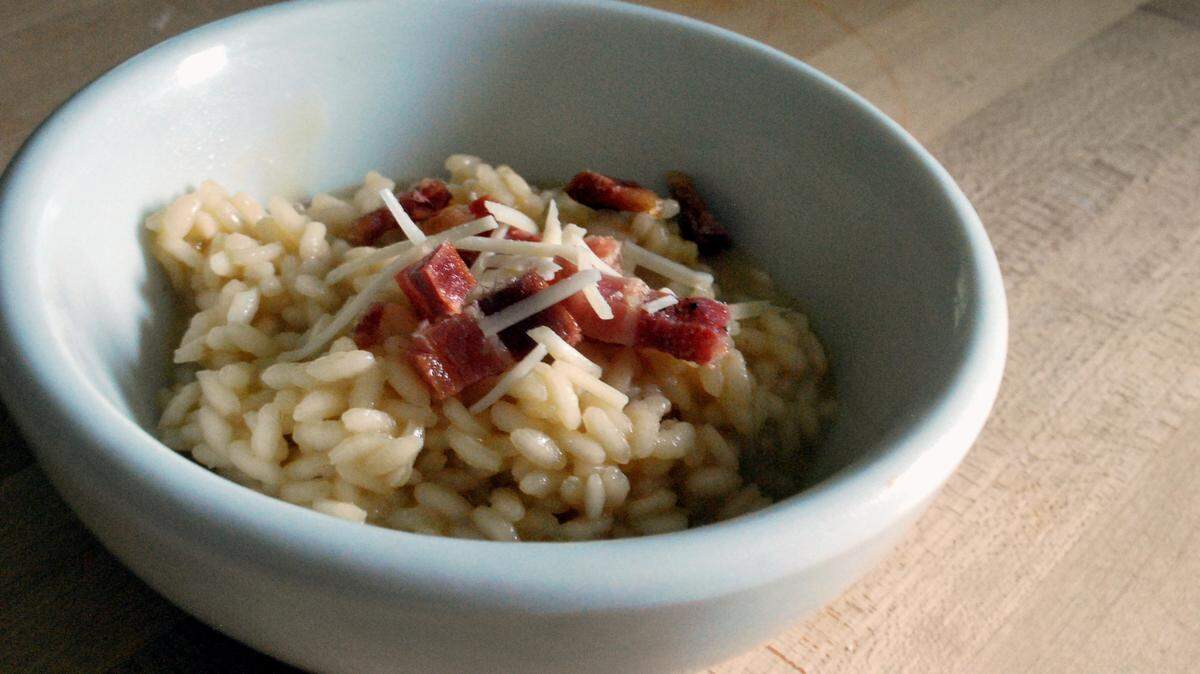
The anticipation in the house was high. My boys were talking wildly of juicy bacon cheeseburgers while I was envisioning a late-night bowl of mushroom and bacon risotto washed down with a glass of pinot noir.
For the next week, I flipped the pork belly every other day to ensure both sides were equally immersed in the salty liquid that had formed. By Sunday afternoon, the bacon was firm enough to finish curing in the oven. A meat thermometer is handy to have at this point as the bacon needs to reach an internal temperature of 150 degrees in a 200-degree oven.
The entire family circled around the kitchen island in quiet awe as the first slices of bacon were cut and placed in the cast iron skillet. We watched as it sizzled and turned that fabulous golden bacon-y hue.
To tell you that it was the most succulent morsel of food I had ever put in my mouth would be a lie. In fact, the first round of bacon was ... salty. Really, really salty. Bummer. After researching further in the cookbook I was relieved to find a solution to the problem (too long in the curing liquid) and was able to save the rest of the slab by blanching the slices before frying. A few tweaks here and there in subsequent weeks, and I have officially crowned myself the bacon-curing queen.
Thinly sliced, limp, store bought bacon is but a distant memory. A few months ago I never would have imagined shopping for meat grinders or determining the right size casings for breakfast sausage.
Charcuterie is an exciting culinary practice. If all goes well, I hope to be enjoying shavings from our first pancetta by winter's end.
RECIPES
Homemade bacon
1 pound kosher salt (2 cups Morton's coarse kosher salt)
2 ounces pink curing salt (10 teaspoons)
8 ounces sugar (about 1 cup)
3- to 5-pound slab pork belly
Mix the salts and sugar well to make a dry cure. Coat pork belly in ¼ cup dry cure (keep the rest in a container for future batches) and put the pork belly in a resealable bag.
Seal the bag and place in refrigerator. After a few hours, the pork belly will have given up a lot of juice. Flip it every day for a week to redistribute the cure.
After a week or so, or until the pork belly is firm and not limp at all, rinse off the salt cure and pat dry.
At this point you can smoke the bacon or cook it in a 200-degree oven on a baking sheet until the internal temperature reaches 150 degrees, or about 1 to 2 hours.
Remove pork belly from the heat and take the skin off. The best way is to place the rind side-down on a cutting board and run your knife along the board. Keep the rind for soup recipes or add to a pot of beans.
Once the rind is off, let the belly cool. When cooled, cover in plastic wrap and refrigerate or freeze the bacon until cool enough to slice thin.
Slice to desired thickness, cook and enjoy.
Adapted from Charcuterie: The Craft of Salting, Smoking, and Curing by Michael Ruhlman and Brian Polcyn
Bacon risotto
6½ cups chicken stock (homemade preferably or good quality store-bought)
5 tablespoons unsalted butter
1 cup finely diced onion
2 cups Arborio rice
½ cup cooked bacon, chopped
Parmesan cheese, optional
In a sauce pot, bring chicken stock to a simmer, reduce heat and keep warm. In a large saucepan melt butter over medium heat. Sauté onion until translucent, 5 to 6 minutes. Reduce heat to low, add 2 cups rice and sauté mixture, stirring constantly, until grains become clear and shiny, 2-3 minutes. Add ½ cup warm stock, stirring constantly. The rice should absorb all liquid before more is added. Add broth ½ cup at a time, stirring constantly, until risotto is very creamy and the grains are firm without any crunch at the center. Total cooking time is 20 to 30 minutes. Mix half the bacon into the risotto and stir. Season to taste with salt and pepper. Spoon risotto into individual bowls, sprinkle with Parmesan cheese if desired and top with remaining bacon. Makes 4 to 6 servings.
This story was originally published October 14, 2010 at 12:00 AM with the headline "Home cook discovers the joys of charcuterie."