
Bill that would regulate beer distribution passes House committee
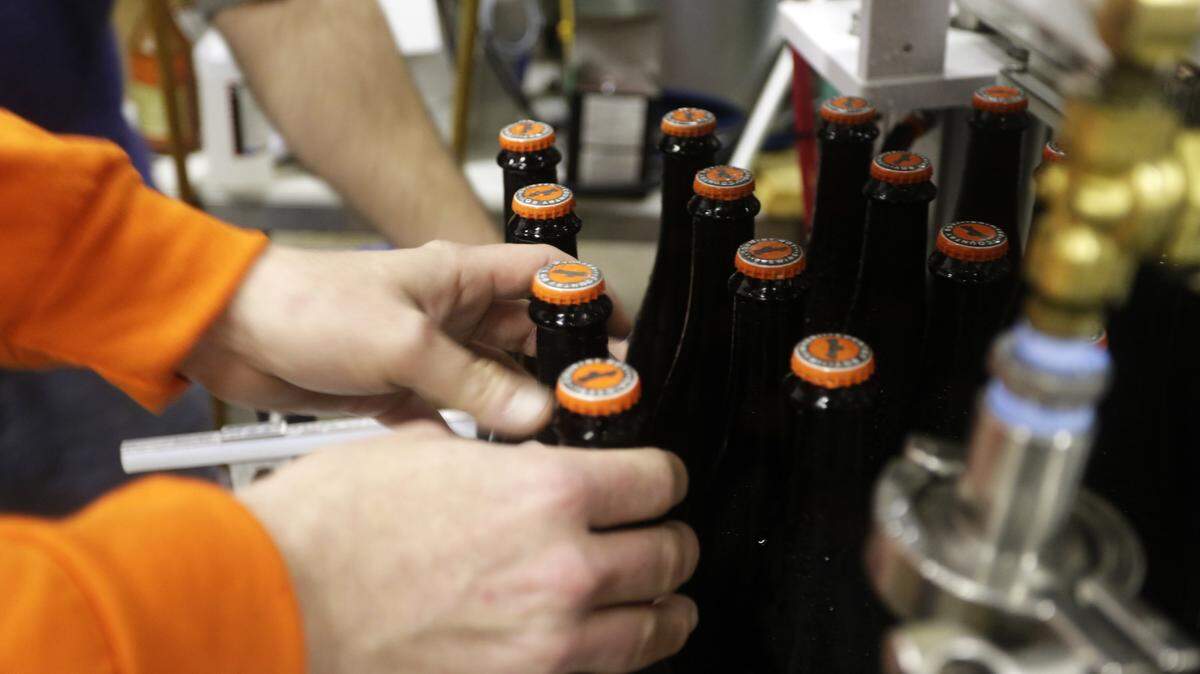
FRANKFORT — A bill to close a loophole in state law that has let Belgian beer giant Anheuser-Busch buy two beer distributorships in Kentucky passed a House committee Thursday morning, but its prospects on the floor are uncertain.
The bill, sponsored by House Speaker Greg Stumbo, D-Prestonsburg, is designed to protect Kentucky businesses and jobs that might be lost to consolidation, Stumbo said.
"It doesn't allow large brewers to come in here and buy up independent Kentucky businesses, consolidate those businesses and cut jobs," Stumbo said.
After about an hour of testimony on House Bill 168, the House Economic Development Committee passed the beer bill by a vote of 15 to four, with Rep. Dennis Keene, D-Wilder, abstaining.
But several committee members said they reserved the right to vote against the measure on the House floor and begged Stumbo for a compromise.
"This bill's picked up a lot of monikers along the way: the beer bill, the lobbyists' employment act of 2015. ... I call it the heartburn bill. I think it's telling that in-state brewers play under a different set of rules to out-of-state brewers, and I think it fixes that," said Rep. Jim DeCesare, R-Bowling Green, as he voted for the bill. "However, I've also had trouble with the companies that have distributorships here for a long time, talking about Anheuser-Busch, ... it's been rumored that there may be an amendment to grandfather them in and ... if there is, I will support the amendment."
The bill would spell out that those with a Kentucky license to make beer can't hold a license to distribute it, too. Brewers in Kentucky's burgeoning craft beer industry say the move is necessary to protect them from being squeezed out of the market.
Stephanie Stumbo of the Kentucky Alcohol Beverage Control agency said regulators support the bill to clear up ambiguity in the existing three-tiered system, which usually limits alcohol makers to selling only to distributors or wholesalers, who sell to bars, restaurants and retail stores, who sell to customers.
"This is about 60 licensees, 60 existing businesses in the commonwealth. There are 30 independent beer distributors and about 30 craft brewers, and they're asking for your help," said Stephanie Stumbo, who is not related to Greg Stumbo. "They're asking for you to give them the level playing field, and (this bill) does make the law the same for malt beverages as has existed for distilled spirits and wine.
"And it has not been an impediment. We still lead the global market in whiskey production, which we like to call bourbon in Kentucky, and they've been under this the whole time."
Daniel Harrison, co-owner of Country Boy Brewing in Lexington, testified that craft brewers are asking for equality.
"If we cannot allow Kentucky beer makers to distribute, we make it equal and we cannot let others distribute, especially the largest brewer in America, and (we cannot) let them have rights that we do not allow Kentucky brewers to have," Harrison said.
Lawmakers said they supported protecting Kentucky-based companies and the jobs they generate, but they were concerned about what the measure would do to about 200 employees of the AB InBev distributorships in Louisville and Owensboro.
Damon Williams, spokesman for Anheuser-Busch, said that if the brewer is forced out, there is uncertainty about what will happen to its employees, including 70 members of the Teamsters union.
The bill "attempts to cap the future growth or eliminate our business entirely," Williams said. "The beer distribution system in Kentucky is working fine. There's never been more avenues to market for beer. Craft beer is booming. ... The notion that our ownership here stifles the craft guys is just plain wrong."
Greg Stumbo denied that there is a "war on Anheuser-Busch." He said the bill would force Anheuser-Busch and at least one other out-of-state brewer who has started a distributorship in Kentucky to divest their businesses, but that it wouldn't necessarily mean the loss of jobs, because new owners would need people to sell Budweiser, which has about 50 percent of the market share in Louisville and Owensboro.
"Nobody in this room wants to lose anybody's jobs. Nobody in this room is here to force someone out of a job," Stumbo said.
But a compromise seems unlikely.
"I still think the best thing we can do is preserve the system in its purest form and pass the bill as is," Stumbo said.
Anheuser-Busch isn't willing to say that it won't buy more Kentucky distributorships, and the craft side doesn't want AB's existing two distributorships grandfathered in.
The two sides "haven't played well in the sandbox together," Stumbo said. "As far as I know, they're still kicking sand at each other."
The battle over the bill has generated a lot of online ire, including social media campaigns and ads by both sides. Before hearing testimony on the bill, committee chairwoman Rep. Ruth Ann Palumbo, D-Lexington, cautioned all witnesses to keep it respectful, and she chastised both sides for their rhetoric.
"I regret that one side has disparaged a Kentucky business owner with misleading and false attacks. A television ad calls Kentucky businesses 'special interests.' I learned that social media has unjustly criticized one of our policy makers," Palumbo said. "These actions are without conscience."
This story was originally published February 12, 2015 at 12:24 PM.