
Plant that will destroy 523 tons of chemical weapons in Madison County is finished
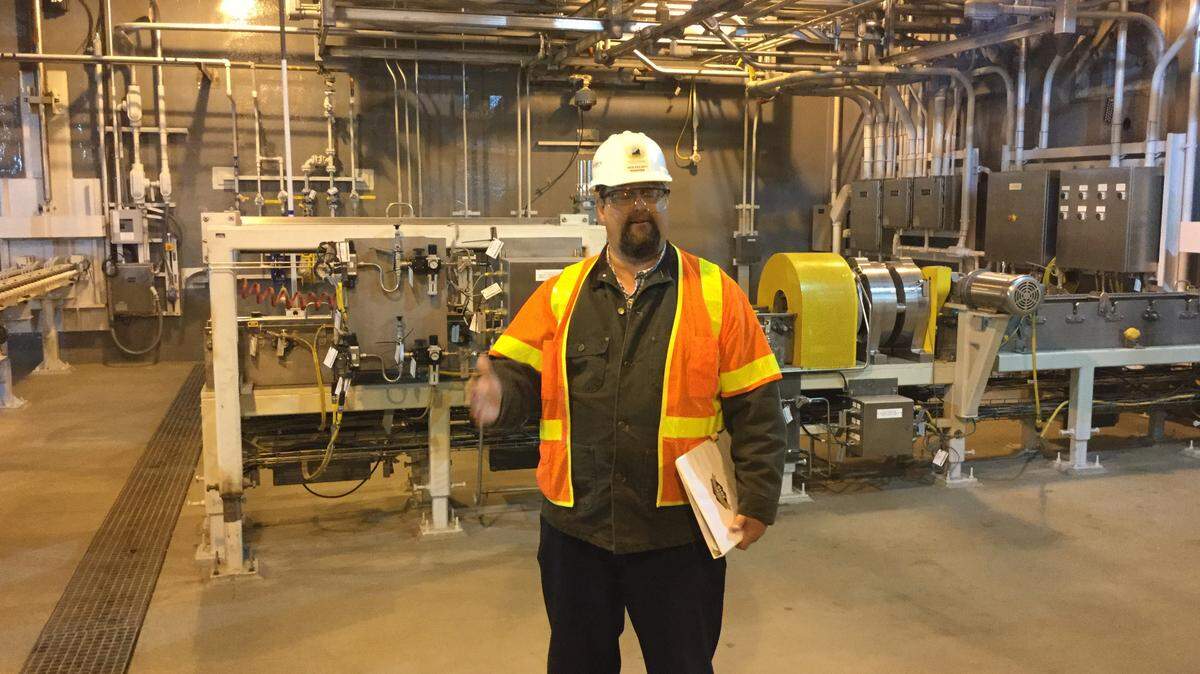
RICHMOND — The plant that will destroy 523 tons of chemical weapons in Madison County is finished, so officials on Tuesday gave a tour to the media.
"This represents a significant milestone," said Jeff Brubaker, site project manager.
Construction was substantially finished in July, but between then and now another 900 items of minor finish-up work had to be completed, Brubaker said.
"We're talking about miscellaneous painting, putting stenciling on piping, things like that," Brubaker said.
The plant represents an investment of $1.5 billion. But its design, construction, operation and closing will mean a total "life cycle" investment of $5.3 billion.
The site is a lot quieter now than it was last year, when it employed a peak of more than 1,600 people. That will drop to 842 this week as the last 45 "craft" or construction laborers finish up and leave the site on Thursday.
The plant will employ more than 1,000 when it begins the neutralization and destruction of weapons in 2020. The final weapons at the Blue Grass Army Depot are scheduled to be destroyed in 2023.
Before the destruction of VX and GB nerve agents can begin, the plant's various systems will go through rigorous and repeated testing. Some equipment will go through 10,000 practice rounds before the actual destruction begins.
Destruction of mustard or blister agent is scheduled to begin in 2017 in a separate facility on the same property as the plant. The mustard rounds will be destroyed in a "static detonation chamber."
The mustard projectiles have to destroyed separately because X-rays revealed in 2011 that the agent inside had solidified and would make it difficult using the main plant's automated systems.
Federal law requires that any part of the facility that has been touched by chemical agent must be destroyed. But a citizens' committee is investigating whether the plant could have other future uses once the weapons are gone.
Any decision to reuse the plant would have to be agreed upon by the state and Army officials.
This story was originally published October 27, 2015 at 5:09 PM with the headline "Plant that will destroy 523 tons of chemical weapons in Madison County is finished."