
Kentucky doctors see surge of babies treated for drug addiction withdrawal
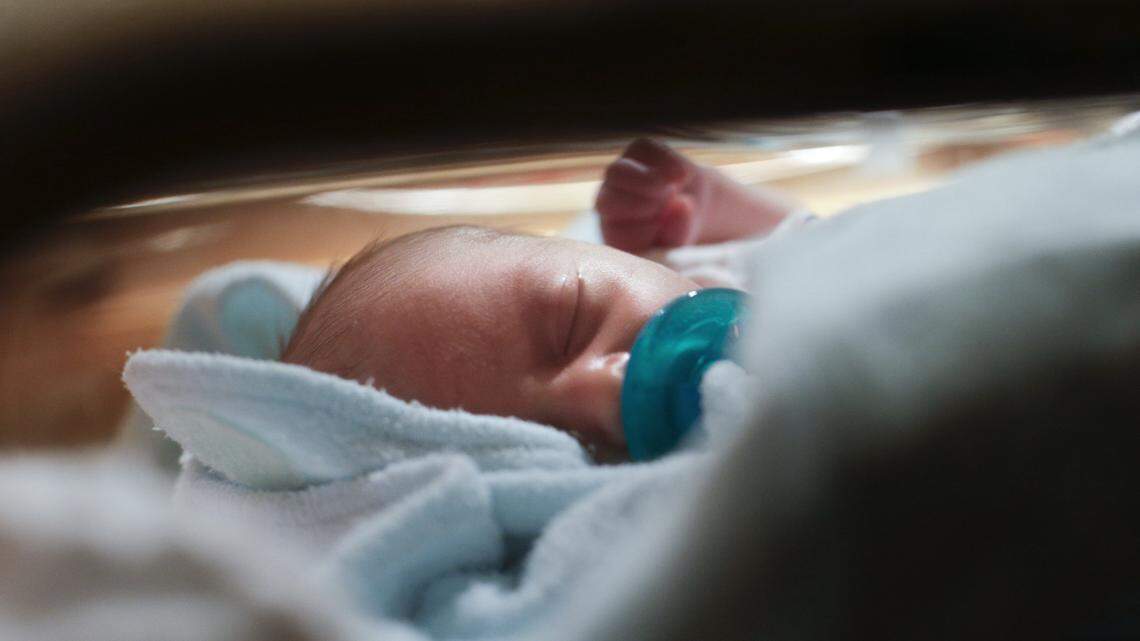
Excessive crying, tremors, stiffness, diarrhea and seizures are common in adults who suffer drug withdrawal. Wynemia Hale's infant experienced the same.
Sheena Smith, who was five pounds and nine ounces when she was born on Sept. 4, was treated for neonatal abstinence syndrome, or NAS, at University of Kentucky Children's Hospital. During Sheena's time there, she received daily massages, was fed every three hours and was given dosages of morphine to curb the symptoms that come from being born with NAS.
Hale has a history of drug abuse and was prescribed Subutex, a drug used to treat addiction, which she took throughout her pregnancy. She was told the drug would have minimal effects on her daughter, but they were more severe.
Hale, who fed Sheena in a rocking chair outside of the Neonatal Intensive Care Unit, said she slept in the hospital's waiting room, worrying about Sheena's future.
"Once we get home, will she have any problems after going through all the withdrawal and the medicine she's on?" Hale said she typically wondered. "They say that's the best thing to do, is go through the clinics, but when you do they end up withdrawing and social services gives you a hard time, too."
Sheena, who was discharged on Sunday, was cared for by a team of nurses and a group of volunteers. Hale said the team was "really good with them."
The growing rate of babies being born with NAS has urged many medical professionals to call the surge an epidemic and label it a public health care crisis that needs to be addressed.
The unit has discharged 204 babies as of this month, up from 154 in 2013 and 130 in 2012, according to statistics from the Children's Hospital. The average hospital stay for babies is between 19 to 21 days.
Henrietta Bada, a neonatologist at the hospital who treated Sheena, said babies born with NAS are "so eager that they want to eat ... but then you give them their formula or their feedings but they just cannot.
"They can't coordinate their suck-swallow reflexes ... If they are not treated then they end up with weight loss, dehydration and you're going to have a baby that is sicker than just going through withdrawal," said Bada, who is also a professor of pediatrics at UK.
A series of tests are run and techniques are employed to determine the best ways to treat NAS symptoms. Ultimately, caregivers want to negate stimulation. Lights are usually dimmed and babies are held a lot to relax them.
Numbers released from the Kentucky Cabinet for Health and Family Services show a dramatic increase in NAS hospitalizations from 2001 — when there were 67 babies hospitalized for drug withdrawal — to 955 in 2013, the most recent figures available.
Bada said this is not just a medical problem, but "as a medical problem, I can treat these babies."
"I can make them comfortable. I can give them the medications, but what's really important is that you have to treat the families," she said. "The baby has to go home to a safe home. Babies have to go home to a mother that is capable of taking care of him or her."
A lot of mothers using prescription drugs, as in the case with Hale, can cause the child to have withdrawal, she said.
Bada said the numbers are staggering and can be frustrating for doctors because there is a lack of care for mothers battling drug addictions and prenatal care, and the lack of care continues after the baby is born. At least 80 percent of medical fees are paid through Medicaid, which can cost as much as $60,000, she added.
Earlier this month The Associated Press reported that the Kentucky Perinatal Association and the state's Department for Public Health began collecting information from partnering hospitals and spreading information about best practices in combating NAS. The goal is to create standardized treatments to improve outcomes for mothers and babies.
Officials are increasingly concerned because, in part, because Kentucky has been hit hard with drug abuse issues — from prescription drugs to a rising heroin epidemic. Efforts to curb the state's drug problem have been a goal for city leaders and officials throughout the state.
In 2012, the General Assembly passed House Bill 1, which put into place regulations to thwart unscrupulous doctors and to make it more difficult for drug abusers to obtain prescription drugs. But officials have said that when the pills became harder to get and therefore more expensive on the street, addicts turned to heroin as their drug of choice. It is a continuing battle.
Eric Reynolds, a neonatologist at Kosair Children's Hospital in Louisville, says efforts to curb pill abuse have been good, but NAS is not always caused by mothers who abuse drugs. He would like to see more done for those situations.
"We need better treatment options for the pregnant mothers who have a legitimate medical reason to be on these types of medications," he said. "It's not only illicit substances. Sometimes it's moms who have a real medical problem that they need to be treated and the side effect is that the baby has to go through this, too."
Reynolds said babies stay at Kosair an average of 20 days, but can exceed 30 days, depending on how the baby reacts to treatment.
Both Reynolds and Bada said efforts to combat NAS have to start with education. Reynolds said the long term effects of NAS are still unknown because it is so early in the epidemic.
This story was originally published September 22, 2014 at 9:15 PM with the headline "Kentucky doctors see surge of babies treated for drug addiction withdrawal."