
How will health care in Kentucky change when Matt Bevin takes office?
Whatever Republican Matt Bevin has in mind for Kentucky's health insurance reform efforts after he's sworn in as governor Dec. 8, there are unlikely to be changes this winter while people enroll for their 2016 coverage.
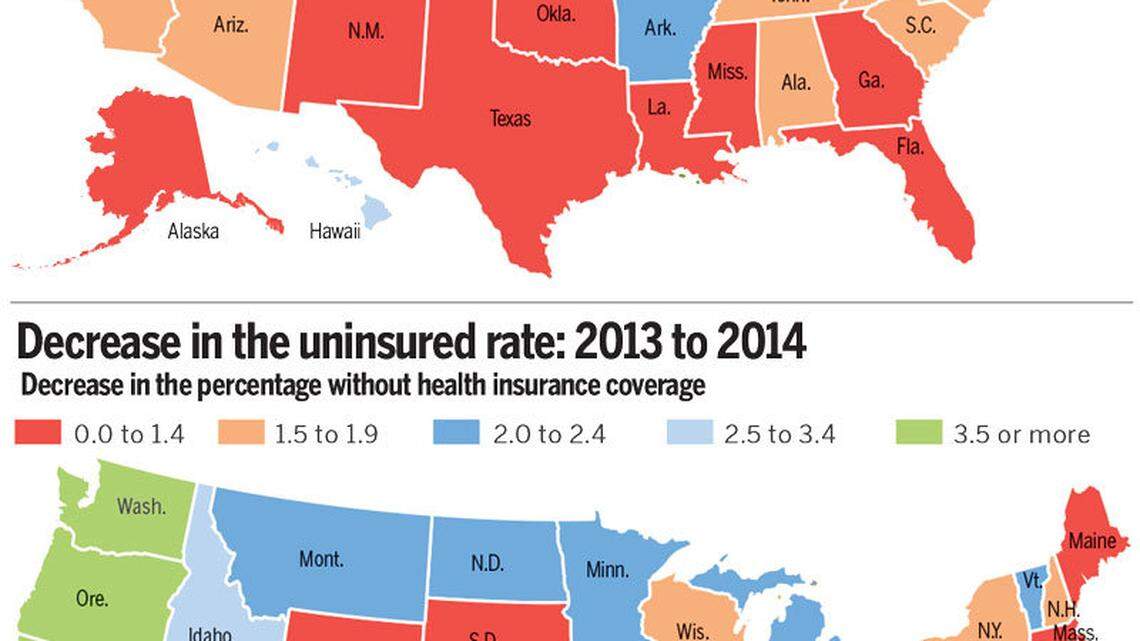
As a candidate, Bevin said he would move quickly to dismantle Kynect, the state-run health insurance exchange, and repeal the state's Medicaid expansion or ask for federal waivers that let him impose more restrictions. About 500,000 Kentuckians have coverage through Kynect, which has allowed the state to cut its rate of uninsured residents nearly in half.
"Absolutely. No question about it. I would reverse that immediately," Bevin told reporters who asked about the Medicaid expansion in February. "The fact that we have one out of four people in this state on Medicaid is unsustainable, it's unaffordable, and we need to create jobs in this state, not more government programs to cover people."
Legally, Bevin is free to reverse what Democratic Gov. Steve Beshear did two years ago when he established Kynect (pronounced 'connect') by executive order. However, no state has dismantled its health insurance exchange or repealed its Medicaid expansion — not even those with Republican-controlled statehouses, such as Arkansas, where candidates won on a platform of attacking the federal Patient Protection and Affordable Care Act.
The bureaucratic process for closing Kynect would not be swift. The U.S. Department of Health and Human Services expects at least one year's notice for states that want to terminate their health insurance exchanges and transfer those duties to the federal exchange. Repealing Kentucky's Medicaid expansion, which covers people up to 138 percent of the poverty line, or even modifying the Medicaid program with federal waivers, could take months of negotiations with the federal government.
On Wednesday, state Health and Family Services Secretary Audrey Tayse Haynes said Bevin's transition team had not contacted her about the next governor's plans. Regardless of the election, Kynect's third annual open enrollment started Sunday and continues through Jan. 31, Haynes said. A Kynect outlet in Fayette Mall is set to open Monday to help enroll Central Kentuckians. The website Kynect.ky.gov also is accepting customers.
"For us, we'll be here until Dec. 7 and we are enrolling people, and people will have coverage either through Medicaid or a qualified health plan," Haynes said.
A Bevin spokeswoman did not respond to requests for comment Wednesday.
Health care experts who watched Bevin's gubernatorial campaign said they wonder what he will do once he's in office. Kentucky spent $283 million in federal funding to establish Kynect, which employs about 30 people, plus 175 contract workers at a Lexington call center. The estimated cost to decommission Kynect is $23 million, which would have to come from the state's General Fund.
"There was a significant amount of tax dollars invested here that essentially would just be scrapped," said Jennifer Tolbert, director of state health reform at the Kaiser Family Foundation in Washington, D.C.
"And apart from being disruptive, it wouldn't make a lot of sense," Tolbert said. "It's one thing to throw out a system that isn't working, but your system in Kentucky has actually turned out pretty well. It's considered something of a model."
No issue more starkly separated Bevin from his Democratic opponent, Attorney General Jack Conway, than Kynect. Conway supported Kynect and praised Beshear for helping hundreds of thousands of Kentuckians to visit doctors, order prescription drugs, undergo preventive disease screenings, and enroll in psychiatric and addiction treatment.
By contrast, Bevin said he doesn't want to throw people off their insurance, but he also doesn't think Kynect is sustainable. Of the roughly half-million Kentuckians enrolled through Kynect, about 400,000 are on Medicaid, which costs billions of dollars a year. Starting in the next fiscal year, the states that expanded their Medicaid programs are expected to pay a growing share of that tab, up to 10 percent by 2021.
"It's financially untenable," Bevin told voters in Elizabethtown during the Republican primary. "The fact is, we can't afford it. We are already broke. We are already fast on the road to insolvency as a state."
The Affordable Care Act required every state to establish a health insurance exchange by January 2014; they had the option of running the exchange themselves or allowing the federal government to do it. Southern states with Republican leadership typically left it to the federal government. Kentucky created Kynect, agreeing to regulate the exchange's insurance plans and prices, and perform community outreach to help residents enroll.
Three states that launched their own exchanges — Oregon, Nevada and Hawaii — subsequently decided to enroll residents through the federal government's website, HealthCare.gov, rather than their own websites, which proved to have technical problems. But they otherwise kept control of their exchanges, Tolbert said.
Even transferring people to a different enrollment website, which requires a new application process, can be cumbersome. In Oregon, for example, early enrollment fell dramatically after the state started sending people to text you want hot.
If Bevin decides to dismantle Kynect, federal regulations require him to provide one year's notice and coordinate with the federal government on a transition plan for people with Kynect coverage. Bevin would have to notify Washington by Jan. 1 if he intends next fall to prevent open enrollment for 2017. In the meantime, private plans bought this winter through Kynect — often with subsidies to make them more affordable — would remain in effect.
Repealing Medicaid expansion would be cumbersome, too, although it could be negotiated with the federal government over a period of months.
Under the Affordable Care Act, 30 states opted to expand their Medicaid programs to cover a larger population, including poverty-level, working-age adults without children who can't afford private insurance and didn't qualify for traditional Medicaid. In Kentucky, an estimated 160,000 uninsured people who fell into this "coverage gap" were prime targets of expanded Medicaid enrollment.
None of the states that expanded Medicaid has repealed it. Some, like Arkansas, have considered it. But private consultants told Arkansas lawmakers this summer that ending Medicaid expansion there could cost the state $438 million from 2017 to 2021. Even when states must pick up 10 percent of the cost for expanded Medicaid, the federal government is pumping billions of dollars into the states' health care industries and offsetting the expense of costs such as indigent care at hospitals, the consultants said.
"I think their health care providers had some say in slowing down that train," said Haynes, Kentucky's health secretary. "I'll be curious to see what our providers say or do here. I do know that we have paid over $2.5 billion in new dollars to health care providers since Kynect started Jan. 1, 2014, and it's probably closer to $3 billion by now."
Less dramatic than repeal, six states have won federal waivers allowing them to impose their own rules and restrictions on Medicaid expansion in an effort to reduce costs.
Bevin has cited Indiana's expanded Medicaid waivers as a model he admires. Indiana requires some "cost-sharing" with Medicaid recipients, such as premiums and co-pays, and it can impose "lock outs" on recipients who fall behind on their payments, said Diane Rowland, a Medicaid expert at Kaiser Family Foundation.
"The waivers give governors a way of saying they styled it in their own fashion while still getting some money from the federal government," Rowland said.
The General Assembly also might involve itself with Kynect's fate when it convenes in January, said Susan Zepeda, president of the Foundation for a Healthy Kentucky, a Louisville nonprofit that provides health policy information and analysis.
"It will be interesting to see if the legislature weighs in on the question of retaining Kynect," Zepeda said.
"Though it was created by executive order, it could be affirmed in the legislature if members were to choose to avoid the financial costs and the disruptions of care delivery that might accompany a move to the federal exchange," she said. "Kentucky's home-grown exchange has been responsive to the needs of its users and their advocates, in making design changes to make the system easier to navigate."
This story was originally published November 4, 2015 at 6:36 PM with the headline "How will health care in Kentucky change when Matt Bevin takes office?."