
Light a fire under Coldstream development
Buried deep in a recent Herald-Leader story about Mayor Jim Gray's proposed budget was a nugget that $1 million would be set aside for infrastructure costs to help deal with the scarcity of available land for commercial development in Lexington.
Hello. I know where there are hundreds of acres of developable land. They're in plain sight, and even inside the interstates.
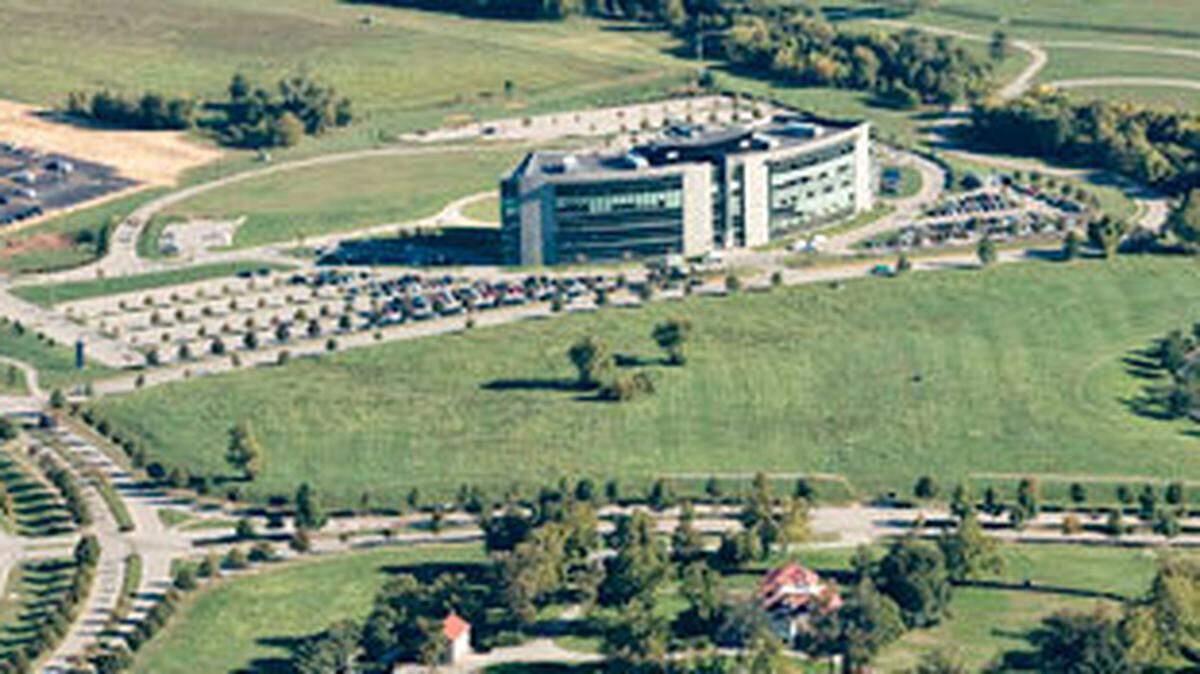
Coldstream Farm, officially known as Coldstream Research Campus, is 735 acres of maybe the most desirable land for economic development in the entire state. That's 30 acres bigger than the entirety of Lexington's Beaumont development — retail, commercial and residential combined.
As a resident of Griffin Gate, I think about Coldstream whenever I cross Newtown Pike and see all the signs saying "lease" and "available" scattered throughout the property.
Of the 735 acres, 225 are a city park and 335 acres are still available. Another 200 acres, also inside the interstates, are home to 100 lactating cows, according to the Coldstream website. Hello again.
I have never understood why the University of Kentucky hasn't been able to do more with Coldstream. I do not think I am alone.
In 2003, Billy Joe Miles, a UK trustee and former chairman of the board, said of Coldstream, "This thing is a nightmare for me. I don't know if we should just give it up."
UK has not given it up and continues to market Coldstream, working with Commerce Lexington, the state's Cabinet for Economic Development and national commercial real estate firms.
Yet it might be time for everyone — UK, the city and Frankfort — to take a fresh look at Coldstream with a cold, clear eye and approach it with the same sense of urgency that is occurring at the main campus and the medical center.
UK claims over 90 percent occupancy of the buildings encompassing 66 companies and 1,800 employees. Yet when you drive around the campus, it just seems like an odd conglomeration of stuff mixed in with several research buildings, some with often sparsely populated parking lots.
The most recent construction has been mattress firm Tempur-Sealy's headquarters, Eastern State Hospital and a veterinary supply company's warehouse and distribution operations on land the city once proposed for its emergency operations center.
There's also the Embassy Suites, a building housing A&W Restaurants' headquarters and the MedTech medical professionals school, the Bingham McCutchen law firm that's leaving the city, the Maharishi Peace Palace transcendental meditation center, a city dog park and the old farmhouse that had been used as a conference center but which now is vacant and in ill repair.
UK's history with Coldstream goes back several decades, administrations and iterations.
It's said that UK looked to put Commonwealth Stadium there before deciding on the campus site. At another point, there was an idea for a regional shopping center (à la Hamburg). Later, UK brought a plan to the Herald-Leader editorial board about a housing development for faculty members who could continue research there after they retired.
None of it happened.
In 1999, President Charles Wethington persuaded the state to fund $5.5 million in major infrastructure improvements — roads, sidewalks, sewers and utilities — that he felt Coldstream needed to take off. A year or two into President Lee Todd Jr.'s tenure, I remember him saying about Coldstream: "I don't have a dealmaker; I need a dealmaker."
Todd did hire a dealmaker who didn't stay very long but who got entangled in a major legal mess over what were supposed to be two six-story buildings.
The first sat as a shell for several years and now includes A&W and MedTech. The second was never built.
In 2011, UK solicited proposals for a master developer for a mixed-use "lifestyle" town center in the heart of Coldstream. A UK release said the project was to include new offices, laboratories, residential units, facilities such as a restaurant, coffee shop, bank, fitness center, dry cleaner and day care, and the restoration of the farm house.
Again, none of it has happened.
UK can rightfully point to several success stories at Coldstream and its affiliated Advanced Science and Technology Commercialization Center (ASTeCC) on campus.
Recently announced was the $30 million sale of Coldstream Laboratories Inc., a business in which UK had invested $47 million, to India-based Piramal Enterprises Limited. Those figures notwithstanding, it appears to be a good deal for UK, in part because Piramal signed a long-term land lease.
There are challenges with Coldstream, to be sure.
For one, if UK leases land, as with Piramal, it retains the revenue. But if UK sells land, the proceeds go to the state. Steve Pulliam of Sperry Van Ness, whose firm's name is on the big signs, said he thinks leasing can be an advantage to potential clients, but many would rather own.
Also, it's big for a research park. George Ward, executive director of Coldstream, said the median size of the 200 research parks across the country is 119 acres. "If we had started up at 150-200 acres," he told me, "everybody would be saying how great it was."
But critically, UK has wanted headquarters, high-tech or R&D projects with only light manufacturing on the property, not heavy manufacturing. With the Bluegrass Business Park now totally built out and Lexington short of space for large-scale commercial development, should that thinking change?
I don't know how the lactating cows would feel about it, but it just seems to this neighbor and longtime observer that there is an awful lot of highly attractive, badly needed land laying fallow that could produce far more jobs and revenue than it has for lo these many years.
This story was originally published May 3, 2015 at 12:00 AM with the headline "Light a fire under Coldstream development."