
Who needs the EPA? Ask Flint
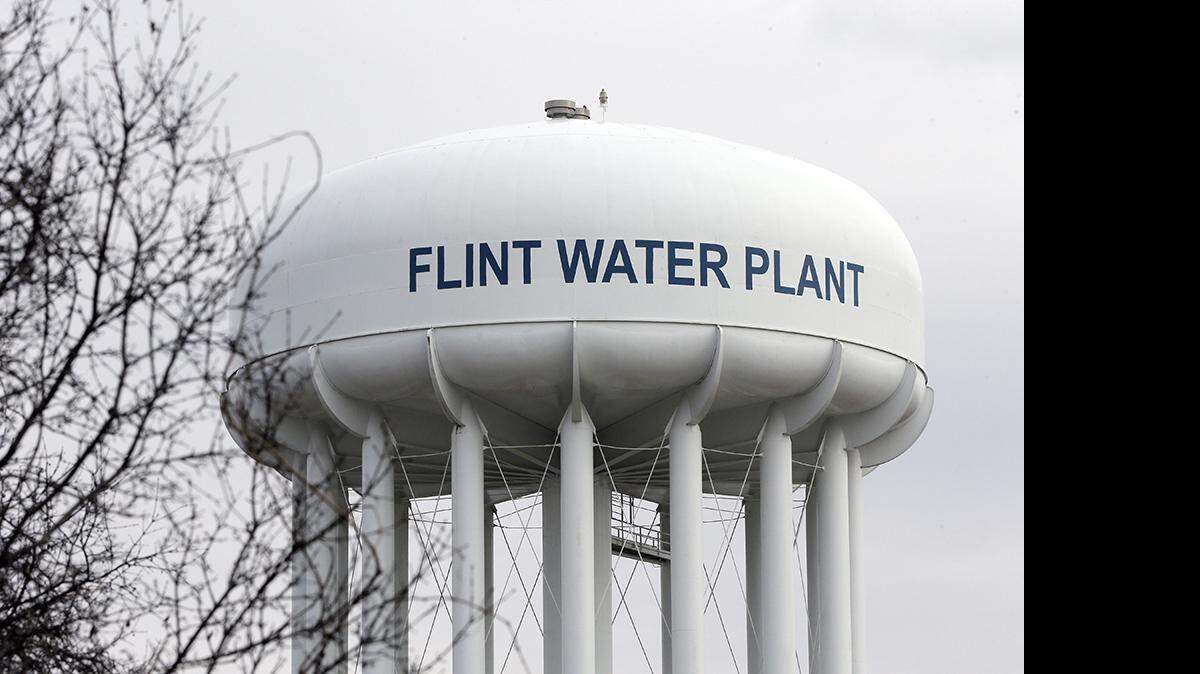
Sometimes I procrastinate shopping until I find the perfect gift for someone. Now, I have found the ideal gift for our senior senator, Mitch McConnell: a lifetime supply of drinking water from Flint, Mich.
McConnell frequently criticizes the Environmental Protection Agency. Since the EPA was complicit in this environmental disaster because it refused to take appropriate action quickly enough, McConnell can enjoy the drinking water in a world unencumbered by EPA regulations.
I hope that others around the country will follow my example and give their EPA-hating congressmen the same gift that keeps on giving.
Frivolity aside, people who object to the EPA are woefully ignorant of the need for environmental regulations to protect us from the byproducts of our civilization. They are oblivious to the fact that these improvements are based on synthetic chemicals that natural ecosystems cannot degrade or detoxify.
In her masterpiece, Silent Spring, Rachel Carson foresaw the threats these chemicals posed. The perfect example was the overuse of DDT that devastated the populations of many birds of prey. DDT was used widely to control insect pests but it bio-accumulates up the food chain. The higher an organism is in the food chain, the greater the level of DDT it absorbs in its tissues. In raptors, DDT caused thinning of the eggshells so they broke during incubation.
Although some people still deny this, the proof is incontrovertible. In 1963, there were only 487 nesting pairs of bald eagles in the contiguous United States. The government banned DDT in 1972 and by 2006 the number had rebounded to 9,800 pairs. Other species of raptors such as peregrine falcons have also enjoyed resurgent population growth.
Our society is awash in toxins, but lead is one of the most common. The Flint River has been so polluted and corrosive for decades that the automobile industry refused to use its water in their industrial processes.
Previously, Flint bought its water from the city of Detroit's water utility whose basic supply was Lake Huron, a large and fairly pure source. The decision by an appointed city manager to use the water from the Flint River saved the city about $100 a day.
The horrors of lead poisoning for hundreds of children in Flint will not be fully realized for years because lead and other heavy metals are extremely difficult to remove from the body.
But lead is not the only danger the EPA has identified. The risks of eating tuna and other fish that are high in mercury are great enough that pregnant women are advised to avoid those fish altogether.
Government regulation banned asbestos in 1978, but it was too late to save thousands of victims dying from asbestosis.
Sadly, coal miners still suffer and die from black lung disease developed during their years in the mines.
In recent years, people have become aware of the risk of arsenic poisoning in children from playground equipment treated with arsenic compounds to preserve the wood from decay.
Perhaps McConnell and others who hate the EPA so much should move to China which is not hindered by such “government overreach.” Air pollution in Beijing is so terrible that on some days people are advised to stay indoors. Pictures taken in large Chinese cities show people wearing respiratory masks to protect their lungs.
The unimaginable tragedy of the lead poisoning in Flint gives us insights into what the world would be like if we did not regulate environmental pollution. Before we abolish the EPA, maybe we should ask: Should we throw the baby out with the bathwater, Flint River lead and all?
Roger Guffey of Lexington is a retired teacher.
This story was originally published February 26, 2016 at 5:34 PM with the headline "Who needs the EPA? Ask Flint."