
Dawes' 'Passwords' sounds like summery pop, until you crack the code
Sitting at the heart of “Passwords,” the newest and by far most pop-infatuated album yet by Dawes, is a tune called “Feed the Fire.” It sweeps along with a light, summery guitar shimmer that quickly blooms into a neo-dance groove. The sound is light years removed from the Laurel Canyon folk-rock Taylor Goldsmith and company fashioned on the debut Dawes album just under a decade ago.
What emerges from there are quixotic and almost contradictory images that play into modern day mythmaking.
“Working for attention that I eventually resent,” Goldsmith sings amid the infectious pop sheen in a hushed, confessional tone that proves to be his favored singing stance for the entire album. “Trying to ignore some of the darker implications of smiling for the camera when my head’s in wet cement.”
A detour into trippier pop turf courtesy of a sitar solo then sets us up for the big fall, the collapse of a house-of-cards profile built on an already tenuous foundation of glamour and grandeur.
“How could I look so perfect on the screen and so awful in the mirror?”
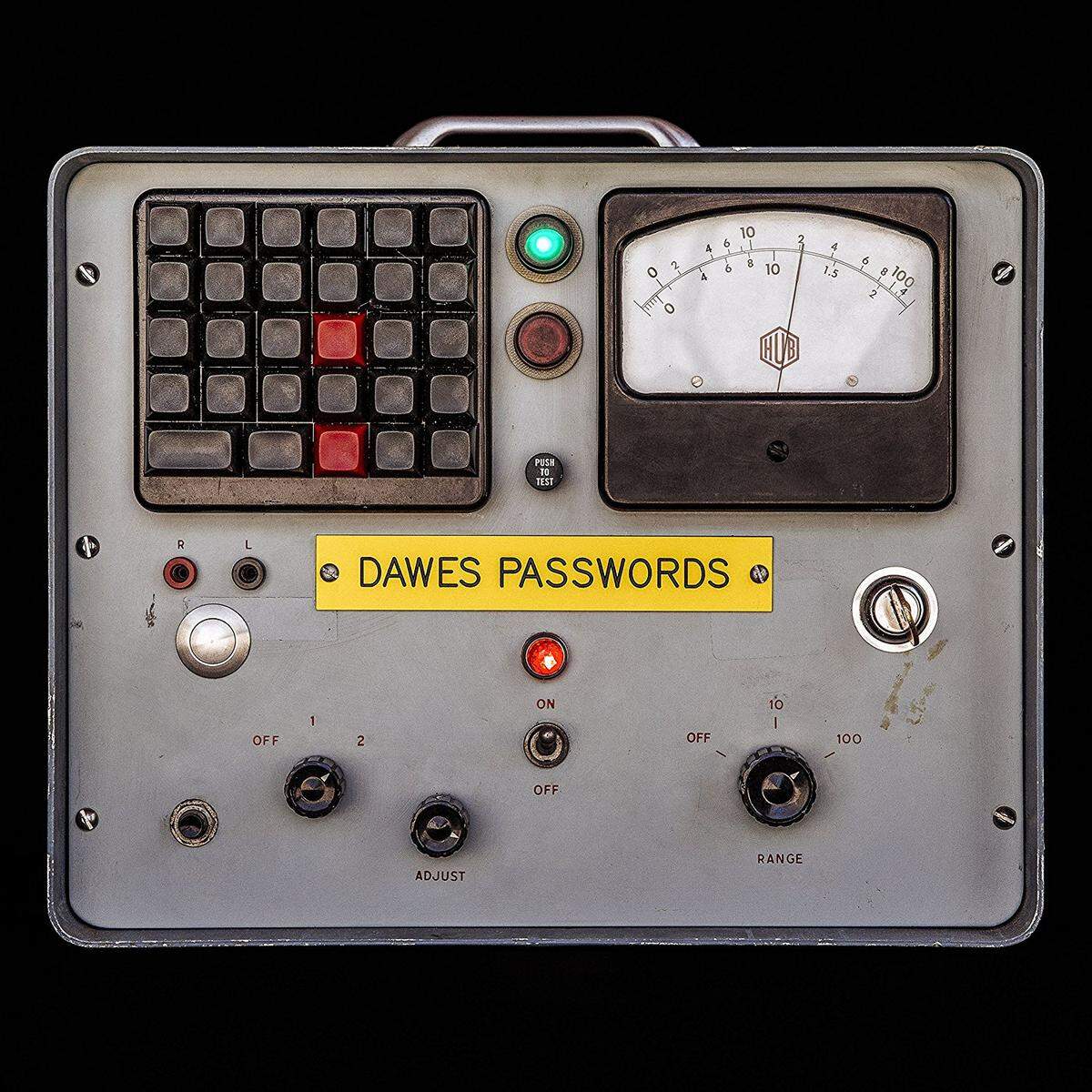
Much of “Passwords” is fascinated with a soothing sense of pop appeal masking a more personal sense of incompleteness. In terms of the pop design, the most immediate parallel to be made within most of these new songs is to the early music of Bruce Hornsby.
Specifically, Dawes’ folkie heritage gives way to atmospherics that place piano on top orchestrated synths. You hear it at once within “I Can’t Love,” a tune also reminiscent of Hornsby’s coy wistfulness. The song’s chorus of “I can’t love you anymore” seems intent on being taken literally as a poetic parting shot. Then, just as the story’s romance is about to surrender to finality, he defuses the turmoil by tacking on a four word embellishment — “… than I do now.”
Little is obvious within “Passwords.” On “Telescope,” another percolating pop beat shadows the story of a 10 year old boy seeking companionship from an absent father “drunk on his own destiny.” Earlier, on “Crack the Case,” Goldsmith practically whispers over the synth/piano cool a story that strives for empathy (“It’s really hard to hate anyone when you know what they’ve been through, once they’ve given you a taste”). And for a brief reprieve from the pop parade, there is the world weary album opener “Living in the Future,” which is steeped in Neil Young and Crazy Horse-style power chords and an underlying sense of paranoia.
For all of its inner unrest, “Passwords” still works as a great summer listen. Aside from the Hornsby accents, the stylistic reach runs from the Beach Boys to comparative obscurities like World Party. But Dawes really gets to work when Goldsmith pulls back the curtains to let loose a few of the demons at work in the engine room.
This story was originally published June 18, 2018 at 6:05 PM with the headline "Dawes' 'Passwords' sounds like summery pop, until you crack the code."