
Kamasi Washington affirms he's the sax man for a new generation on 'Heaven & Earth'
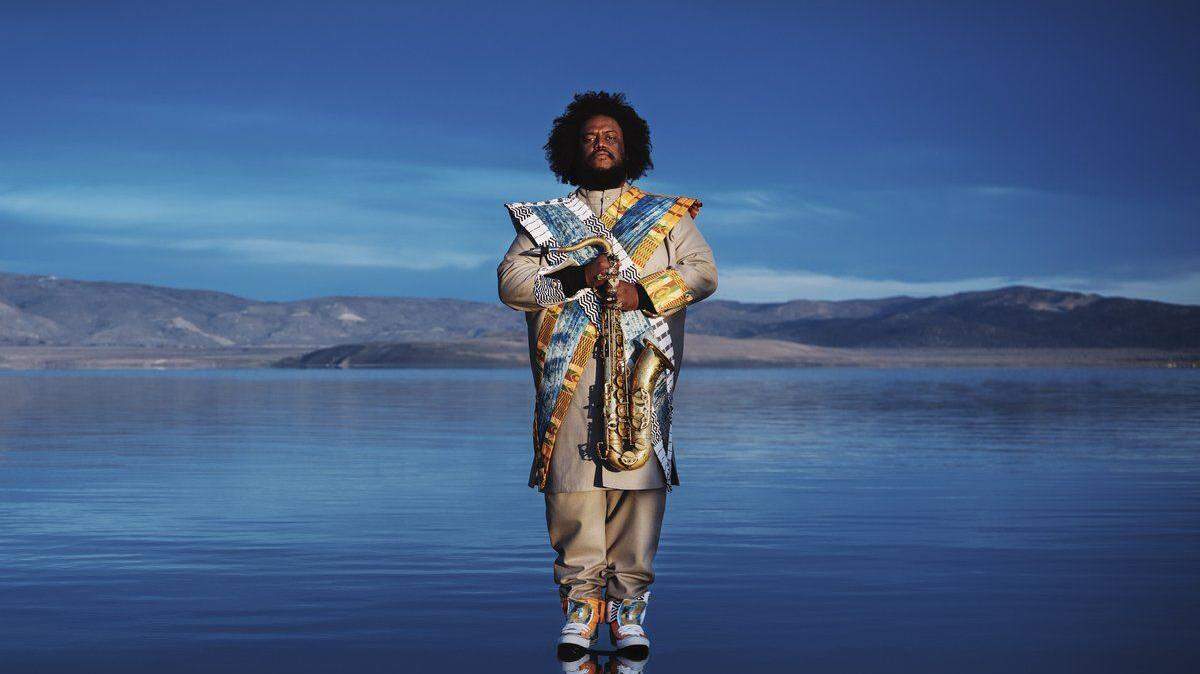
Few recordings, jazz or otherwise, will equally delight and confound listeners more than Kamasi Washington’s newest opus, “Heaven and Earth.”
First, the positives, and there are many. “Heaven and Earth” affirms, almost effortlessly, the saxophonist’s status as the voice of a new jazz generation. Extensive collaborations with hip-hop greats like Pulitzer Prize winner Kendrick Lamar opened Washington up to an audience largely independent of jazz preferences and prejudices. That set the stage for his 2015 indie breakthrough, “The Epic,” a sprawling, spiritually-inclined set organically orchestrated with a strong old-school soul feel. The music was still very much jazz, but the inspirations borrowed heavily from urbanized, pre-fusion jams.
That’s also what you get on “Heaven and Earth,” except the tunes are tighter, the orchestrations are woven more evenly within the jazz exchanges and the musicianship works to establish a keener jazz voice for Washington.
There is a lot to take in. Vocals are integrated sparingly but with great allure, as in the way Patrice Quinn and Dwight Trible, along with a wordless choir meshed with strings and layers of jangling percussion, redefine the theme from the 1972 Bruce Lee film “Fists of Fury” (one of only three non-original tunes on the two initial discs of “Heaven and Earth”) into a prayer of social identity where Washington’s tenor sax beautifully takes to the streets.
In contrast, “Song for the Fallen,” enforces a sense of time and place for Washington — namely, the early 1970s — with subtle, stately grooves and largely cinematic lyricism. It alternately recalls the 1973-era music of Santana and the two saxophonists who circle like spirits over Washington today: the Afro-centric traditionalist Yusef Lateef and the more melodically inclined Grover Washington, Jr. (no relation) in his pre-pop days.
Washington isn’t a master of brevity, though. “Heaven and Earth” stretches on for nearly 2-and-a-half hours. There is no denying some of the record’s prime components — namely, the choir — wear thin during that time. But the trance like effect of the rhythms and the many wonderful passages where Washington and his core group go it alone nicely compensate.
With all that said, there is a marketing ploy to “Heaven and Earth” that is beyond perplexing. The recording’s vinyl and CD editions both contain a bonus disc with 40 additional minutes of extraordinary music, including a cover of the Five Stairsteps’ 1970 pop-soul hit “Ooh Child” that serves as the crowning affirmation of Washington’s jazz pilgrimage. Trouble is you have to cut into the album’s packaging to retrieve it. With the CD version selling for over $20 and the vinyl set going for over $50, the idea of having to purposely deface the product you just purchased is a bit dumbfounding. The music Washington offers on “Heaven and Earth” is compelling and enriching. Why treat some of it like the prize in a scavenger hunt?
This story was originally published June 26, 2018 at 5:14 PM with the headline "Kamasi Washington affirms he's the sax man for a new generation on 'Heaven & Earth'."