
With his new album and new band, this jazz journeyman is back in town
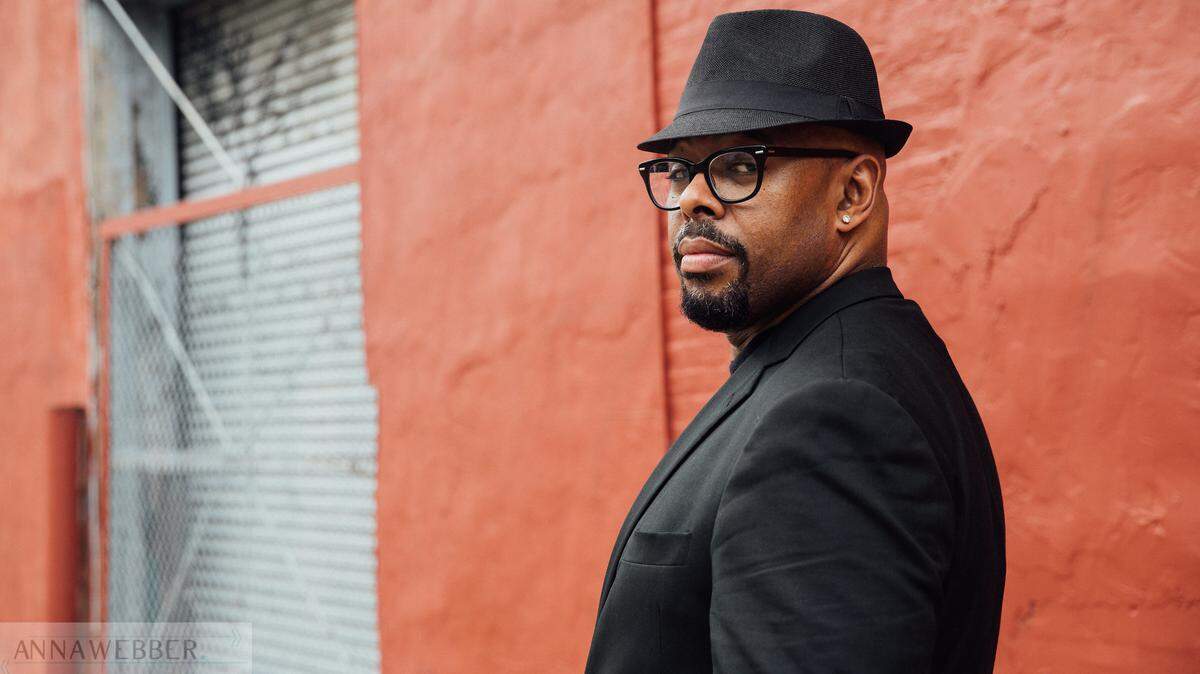
Christian McBride’s New Jawn
7:30 p.m. Oct. 28 at the Lyric Theatre and Cultural Arts Center, 300 E. Third. $15 student, $25 public. 859-280-2218. originsjazz.org, lexingtonlyric.tix.com, christianmcbride.com.
Christian McBride is well aware that some 19 years have passed since he last played Lexington. But he has an excuse — actually, a lot of them. Pretty good ones, too.
For starters, the bassist, composer and all-around jazz journeyman has since recorded with some of the top tier artists in his field. The short list includes Chick Corea, John McLaughlin and Herbie Hancock. But McBride has also regularly rubbed musical shoulders with such pop giants as Paul McCartney, Sting and Bruce Hornsby.
Then there is the considerable offstage work McBride had dived into in order to further the visibility and accessibility of jazz music, from serving as the host of the weekly NPR program “Jazz Night in America” to taking the reins as artistic director for one of the one of the genre’s most prestigious concert summits, the Newport Jazz Festival.
Finally, there is McBride’s own work — two decades worth of recordings by his critically lauded trio and quintet, his Grammy winning big band and his current New Jawn quartet.
The latter is the band that finally lands McBride back in Lexington for a Sunday performance at the Lyric Theatre and Cultural Arts Center.
His explanation for juggling such an extensive dossier, such a packed performance itinerary and such a vast legion of musical pals?
“I’m just curious. It’s a mindset more than anything. Say you have a concept where you decide you’re only going to learn one kind of music. There’s nothing wrong with that. But there is so much out there other than the music you have dedicated yourself to. I dedicated myself, first and foremost, to being the best musician I could possibly be. In order to do that, I had to learn to play a lot of different styles.
“I realize when people say they like all types of music, that’s sort of a cop out answer. But the truth is I am very curious about a lot different styles of music. When it comes to American music, there are already a lot of different inflections, a lot of different variations. But there is also a lot of international music I know nothing of that I’m dying to learn about.”
McBride’s Sunday performance caps off an especially full October. As recently as last weekend, he was serving as music director for an all-star Apollo Theatre concert honoring the 50th anniversary of the James Brown hit “Say It Loud, I’m Black and I’m Proud” and other socially driven soul hits from 1968.
Today, though, marks the release of his newest album with his newest band. The self-titled “Christian McBride’s New Jawn” introduces a piano-less quartet that teams the bassist with trumpeter Josh Evans, saxophonist Marcus Strickland and drummer Nasheet Waits. On Sunday, however, Branford Marsalis Quartet mainstay Justin Faulkner will sub for Waits, who is currently on tour with Jason Moran and the Bandwagon.
On record, the resulting New Jawn music touches on torchy blues (“Ballad of Ernie Washington”), swing (“The Middle Man”) and ensemble grooves that glide out of combustible bass and drum exchanges (“Ke-Kelli”). McBride favors a flexible ensemble sound over undue flaunting of his own instrumental prowess, although he kicks out a riotous bass solo during a cover of the vintage Wayne Shorter/Weather Report tune “Sightseeing.”
“I’ve now had a number of steady groups that have been able to play consistently over a nice, long period of time,” McBride said. “It’s been like that with New Jawn. It was like that before with my trio and before that with my quintet (dubbed Inside Straight). When you have time to play together and develop, that’s one of the best things that any bandleader or musician can hope for. You need time and an opportunity to have some consistency as a unit. I think we have that now.”
But how does one of jazz music’s most prolific ambassadors view the current state of the music he has so thoroughly invested himself in?
“There’s about 98 percent of the population that has no idea we exist. I think that’s pretty much always been the case for jazz. One could argue that maybe in the’50s or ‘60s, jazz was a little more popular. But historically speaking, starting in maybe the mid ‘60s, jazz quickly fell to the bottom of the sales range and never quite picked up.
“There are two ways to look at that. Artistically, I think the music is thriving more now than ever. So many great artists are doing some incredible things out there. But we’ve got to get people to recognize it, notice it and acknowledge it.”