
Think Bob Dylan is strange? Then buckle-up for Martin Scorsese’s headscratcher
With myriad summer opportunities left to enjoy music in the great outdoors – Louisville’s Forecastle, Somerset’s Master Musicians Festival and our own inaugural Railbird being but three fine examples – we’re suggesting an indoor activity to close this holiday weekend. Specifically, something you don’t even have to leave your living room for.
If you have yet to devote a few hours to Martin Scorsese’s “The Rolling Thunder Revue: A Bob Dylan Story” on Netflix, then map out some “me time” on the couch and give it a viewing. It’s an account – well, maybe “interpretation” is a better term - of one of the oddest yet most intriguing chapters in the performance career of the championed songsmith. It is as fascinating and confounding as Dylan himself.
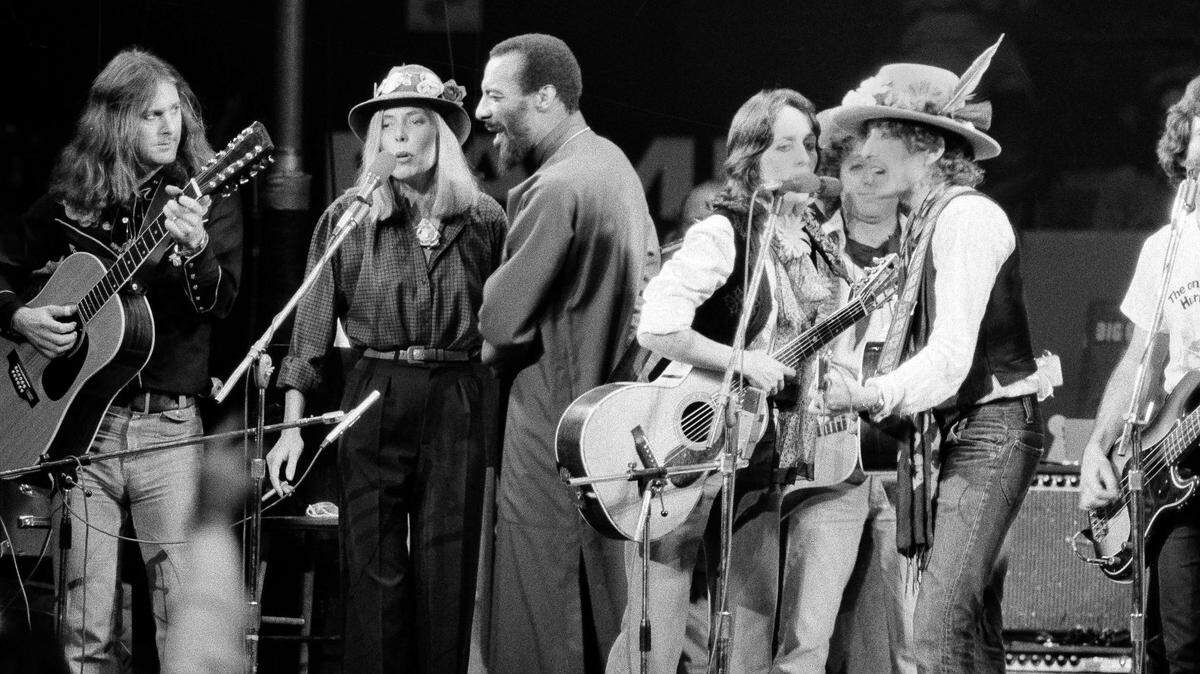
The film rewinds the calendar to the late fall of 1975 when Dylan, less than a year after the release of his most heralded album in nearly a decade, “Blood on the Tracks,” gathered a caravan of similarly fanciful folk artists, poets and hangers on and played scrappily executed shows as The Rolling Thunder Revue. While the music encapsulated in Scorsese’s film is extraordinary, the offstage pageantry unfolding around it is a bit of a headscratcher.
“The Rolling Thunder Revue” plays out as a documentary, although Scorsese purposely plays into a mythology Dylan created for the tour. As such, we have a wealth of factual backstory. This includes exchanges between Dylan and fellow folkie/former paramour Joan Baez and the now-late poet Allen Ginsberg that range from revealing to self-involved. There is also present-day commentary from Dylan, who seems only intermittently interested in drudging up the Rolling Thunder era, dismissing it outright at the film’s conclusion by labelling the tour’s lasting significance as “Nothing. Not a single thing. Ashes.”
But balancing all that are instances where Scorsese simply makes stuff up, like an interview with a fictional director named Stefan Van Corp, who condescends during between-song commentary in a way that lends the film an inexplicably confusing smugness. There are also interviews with fabricated promoters, congressmen and even real-life actress Sharon Stone (she talks about joining the on tour at 19-years-old). The latter’s account of being part of the tour has largely been debunked as being intentionally false.
Why did Scorsese take such liberties? Who knows? I bought into most of them the first time I watched “The Rolling Thunder Revue.” A better question is why bother with all the make-believe when the actual performance footage (filmed by Howard Alk, who died in 1982) is so stunning?
Much of the Rolling Thunder repertoire centered around “Desire,” an album of then-new studio songs released between the two legs of the tour. It was bolstered by the single, “Hurricane,” Dylan’s most vividly annotated protest song in a decade. Designed mostly around a lean but dramatic arrangement of acoustic guitar, violin and percussion, the composition detailed the trial and imprisonment, perceived as the product of a racially motivated arrest and conviction, of African-American boxer Ruben “Hurricane” Carter on charges of triple murder (the real life Carter is also interviewed, but comes off no more credibly than the fake subjects). The song possesses a quiet defiance in the film, but it pales next to the storm summoned onstage during a revisit to 1963’s “The Lonesome Death of Hattie Carrol,” a scathing account of an affluent white male’s murder of an older African-American woman.
This is the film’s uncontested high point, one that breaks free from the “Rolling Thunder” bogus pageantry, allowing the very human drama at the core of a true Dylan masterwork to manifest without barriers. “But you who philosophize disgrace and criticize all fears, take the rag away from your face,” Dylan sings with mounting vehemence. “Now ain’t the time for your tears.”
Another integral moment comes when Joni Mitchell, one of several celebs that intermittently joined the tour (unlike Stone, she was actually there) to lead Dylan and Byrds co-pilot Roger McGuinn through “Coyote” with zero fanfare at Gordon Lightfoot’s home. It is the very anti-thesis of the film’s overriding sense of fanfare.
For those wanting to experience the ragged soulfulness of the Rolling Thunder music without Scorsese’s narrative embellishments, there is a new, wonderfully indulgent 14-disc box set of rehearsals and complete concerts from the tour’s first leg titled “The Rolling Thunder Revue: The 1975 Live Recordings.” It costs about $100 and requires a vacation week’s worth of listening time, although its versions of chestnuts like “I Dreamed I Saw St. Augustine” (with Baez) and “Desire” delicacies such as “One More Cup of Coffee” will enthrall Dylan die-hards.
Then again, you could just kick back with Netflix and let Scorsese have you on by watching one of the strangest eras in Dylan’s mercurial career become even stranger.