
Take a gospel journey with this blind Alabama group that has toured seven decades strong
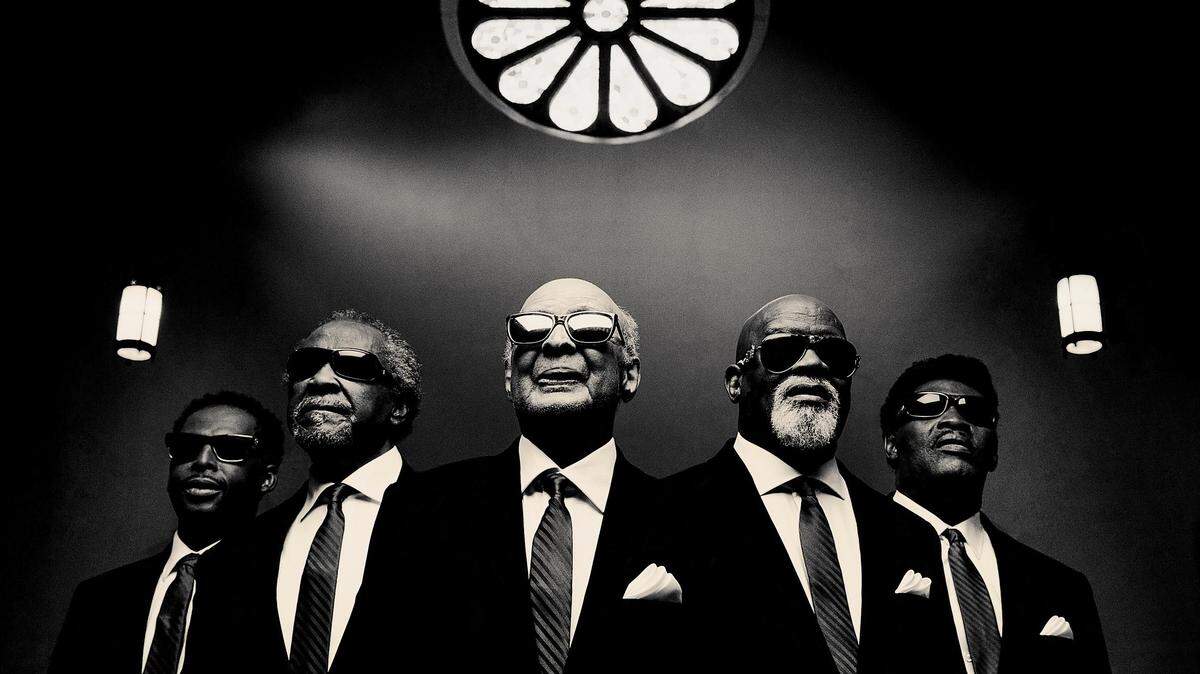
When asked for his age, an admittedly intrusive question regardless of who it is presented to, Jimmy Carter complies, but quickly asks for the reply to be held in confidence,
“Don’t print that, now.”
With that, the leader and longest serving member of the Blind Boys of Alabama lets out a laugh as loud and spirited as his singing. That’s when you realize that life and music for Carter doesn’t anchor itself to age or adhere to something as dismissive as retirement. Singing with the Blind Boys of Alabama, whose beginnings as a group stem back to 1939 with a history of live performance dating to 1944, isn’t a career in any conventional sense. It’s a calling.
“I’m not young anymore,” Carter said, who will be playing UK’s Singletary Center for the Arts with the rest of the group on Wednesday. “Traveling, now, has become a little difficult. But I’m still at it. God has been good to me. I’m going to give God the best that I have until I’m told, ‘That’s enough.’”
For over seven decades, the Blind Boys of Alabama have maintained a steadfast gospel journey that has taken the group from its beginnings at the Alabama Institute for the Blind in Talladega through the Civil Rights Movement of the 1960s to theatre-related work (specifically, the Tony-nominated “The Gospel at Colonus”) in the 1980s.
Through it all, the Blind Boys’ vocal sound was solemn, soulful and remarkably timeless in its sense of conviction and tone. In short, the mission of the Blind Boys never changed. But in 2001, the world around them most assuredly did.
For an album called “Spirit of the Century,” producer John Chelew kept the group’s rustic harmonies intact, but changed everything else. The repertoire mixed traditional gospel tunes with modern, spiritually themed songs by the Rolling Stones, Tom Waits and Ben Harper with instrumentation by such blues stalwarts as Charlie Musselwhite and John Hammond. Typifying the blend of tradition and innovation was a reading of perhaps the most familiar of gospel staples, “Amazing Grace,” sung to the melody of the very secular “House of the Rising Sun.”
Audiences, especially those outside the group’s exclusively gospel trajectory that had never heard of the Blind Boys, flipped for it. “Spirit of the Century” would win a Grammy Award for Traditional Gospel Album in 2002, a feat the group would repeat four times by the end of the decade.
“It surprised everybody,” Carter said. “It was a surprise to us, too. We had a great producer in John Chelew. He’s deceased now, but he was the one that talked us into singing ‘Amazing Grace’ to the tune of ‘House of the Rising Sun.’ We never sang that song like that, but it turned out to be what won us the Grammy. It was the first Grammy where we were even nominated, and we won.”
Collaborations would abound for the Blind Boys in the years to come. There were tours with Peter Gabriel and Tom Petty. Full album projects with Ben Harper, Taj Mahal and, most recently Marc Cohn, and song collaborations with everyone from Lou Reed to Randy Travis. The guest list alone on the group’s 2003 Chelew-produced Christmas album, “Go Tell It on the Mountain” (its third Grammy winner) reflects the Blind Boys’ popularity among their pop, rock and blues peers. Among those helping out on the album: Waits, Mavis Staples, Solomon Burke, Mavis Staples, George Clinton, Chrissie Hynde, Richard Thompson and Lexington’s own Les McCann.
“You know, what we found out about these collaborators, and a lot of people don’t know this, was that a lot of these artists came out of the church,” Carter said. “They knew something about gospel music. In sharing that with us, they enjoyed it as much as we did, maybe even more.”
But the Grammys and the all-star alliances have not deterred Carter. While he is appreciative of the recognition and opportunities, singing gospel remains not an exercise in artistic expression but one of total spiritual involvement. He views music as a tool to further his mission, a calling he feels he may have never received had he possessed the sense of sight.
“I call blindness not a handicap,” Carter said. “It’s just an inconvenience.
“My mother and father had six children, all of them boys. All of them could see except me. I wondered about that. My mother and father were very religious people that taught us about God. So, I asked God about why he would let all of these boys see except me. As time went, God called me to do this work. I know it’s my calling. God meant for me to do this work. He saw further down the road than me, because if I had had my sight, I probably wouldn’t be doing what I’m doing now. He knew that. He didn’t give my sight back, but God gave me this gift of song. I can get out and talk to an audience and they feel me. I can’t explain why.
“So blindness doesn’t bother me anymore. I’m happy. I’m content. I can do anything you can do except see.”
Blind Boys of Alabama
When: 7:30 p.m. Dec. 11
Where: Singletary Center for the Arts Concert Hall, 405 Rose St.
Tickets: $20-$46
Call: 859-257-4929