
Lexington Philharmonic taking its act on the road — literally on the street to you
You may be sitting on your porch in Lexington one afternoon this fall, enjoying the crisp autumn air, when you hear music in the distance, coming closer. It won’t be recorded music from a passing car. It won’t be a marching band.
Instead it will be members of the Lexington Philharmonic, playing classical music while riding through the neighborhood on a sort of parade float, or, as the orchestra’s general manager Sarah Phoebe Thrall put it with a smile, “a hayride wagon-type situation, if you can picture that.”
Locked out of its traditional performance venues such as the Singletary Center for the Arts and the Lexington Opera House for the foreseeable future due to the coronavirus pandemic, the Philharmonic is planning to bring its musical offerings directly to audiences this fall in small-scale mobile concerts featuring small ensembles of masked and socially distanced orchestra players.
Contingent on developments in the pandemic, the Philharmonic is keeping open the possibility of holding its annual holiday concert at the Cathedral of Christ the King and returning to large-scale music-making next spring, in both cases with live audiences with reduced size. Until then, the orchestra will be taking its act on the road — literally.
“We want to take the music to the people where they are,” said Thrall, who noted that the Philharmonic’s alternative programs will be supported by a recent Futures Fund grant from the League of American Orchestras. “We’ll post the route ahead of time, and there’ll be a spot where they’ll start and stop, so that people can gather in their yards or on their porches and be able to see us as we travel throughout the neighborhoods.”

In addition to the mobile concerts, Philharmonic plans to give scaled-down, socially distanced performances in outdoor venues around the city, possibly including Woodland Park, Moondance Amphitheater in Beaumont Centre, the McConnell Springs amphitheater, the University of Kentucky Arboretum and Jacobson and Masterson Station parks, among others.
Executive director Allison Kaiser said the Philharmonic also plans to include underserved parts of the city such as Cardinal Valley, the East End and Veterans Park in southern Fayette County.
“We very much want to work with neighborhoods that traditionally have been underrepresented in our work and our audiences,” Kaiser said. “We’re in the process of identifying partners that we’ll work with in those neighborhoods, and we’re looking intentionally at how to introduce these neighborhoods to the Philharmonic. That doesn’t mean just delivering our vision, but listening to what they think their communities would enjoy.”
That outreach is part of a larger push by the Philharmonic to use the current COVID-enforced break in normal operations as a window of time in which to come up with an action plan for increasing racial diversity among its musicians, board, staff and audiences.
To that end, the orchestra’s board is forming an IDEA (Inclusion, Diversity, Equity and Accessibility) Task Force, which will examine the Philharmonic’s structure and practices with the goal of making the organization more welcoming of minorities.
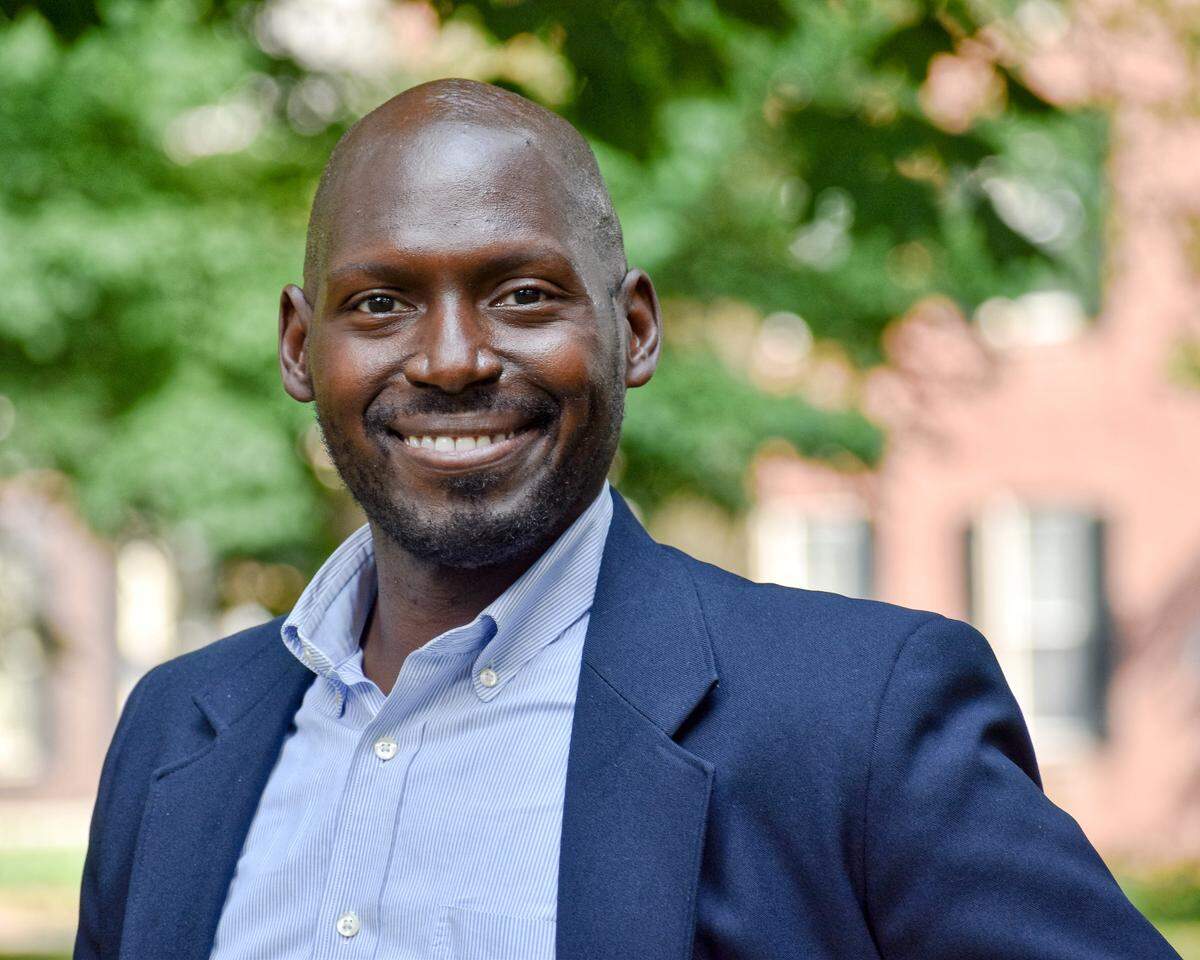
“We are intentionally having a conversation about how we can be more inclusive, more diverse, more accessible and more equitable,” said Colmon Elridge III, now in the second year of a two-year term as the Philharmonic’s first-ever Black board president. “We don’t necessarily know what that’s going to look like yet, but we cannot let that stop us from digging into the work.”
The task force has its work cut out for it. Of the Philharmonic’s 61 orchestra members, only two — one Black, one Latinx — are people of color. (In one bright note, about half of the orchestra players are women.) Its current staff consists entirely of white women. And Elridge, former executive assistant to Kentucky Gov. Steve Beshear, is one of only two people of color on the Philharmonic’s 22-member board.
One topic of discussion on the IDEA task force will be the Philharmonic’s use of blind auditions, a long-established standard practice among American orchestras in which prospective musicians compete for positions anonymously by playing behind a screen.
“The question that’s being floated right now is, should there be blind auditions?” Kaiser said. “We’re just starting to explore that as an industry.”
At the Philharmonic, she said, “It’s fair to say that even if we continue to have a blind audition process — and I think it can continue to serve us well — we have to find ways that we can provide a path for musicians who don’t fit the traditional Caucasian mold, perhaps by offering fellowships to those folks who have not had a path or resources to become part of an orchestra.”
That kind of innovative thinking will also need to be applied to the area of audience development, Elridge said.
Two years ago, he recalled, his 10-year-old son, attending his first Philharmonic concert, looked around the auditorium and saw that there were just a handful of people of color present. His son asked, “Are you sure we’re supposed to be here?”
“Yeah, we’re supposed to be here,” Elridge replied.
“What we want to make sure of is that, whether you have 50 cents to your name or 50 million, we want you to feel like you have a place in our family, because you do,” he said. “That hasn’t always been the case, and we know that. But we’re working on it.”