
The last musician John Prine signed has released his first album
Listening to the introductory tune from Arlo McKinley’s new “Die Midwestern” album is like absorbing the imagery from a picture postcard of some soon-to-be obtainable Nirvana minutes before it bursts into flames.
Titled “We Were Alright,” the song opens with hesitant comfort. It’s a twilight-colored travelogue of a couple fleeing an arduous past with the prospect of a hard-won second chance ahead of them. “And for the first time, in a long time,” McKinley sings with a mix of quiet candor and relief, “we were alright.”
Then reality hits. The phone rings, the escape turns out to be a dream and the voice on the other end belongs to his partner telling him to gather his things and get lost.
“So I went back to sleep. What else could I do?”
For Lexington audiences, such an unassumingly devastating tune by the Cincinnati songsmith is nothing new. He has been playing here steadily over the last two years, primarily at The Burl, establishing a solid local fanbase that rivals his hometown following up I-75.
McKinley returns to the club this weekend for a three-night engagement. The Friday and Saturday performances are sold out. Tickets still remain for the Sunday show.
McKinley took his music to the world in August with the release of “Die Midwestern” on John Prine’s proto-indie label Oh Boy Records. The record is a sobering roundup of folk/country meditations rooted in real life - much of it McKinley’s own. But to get it out, he faced two setbacks: Prine’s death from the COVID-19 coronavirus in April and the resulting pandemic that has halted any ongoing touring plans.
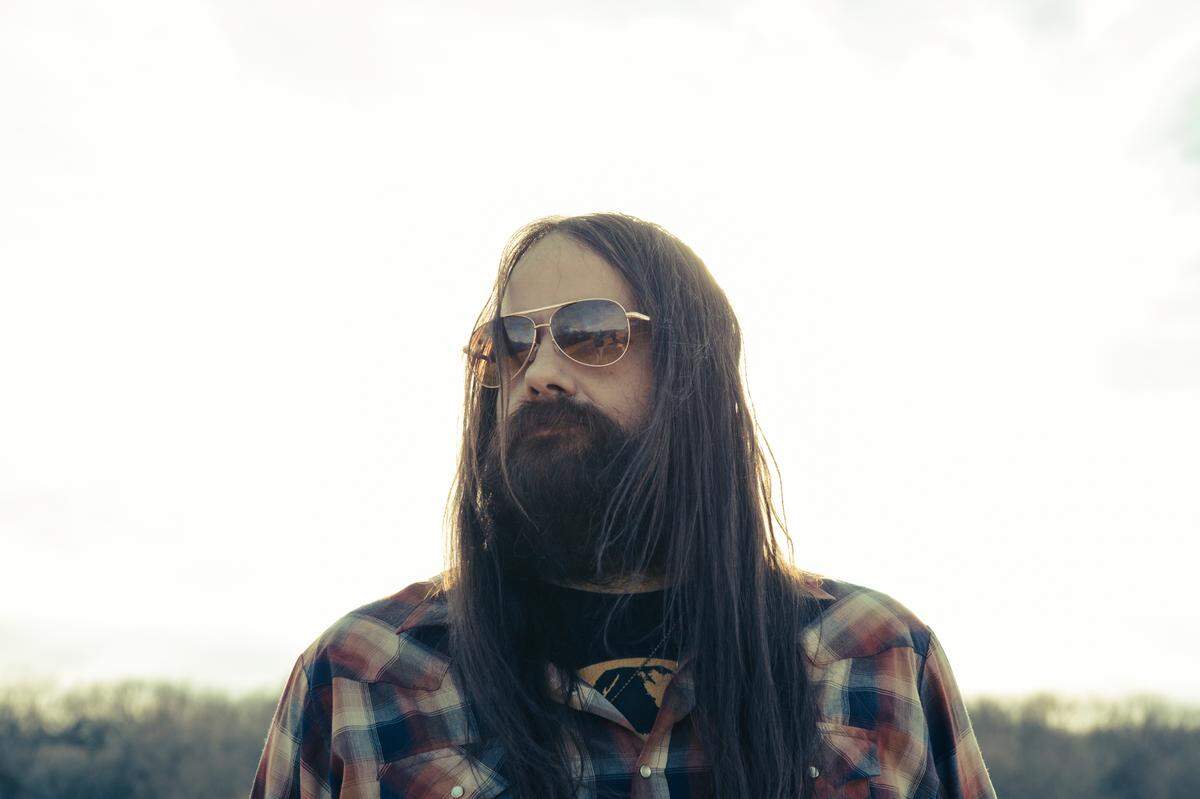
“It’s been weird adjusting to everything,” McKinley said. “But then, on the other hand, I consider myself kind of lucky. I’ve actually been able to keep myself busier than a lot of musicians I know and just a lot of people in general. I know some musicians this has affected badly. Luckily, I have the record and I have a team that’s trying to always keep me doing something, whether it’s setting up interviews or a video or something. I’ve just done what I can, really, to get by.
“I’ve spent a lot of time reading books, listening to records and just kind of figuring myself out. Trying to, anyway. I’ve never had this much time, really, to sit and not feel rushed like I have to go and do things. It’s been awhile since I’ve had a lot of time to kind of work some things out with myself and try to get myself in a good head space. It’s weird, because I’m trying to enjoy a moment of this relief. Then I look at the state of the world beyond COVID. It’s just a strange time.”
Self-examination also sits at the heart of “Die Midwestern,” a collection of songs possessing such dark and sparse imagery that one would think they hailed from a small rural community, not a metropolis like Cincinnati. But mean commonalities exist between city and country in this music, especially when McKinley documents the opioid crisis that took hold of his friends and his neighborhood in one of the album’s older compositions, “Bag of Pills.”
“These are songs I wrote in a period of time when I was going through some things and also just reflecting back on some things,” McKinley said. “These are just my experiences, my stories that happened growing up and living here in Cincinnati. It’s a reflection… well, it’s not even a reflection. It’s just me telling you a little about me.
“I tried not to get too sophisticated or anything with lyrics. I’m very straightforward about things. I just wanted to make the most honest record I could. I don’t think I could have done that any better than I did. It covers a lot of things that I’ve seen, that I’ve gone through and am still going through along with the experience of living here.”
The knack for telling a dramatic story in simple, unaffected terms is a gift he shares with Prine. The two weren’t longstanding acquaintances, having first shared a bill at the 2018 Master Musicians Festival in Somerset. A year later, McKinley was playing the miniscule High Watt club in Nashville when Prine and Oh Boy director of operations Jody Whelan stopped by for a listen. That led to McKinley becoming the last signee to Oh Boy prior to Prine’s death.
“Having John come out on a Thursday night to see me in Nashville … I mean, after that, my music career could end and I would be happy. I would look at it as a success after that moment. I don’t want it to end, of course. But that meant the world to me. I didn’t know he was coming. I had no idea. I mean, he had nowhere to go there. The green room in that place barely sits my band, but he didn’t even try to hide.
“We had a super short conversation that night. He shook my hand and said he was a fan and that he was glad to see me. That was our only interaction. I would have loved to have had time to sit and talk music with him or anything. But that little two or three minute interaction is enough for me. It just confirmed a lot of things for me and reassured me that I’m doing what I should be. John was always an influence.
“He showed me that I don’t have to worry about being flashy or technical or anything like that. John was one of the first people that showed if you just do what’s in your heart and just stay honest with yourself, then that’s all you really can do. You just hope then that it connects with people.”
Arlo McKinley
When: 8 p.m. Nov. 6 and 7 (sold out); 5:30 p.m. Nov. 8
Where: The Burl, 375 Thompson Rd..
Tickets: $120 for a table of six; theburlky.com/shows