
Lexington has lost two music legends that fans will never forget
I had intended to make my column this week a remembrance of Nick Stump, a longtime friend of just about anyone would enjoyed fine music in Central Kentucky over the last four decades. It was a paragraph or two shy of completion when I heard about the passing of Gail Wynters, a Lexington artist as synonymous with jazz and Nick was with the blues.
A revision was in order. Here then are some thoughts on two titans of the Lexington music community left us last week.
Nick Stump
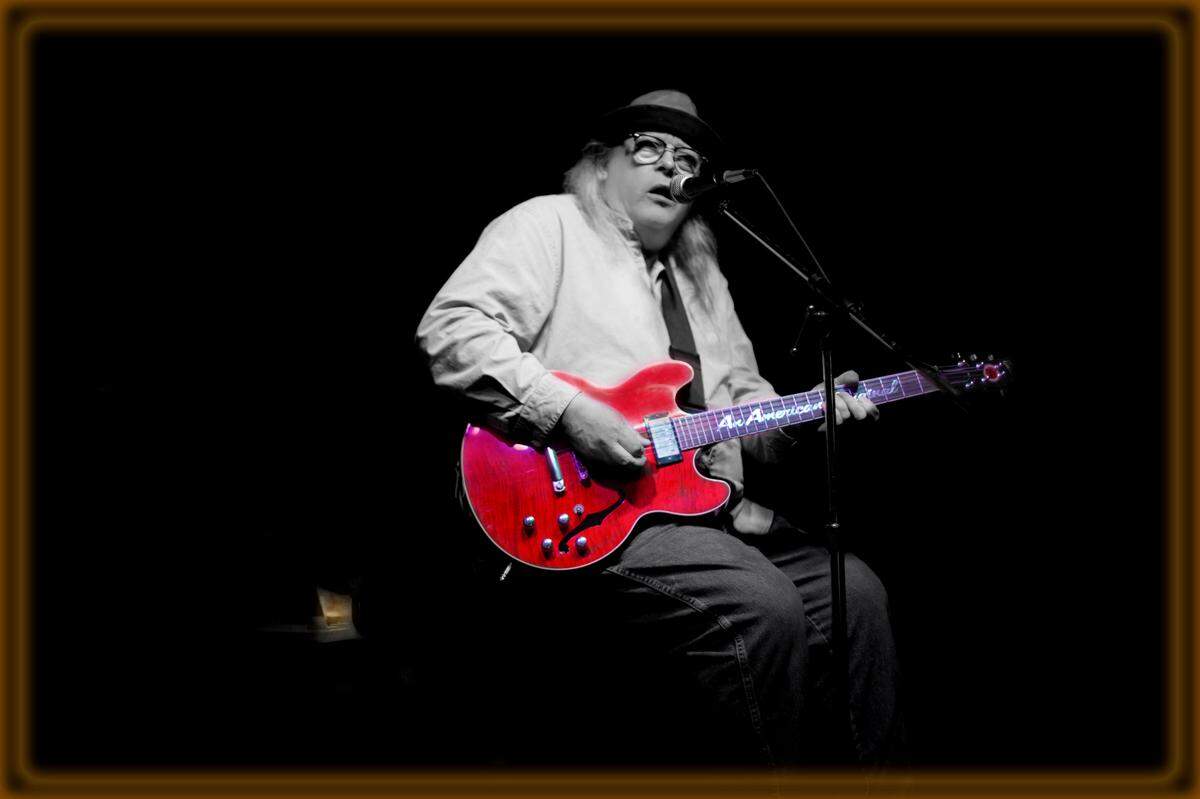
Nick Stump possessed an unwavering view of what he felt was right and wrong with the world and an expansive wit to set those opinions on fire. You would have never sensed that if you knew Nick mostly from his performances. With the Metropolitan Blues All-Stars, he commanded an enduring Lexington club following that enjoyed a Kentucky-distilled fermentation of multiple blues styles. Much of the music, when I think about it, wasn’t blues as you normally viewed it, but an offshoot that laughed off the woes of the world as it celebrated life. It was soulful and unspoiled, plus it packed the crowds in every weekend back in 1980s and ‘90s.
What Nick and the band achieved, though, was more than mere nightlife entertainment. Their music’s assimilation of regional blues dialects was filtered through a consciousness bred in rural Kentucky. Some of the original tunes the Wolfe County native brought to his band centered on narratives that reflected pride of his Eastern Kentucky roots and the very real blues that pervaded everyday lives there.
The title tune to 1995’s Metros album “Hillbilly Nation” typified this kind of cultural reality check. It’s filled with characters dismissed by a fruitful country to fend for themselves even as its native riches, such as coal, were stripped and shipped elsewhere.
“Money came out of the ground and then it rolled away,” Nick sang. “And landed in the rich man’s pocket so very far away.”
But the blues often turned celebratory when Nick took a shine to them. One of my favorite cover tunes the Metros made their own in their club days was “Call My Job.” Penned in the 1960s by a Chicago pianist curiously named Detroit Junior, it received more popularity with guitar greats like Albert King and Son Seals recorded it the following decade. In Nick’s hands, the song became a swing piece, a rocking number that neatly balanced working class worries and a sense celebratory escape.
By the late ’90s, Nick and his principal compatriots in the Metros, Rodney Hatfield and Frank Schaap, had gone their own ways. In recent years, Nick took to playing a weekly residency gig downtown at the Henry Clay Public House, where the very sound and spirit of the Metros proudly lived on. The times I saw him became increasingly infrequent, a fact that hit hard when I realized the last two occasions I spoke with Nick at length were for obituary pieces on two of his Metros bandmates – bassist Ricky Baldwin in 2018 and longtime ally Schaap in 2019.
The blues. They’re everywhere. But Nick’s spirit lives on, as will, most assuredly, his music. His daughter, Marea Stamper, summed up that boundless vigor in one of the most endearing obituaries you will ever read.
“Nick Stump was a poet, a pundit, a screenwriter, a veteran, an outlaw, a storyteller, a scoundrel, a Rook champion, a yellow-dog Democrat, an autodidact, a proud son of the bluegrass, and a citizen of the Big Blue Nation. He loved America, Ale-8, bourbon, and singing his stories to anyone that needed to hear them. He was a member of no church, preferring to do his praying in the closet and in foxholes. Being Nick Stump was a hard job. He shared his joy easily and hid his pain masterfully.”
Gail Wynters
If you spoke with Gail Wynters for more than two minutes, you were her friend. While her stylistic range as a vocalist was bold and broad, the inviting nature of her personality was boundless. Never was that more in evidence, fittingly enough, than when she was onstage.
An Ashland native who played some of the most prestigious jazz venues on either coast, she collaborated with several of music’s most honored ambassadors. Wynters died Feb. 19. A Facebook posting by son and frequent musical collaborator Tripp Bratton said the cause was complications from a heart procedure.
In a career that had her recording with such multiple Grammy winners as Dr. John and Michael Brecker, Wynters worked extensively in such famed New York nightspots as the Rainbow Room, the Blue Note and the long-since-defunct Village Gate. But to local jazz enthusiasts of all ages, she was a hero, having played Lexington clubs in between stays in New York and California.
After re-settling for good in Central Kentucky for a state of “semi-retirement,” Wynters performed for fans of traditionally schooled jazz through Sunday brunch concerts at the now-closed Willie’s Locally Known and endeared herself to an entirely new generation by collaborating on a video recording with Lexington’s March Madness Marching Band for an upbeat anthem called “We Will Survive.”
My parting-shot memory of Wynters is two years old, but it’s a grand one – a Saturday night performance in January 2019 for the Origins Jazz Series at Tee Dee’s Bluegrass Progressive Club. It was tough to tell which Wynters got a bigger kick out of – singing Horace Silver’s “Sister Sadie” and the Billie Holiday gem “Crazy He Calls Me” backed by Bratton, longtime regional pianist/educator Keith McCutchen and bassist Danny Cecil or simply working the room and sharing laughs with the many fans and friends that turned out to see her.
“Pop pretty much stays the same, but jazz almost never repeats,” Wynter told me for a story that advanced the Origins concert. “You can do the same song 10 or 20 times, but it’s always changing because you’re feeling differently in the moment. I find it to be a heart, soul, mind connection. It’s a kind of freedom of expression. Hopefully, as an artist, you know a certain level of craft. But everything above that ... that’s kind of what you live for.”