
From Van Lear to national stage: Eastern Kentucky musician keeping tradition alive
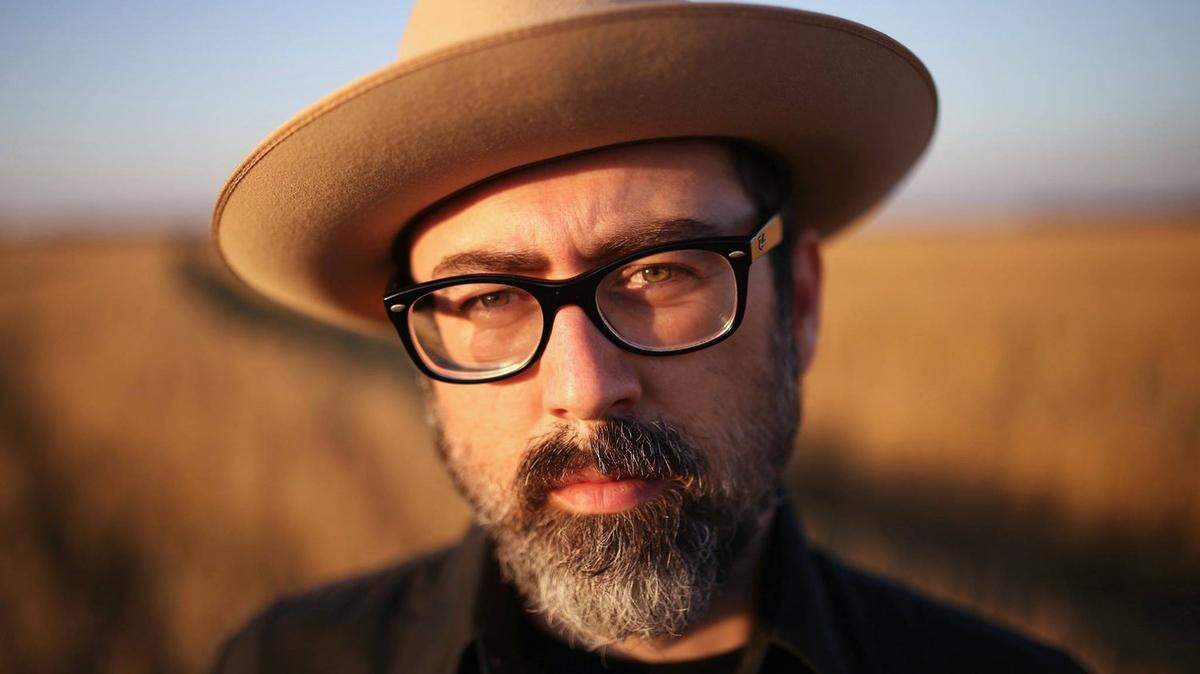
Brett Ratliff knew he was in the running for a fellowship award by the Chicago-based United States Artists – he and a few thousand other entrants, that is.
But that was where expectations ended.
However, in late January, the Johnson County native and long-time Lexingtonian was one of seven artists nationwide to be named a Fellow in Traditional Arts. In the big picture, he was one 63 artists honored from areas of art, music, writing and more. The fellowship comes with a $50,000 unrestricted award.
“I still can’t get my head around that,” Ratliff said. “It’s a tremendous honor. There are other people I respect a great deal who I think deserve this and haven’t received it. So to me, that says this is highly competitive. Nominations were anonymous, so somebody somewhere gave me this chance.”
That somebody didn’t have to look far to discover the multiple roads Ratliff has traveled over the last two decades to keep the musical traditions of his Eastern Kentucky heritage alive and visible.
It could have been through his own musicianship – namely, recordings and performances that ignited the region’s rich string music traditions through old-time tunes and Ratliff’s natural folk affinity for the banjo. It could have been through the airwaves – specifically, his ongoing work as program director for WMMT-FM in Whitesburg, a station that helped further his own musical education as a youth growing up in Van Lear.
Then there is his work with the Whitesburg-based Appalshop and its record label offshoot June Appal that has chronicled traditional music by scores of Kentucky folk artists, including Ratliff himself.
Those are just the dominate three avenues. Ratliff may be a newly crowned Fellow in Traditional Arts, but he is a life-long participant who continually changes hats of responsibility to uphold the culture he is preserving. On the afternoon of our interview last weekend, in fact, he was dealing with streaming difficulties at WMMT.
“What is my work day like? I’ve not been asked that. It’s pretty busy. I’m sort of entangled in all my various projects. I need to monitor WMMT 24/7. Many of the programmers are still in quarantine from the pandemic down in Whitesburg and in the surrounding area. We are starting to transition some of them back, but it’s a slow process,” he said.
“I bounce between that and talking to June Appal artists about whatever our projects are and how to promote them. We’re really trying to put some energy back into the label. And, oh yeah, I practice every day.”
That Ratliff came to music in a community like Van Lear – a birthplace he shares with Kentucky country matriarch Loretta Lynn – may not seem surprising. He grew up singing in church, but never thought seriously about pursuing music professionally until a rummage through the basement of his parents’ home led to the discovery of a battered Gibson guitar. Once the instrument was repaired and some reasonable command of its instrumental possibilities achieved, another set of questions loomed – where to play it and for whom.
“One of the places where music was being played and where there was also a casual setting for the music was the Rec Center - the recreation center in Paintsville at the time. Every Friday night, they had a Hometown Jamboree. It was a bluegrass show where folks would come to dance. The performance was out front. Then there was a smoke filled back room where old-timers were just jamming. People would come from Floyd and Pike Counties, some of the old-time players. I heard a lot of fiddle tunes in that room. I learned my chords in the room just below the haze of cigarette smoke. There were a lot of jokes and carrying on, a little bit of moonshine here and there. It was just my introduction into that whole scene. As soon as we had two or three of us together to form a band, those folks had us out front playing for the dancers. We barely knew three chords, but they put us out there. It was important to them to have young people interested in what they were doing.”
But embracing the culture of Eastern Kentucky also presented Ratliff with an ultimatum. The region’s musical traditions were vast, but so was its history of poverty and a score card of what he termed “statistics.” In short, keeping the tradition – and, to a degree, himself – alive meant leaving home.
“I grew up in Van Lear, which everybody has a lot of romantic ideas about,” Ratliff said. “But it was a very impoverished and very hard place to grow up. I came up through a lot of trauma as well as some addiction problems at one point. But music helped me through a lot of that. It just kept giving me direction and a place to go. These institutions that exist, like Appalshop, have kept this stuff in the air and have kept people connected to one another and to that past. It was critical for those things to exist as places for me to go to. They gave me that sense of place, a connection to place that before was so disconnected.
“We don’t grow up in Johnson County learning very much about our area by way of our formal education. We have a culture of migration that the bust of the coal economy over the decades has created. There are unstable situations there in so many environmental and economic ways. So people leave. I grew up as one of those who believed to get an education, to get a job to do all the things I wanted, you had to leave. I left, but I didn’t go far. I made it to Lexington, but it was to break myself out of things that had become habitual about East Kentucky.”
Leaving Eastern Kentucky in no way dampened Ratliff’s respect for its culture. In fact, he chose to title his newest recording for June Appal after the city that serves as the label’s home – “Whitesburg KY.” Unlike previous albums that drew on ensemble work with string bands, “Whitesburg KY” is a largely solo work with Ratliff and his wiry banjo work as the dominate voices. Cut with veteran studio pro Duane Lundy at the studios of The Lexington Recording Company, the record is surrounded by a sparseness that gives the music an immediate, live sound.
“This was my quarantine project. It had been a minute since I had been able to get back to doing some solo banjo work and forming more intimate relations with the music. I had spent so much time in quarantine playing, exploring tunes and just continuing to practice. I named it ‘Whitesburg’ because of the influence of that town on my work and the direction that my life took growing up in East Kentucky. It was also just to sort of honor the place.”
The immediate future is uncharted for Ratliff. An annual, weekend-long folk celebration he spearheads called The Lexington Gathering, was to have taken place this month, but had to be canceled over uncertainty surrounding the Omicron chapter of the ongoing COVID-19 pandemic. While no future tours are set, festival and residency dates in Brooklyn and Mexico are slated for later in the year.
Until then, the newly titled Fellow in Traditional Arts will keep jugging hats as he further spreads the word and music of the culture he so devoutly champions.
“I played a lot through the years in places like Al’s Bar and The Green Lantern. They were great because those shows would always make a small crowd feel good — just the sense of intimacy and the community. This isn’t music that’s meant to be up on a stage. It’s meant to be down on the floor with the people.”
“That was always the main thing — making sure we weren’t trying to put ourselves out front as much as building a network, an infrastructure to do this kind of work, the kind of music that I have certainly pursued throughout my career.”
This story was originally published February 28, 2022 at 4:44 PM.