
One song changed everything for Elton John. You can hear it live in Rupp one last time.
What is the greatest piano intro you can think of to a pop song? Not one that necessarily reflected any level of performance virtuosity, but a riff, roll or phrase that was an essential part of a composition and instantly established a mood.
Many come to mind. The slow, contemplate lead-in to John Lennon’s “Imagine.” The darker, percussive roll that became the heartbeat of Carole King’s “It’s Too Late.” The graceful, poetic parlor stroll that establishes the Eagles’ “Desperado.”
Well, here is my choice – the simple, eloquent and profoundly touching intro to Elton John’s “Your Song.” It’s a sublime statement – a lyrical turn that set up the song’s almost elegiac naivete. More to the point, it’s the kind complete romantic sentiment that the hero within Bernie Taupin’s lyrics stumbles to articulate. Over a half century later, the entire song remains a masterwork, a cornerstone creation in a career that has abounded with hits and creative triumphs.
This weekend, with John making his final appearance at Rupp Arena as part of a COVID-delayed farewell tour, the significance of “Your Song” is underscored dramatically.
The Rupp show is part of a closing chapter in the performance career of a true vanguard song stylist. “Your Song,” however, was where everything began. Before the spectacle, before Broadway and before the biopic, it was the single that awoke the world to one of the most influential pop figures since The Beatles.
Technically, 1969’s “Empty Sky” was John’s first album. An appealing but tentative work, the record wouldn’t be released in the United States until 1975. It was instead the singer’s self-titled second album that lit the fuse. Released in the spring of 1970, it brought together the team that would establish and then fortify John’s music during its glory years: a prolific lyricist (Taupin), a creative but commercially savvy producer (Gus Dudgeon) and a cinematic minded orchestral arranger (Paul Buckmaster.)
The record was slow to ignite until “Your Song” was released as a single that October. By then, the remaining members to John’s champion team were in place – bandmembers Dee Murray on bass and Nigel Olsson on drums. It was with their drive that John created a performance persona entirely different from the one revealed on studio recordings. Onstage, John was a modern day Jerry Lee Lewis with a physical extravagance that mirrored a scholarly fondness for rock ‘n’ roll. Such bravado opened the door to the kind of theatrical spectacle that marked his mid ’70s concert reign.
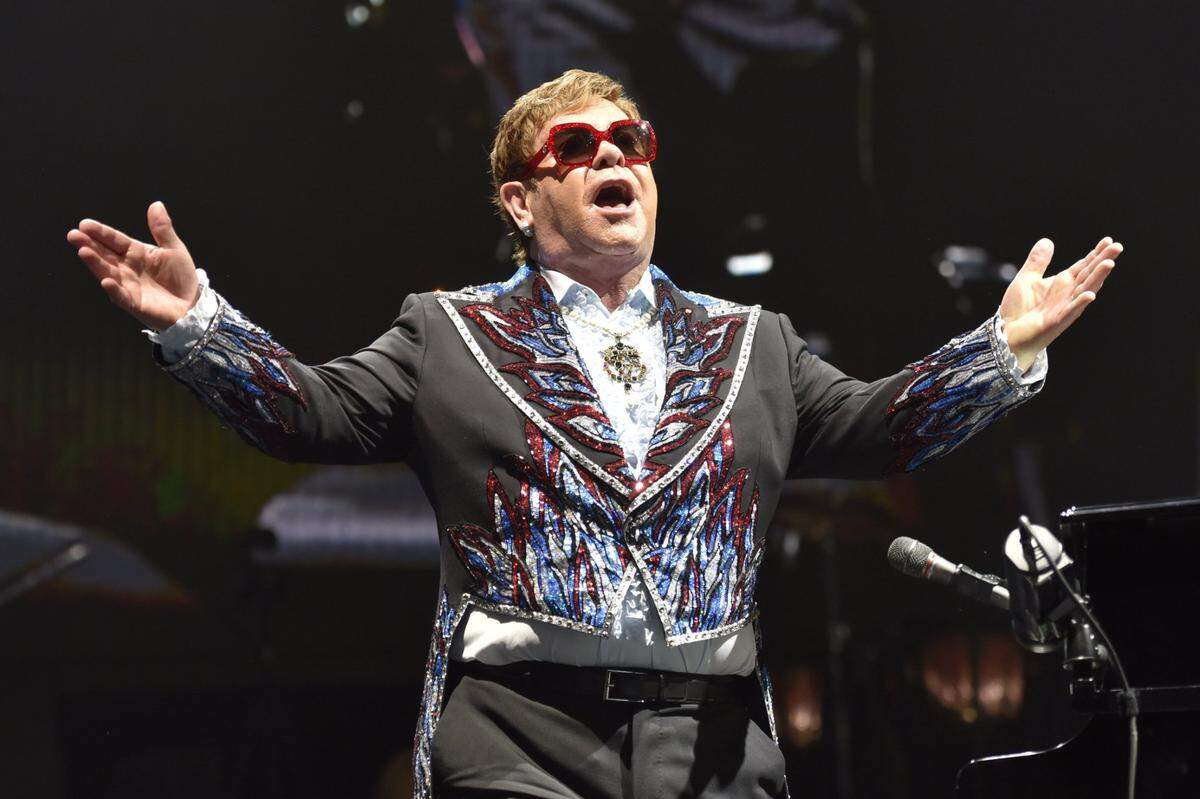
The early magic of the John/Murray/Olsson trio was captured on “11/17/70,” an album pulled from a November 1970 radio concert. Released as a six-song record in April 1971, a time when three other John albums were running up and down the charts, “11/17/70” reveals a wonderfully unvarnished glimpse into the performance savvy of a then 23-year-old John.
Several of these co-horts – Dudgeon, Buckmaster and Murray, in particular – are now gone. Taupin remains John’s songwriting partner and, as audiences will see this weekend at Rupp, Olsson, at age 73, is still in the drum chair. Similarly, Davey Johnstone, John’s guitarist since the early ’70s, remains on board.
The team assembled around John during the first half of the 1970s would prove to be as solid, resourceful and prolific as any in pop music history. Everything pop audiences know and admire about John stem from the studio albums his team assembled during that era: 1970’s “Elton John,” 1971’s “Tumbleweed Connection” and “Madman Across the Water,” 1972’s “Honky Chateau,” 1973’s “Don’t Shoot Me (I’m Only the Piano Player)” and “Goodbye Yellow Brick Road,’ 1974’s “Caribou” and 1975’s “Captain Fantastic and the Brown Dirt Cowboy” and “Rock of the Westies.”
It’s a tremendous catalog – nine studio albums, along with the live “11/17/70,” released in just over five years.
All kinds of career triumphs would follow, including a Tony winning stage/score adaptation (with lyricist Tim Rice) of “The Lion King” in 1997; a version of the hit “Candle in the Wind” (with lyricist Taupin) from the same year retooled as a eulogy to Diana, Princess of Wales; a 2010 collaborative album with Leon Russell titled “The Union” that revitalized the career of the veteran Okie rock pioneer; and the 2018 film biopic “Rocketman” that won John and Taupin an Oscar (for a then-new song, “I’m Gonna Love Me Again.”)
There was also global visibility gained through massive philanthropic ventures, including work with the non-profit Elton John AIDS Foundation, along with a sense of artistic alliance that has led to recordings and/or concert collaborations with such disparate artists as John Lennon, Tammy Wynette, RuPaul, Little Richard, Luciano Pavarotti, Leonard Cohen and, on the 2021 single “Cold Heart” (a Pnau-produced disco mash-up of four earlier John songs), Dua Lupa.
But the albums cut between 1970 and 1975 continue to define John’s lasting stardom. All but four songs from recent concerts on his “Farewell Yellow Brick Road” tour have focused on works from those years. John further reinforced the hearty shelf life of that music by dedicating a performance of his 1974 “Don’t Let the Sun Go Down on Me” at a Des Moines concert two weekends ago to Foo Fighters drummer Taylor Hawkins, who died the day prior.
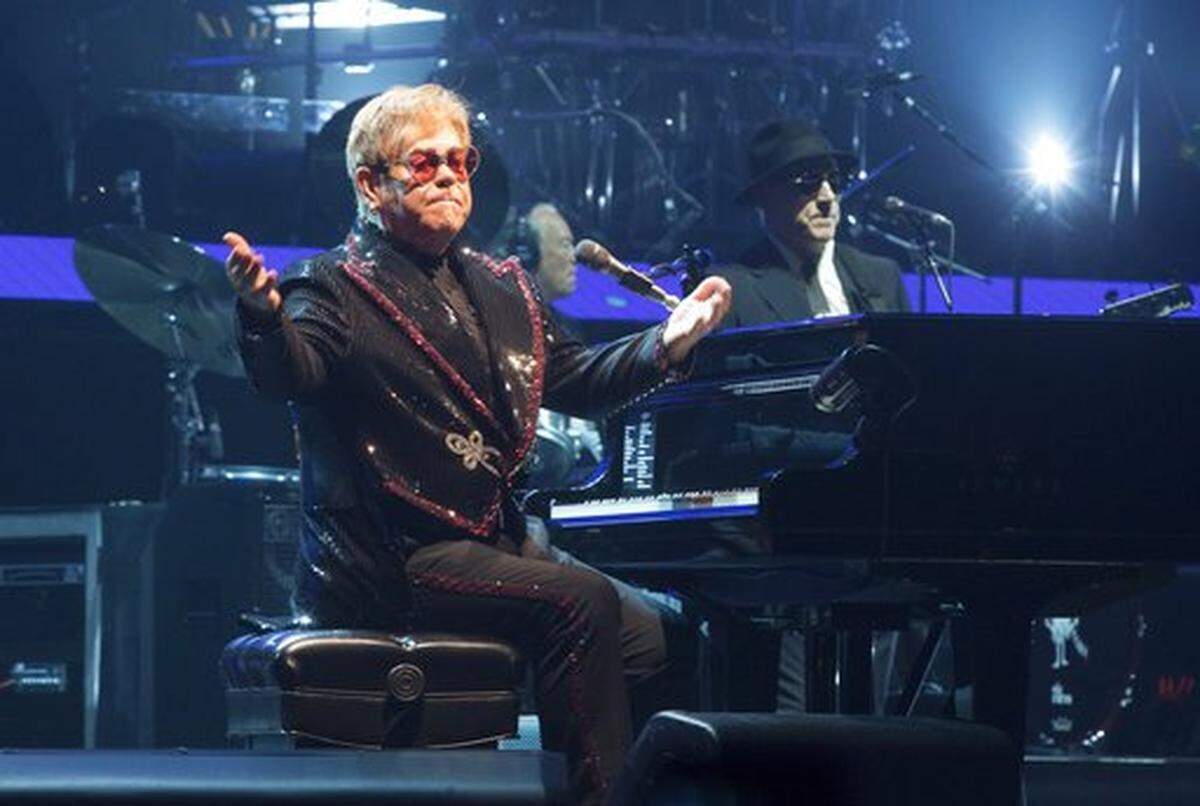
His best work? That will vary, obviously, from fan to fan. My choice goes to “Madman Across the Water.” Released in late 1971, it was a modestly dark and melancholy work that charted far better in the United States than in John’s native England. “Madman” made, perhaps more than any other album by the singer, optimal use of Buckmaster’s string arrangements. The album produced no major hits. While its leadoff tune, the elegiac “Tiny Dancer,” never rose above No. 42 on the Billboard charts upon its release in February 1972, it has since become revered by audiences. As of 2018, the song has sold over three million copies domestically.
“Sometimes, you just have to step up to the plate, even if the plate is miles outside your comfort zone,” John wrote in his 2019 autobiography “Me.” “It’s like going deep inside yourself, forgetting about whatever emotions you may have and thinking: No, I’m a performer. This is what I do. Get on with it.”
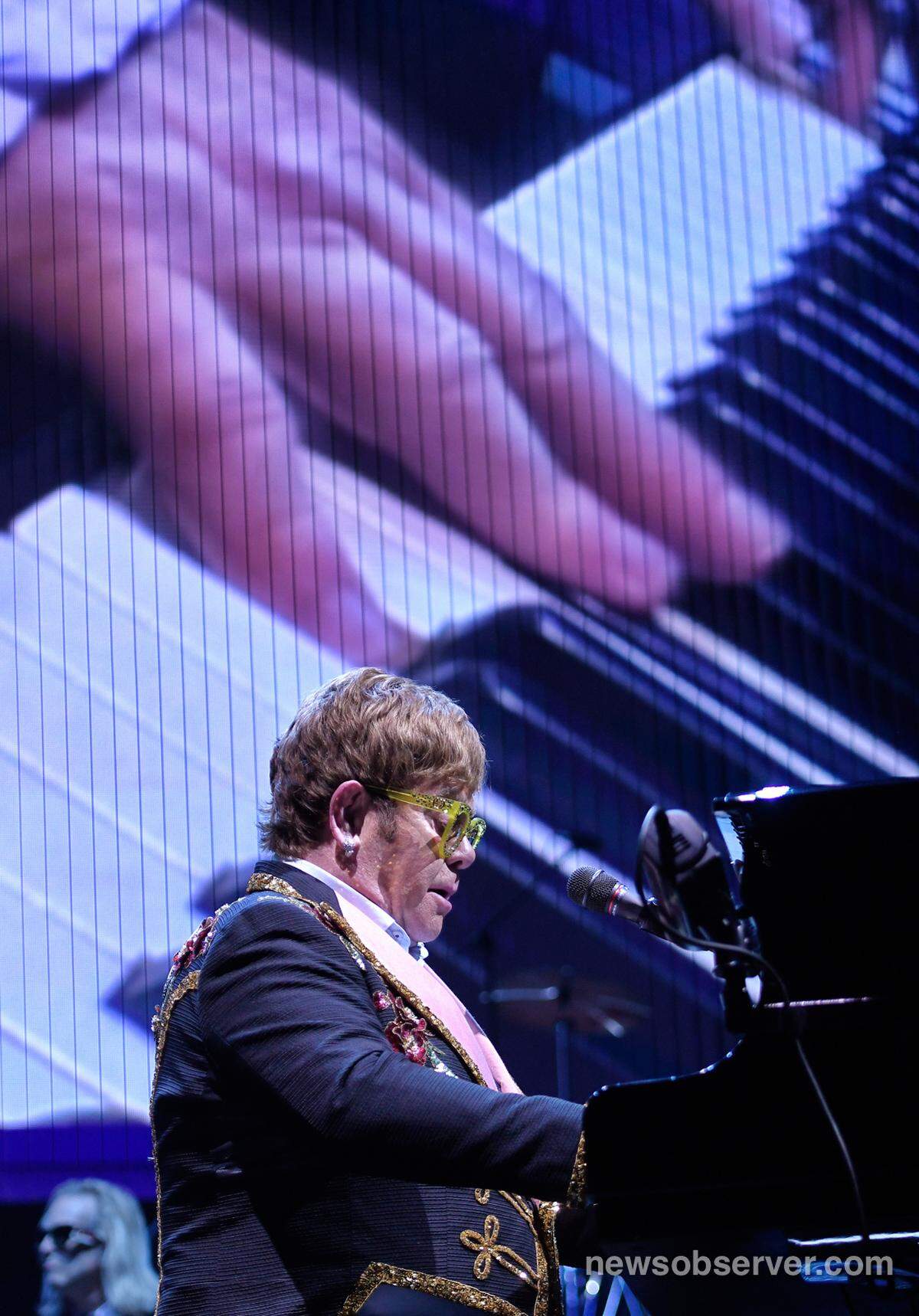
Elton John
When: April 9, 8 p.m.
Where: Rupp Arena, 430 W. Vine.
Tickets: Remaining seats are $159-$447. For tickets, go to ticketmaster.com.
This story was originally published April 5, 2022 at 6:00 AM.