
Sturgill Simpson returns to Rupp Arena with a new name but a familiar sound
When last we left Breathitt County-born Sturgill Simpson, his persona was, by his own hand, getting decommissioned. The artist who had spent the previous decade derailing country music convention, slipping into anime-inspired synth-rock and cutting two albums of bluegrass, was changing his name.
Goodbye, John Sturgill Simpson, the guy who cut his teeth in Lexington clubs with the locally rooted Americana troupe Sunday Valley but was last seen rocking out as a solo career headliner at Rupp Arena less than a month before COVID-19 shut down the concert industry in 2020.
Hello, Johnny Blue Skies. He’s heading to Rupp Arena this weekend.
The name game left more than a few fans scratching their noggins and, in all likelihood, sent record executives and concert promoters into panic mode.
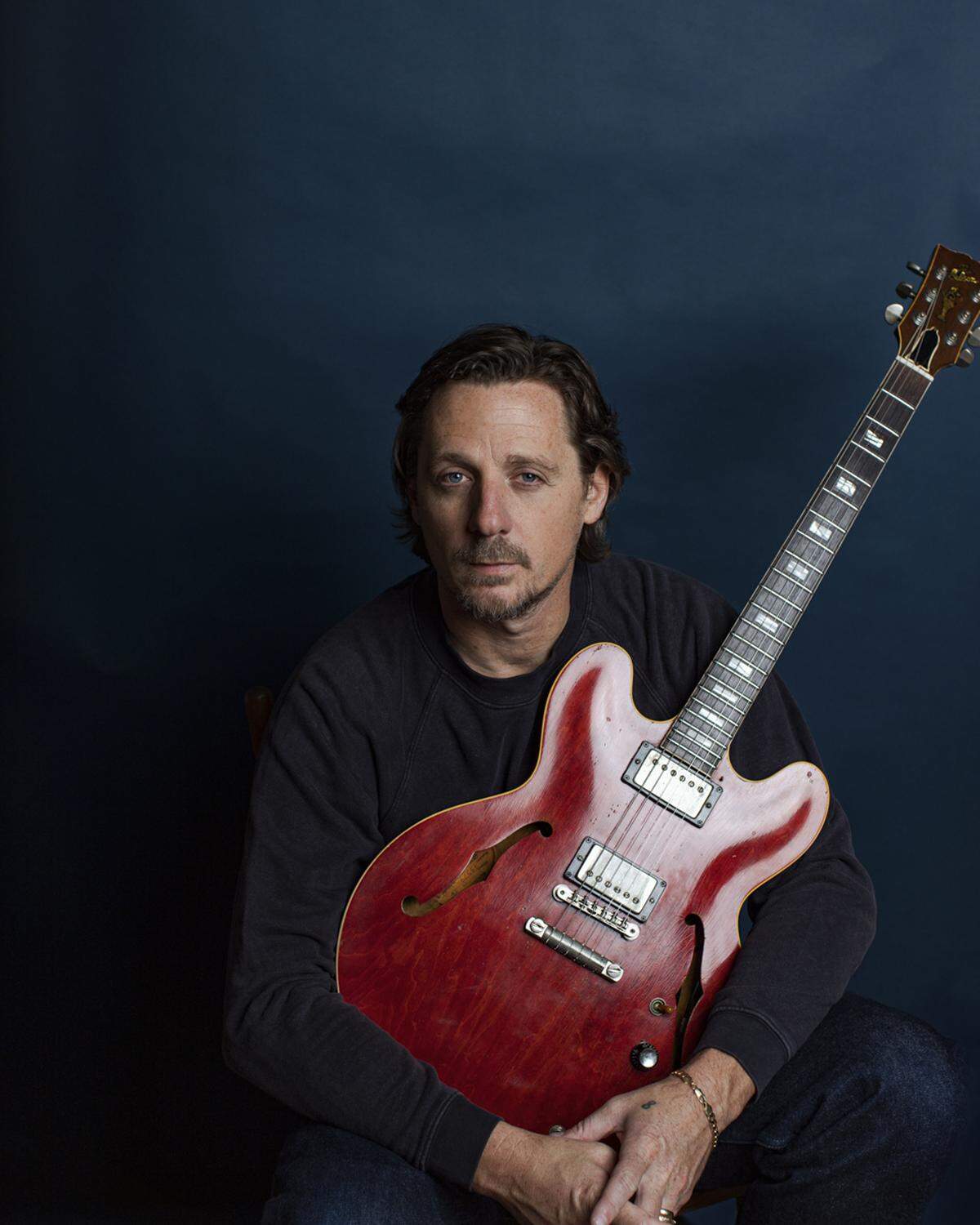
To the former, the switch was mostly a curiosity, especially since the first album under the Johnny Blue Skies moniker, the July-released “Passage du Desir,” sounded more like a Sturgill Simpson album than some recent Simpson records. Those in the industry, though, probably had bigger and more literal investments to consider. After all, how do you market an artist known by one name but who now insists on going by another? It’s been done, of course. Consider all the identities Prince shed, only to return to his original name during the latter stages of his career.
.jpg "unnamed (18).jpg")
Certainly, artists have employed aliases for a number of reasons. Some help circumnavigate legal issues. Others are designed to professionally distance themselves from varying aspects of their own artistic work. But the Simpson-to-Blue Skies switch-up is no alias. In the few interviews given recently, he has reflected on the intensity, injury and reaffirmation of his career over the past four years and how it all led to something and someone new.
Last time Simpson played Lexington
In March 2020 — as mentioned, mere weeks before COVID hit — Simpson was in the early stages of a lengthy tour assisted by fellow Kentucky country-and-more strategist Tyler Childers in one his final engagements as an opening act. When the pandemic hit, three months’ worth of concert dates had to be scrapped, including a final week that would have included shows at Madison Square Garden and Nashville’s Bridgestone Arena before concluding with a home state return by way of a performance at Louisville’s KFC Yum! Center.
The unplanned road show closure eventually bore fruit, however. During the down time, Simpson released two albums of bluegrass tunes, many of which were string music revisions of his own compositions, and an Appalachian-flavored concept album of new songs, “The Ballad of Dood and Juanita.” But 2021 tour plans again collapsed. This time, a vocal cord hemorrhage forced Simpson to miss the last month of a late summer run as part of Willie Nelson’s Outlaw Music Festival along with a subsequent trek of his own that included three mid-November shows at Nashville’s famed Ryman Auditorium.
His latest album evokes previous work
So how did the skies turn blue after several dark and debilitating years? A July interview story in GQ magazine revealed restorative travels that took Simpson to Thailand and eventually to France, where much of “Passage du Desir” was written. The resulting record was a collection of love songs with a hybrid sound that blended country and vintage soul. Such a combo, if one were to search out a corresponding stylistic slot in Simpson’s career, would have fit naturally between his second and third albums, 2014’s “Metamodern Sounds in Country Music” and 2016’s “A Sailor’s Guide to Earth.”
But this wasn’t 2015. Nearly a decade had elapsed. After reassembling his career following two catastrophic interruptions, Simpson appeared ready to place some distance between himself and the past.

All of his music would come with him. Over half of the 30-plus songs that have been making up the setlists for his current tour, which got underway two weeks ago at the Greek Theatre in Los Angeles, come from the four albums that established his career prior to the pandemic. What Simpson left behind was his name and much of the self-perceived persona it was attached to.
Where did Johnny Blue Skies come from?
Thus “Passage du Desir” is credited not to Simpson but to Johnny Blue Skies. The sound, one that underscores the longing and coarse desperation of vintage country but with a groove more common to early R&B, is familiar. It’s certainly more expected than the sharp turn into the synth-saturated rock ‘n’ roll that represented a far more drastic career reinvention on the 2019 album “Sound & Fury.” But the name change? That was seemingly a declaration of at least some separation from the artist that fashioned that music.
“Sturgill served his purpose,” Simpson told GQ’s Colin Groundwater this summer, “but he’s dead, he’s gone, and I’m definitely not that guy anymore.”
Curiously, the Johnny Blue Skies moniker isn’t a new creation. There are references to the name in the album notes to “A Sailor’s Guide to Earth” and “Sound & Fury.” But the actual Blue Skies identity apparently predates those records and lands the artist back in his one-time stomping grounds of Lexington.
From the GQ interview: “When I was about 21 years old, there used to be this bar in Lexington, Kentucky with this bartender named Dave who was like Silent Bob and Charles Bukowski, literally in the long trench coat, and he could do way more Zippo tricks than anybody should know (the name of the bar was not given.) When I started performing and getting my confidence at open mics and stuff, he’d come to this other bar and see me because it was his night off. And he every time I’d walk into his bar, he’d say, ‘Johnny Blue Skies.’ So I just started using it.”
Simpson’s acting credits
Not to heighten the identity crisis, but there is yet another name Simpson has been going by during one his more intriguing off-stage but on-screen adventures of late. On a 2023 episode of the HBO series “The Righteous Gemstones,” he portrayed Brother Marshall, a member of an Armageddon-minded militia who leads a makeshift choir in a spiritually minded cover of the very materialistically themed 1979 Larry Gatlin country hit “All the Gold in California.”
It’s the latest in a series of uneasy character portrayals that include a featured role as a murderous bootlegger in Martin Scorsese’s “Killers of the Flower Moon” (a film that also featured an acting performance by another recent Rupp headliner, Jason Isbell) and as one of the many celebrity zombies that inhabit Jim Jarmusch’s “The Dead Don’t Die” (which Simpson also recorded the theme song for.)
But only two of the artist’s names will on display at this weekend’s Rupp return concert. The show is being billed as “An Evening with Sturgill Simpson Featuring Very Special Guest Johnny Blue Skies.” It’s just an assumption, but one senses the duality of such a billing may have been at the insistence of concert promoters that were not thrilled by the fact the artist they were forking out advance money for was changing his name to something less marquee-flattering.
So what’s in a name anyway? In Simpson’s case, the answer might be found in the opening verse of a song that sits smack in the middle of “Passage du Desir.” It’s titled, quite tellingly, “Who I Am.”
“I’ve lost friends and I’ve lost heroes; I lost everything I am, even my name,” he sings in a hushed, almost serene tone of country reflection that sits in contrast to the tune’s restless narrative. “Been going through changes and finding clarity and comfort in just knowing nothing ever stays the same.”
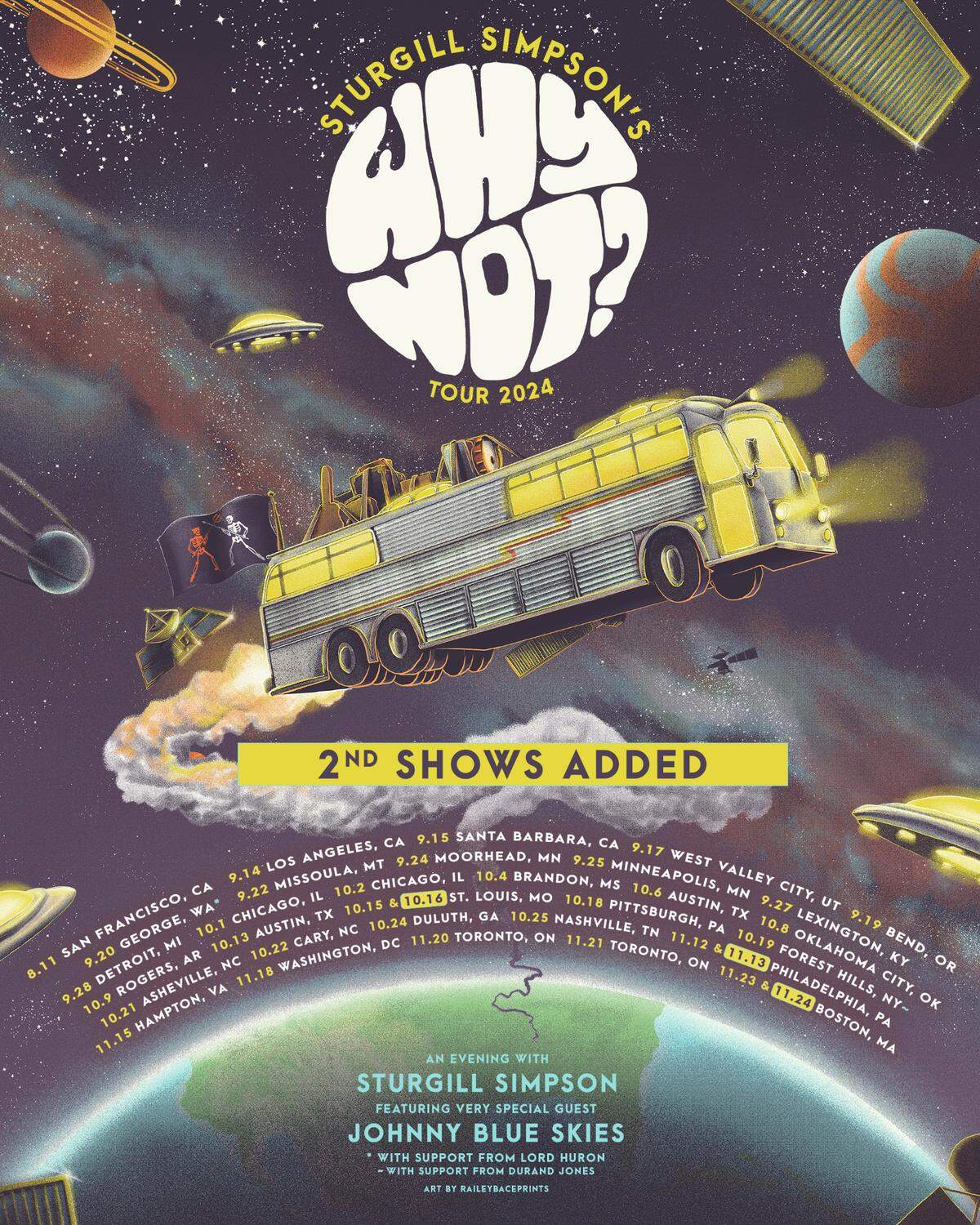
An Evening with Sturgill Simpson Featuring Very Special Guest Johnny Blue Skies
When: Sept. 27, 8 p.m.
Where: Rupp Arena, 430 W. Vine
Tickets: $59.50-$129.50
Online: ticketmaster.com