
Blind Boys of Alabama returning for Lexington concert: ‘People just love good singing’
When an ensemble’s artistic history reaches out over eight decades, it’s understandable — make that inevitable — that time will intrude, causing even its most devout and audience-friendly members to bow out.
For the multiple Grammy-winning Blind Boys of Alabama, whose beginnings trace back to 1939, many a celebrated participant has stirred the soul, praised the Lord and, reluctantly after an extended tenure, called it a day.
When the group presented its first Lexington concert following the stage retirement of founding member Clarence Fountain in 2007, singer Jimmy Carter, long one of the Blind Boys’ most buoyant and spirited stage performers, was given the helm for the group’s future.
“Clarence is gone,” he said at the time. “But the Blind Boys are still here.”
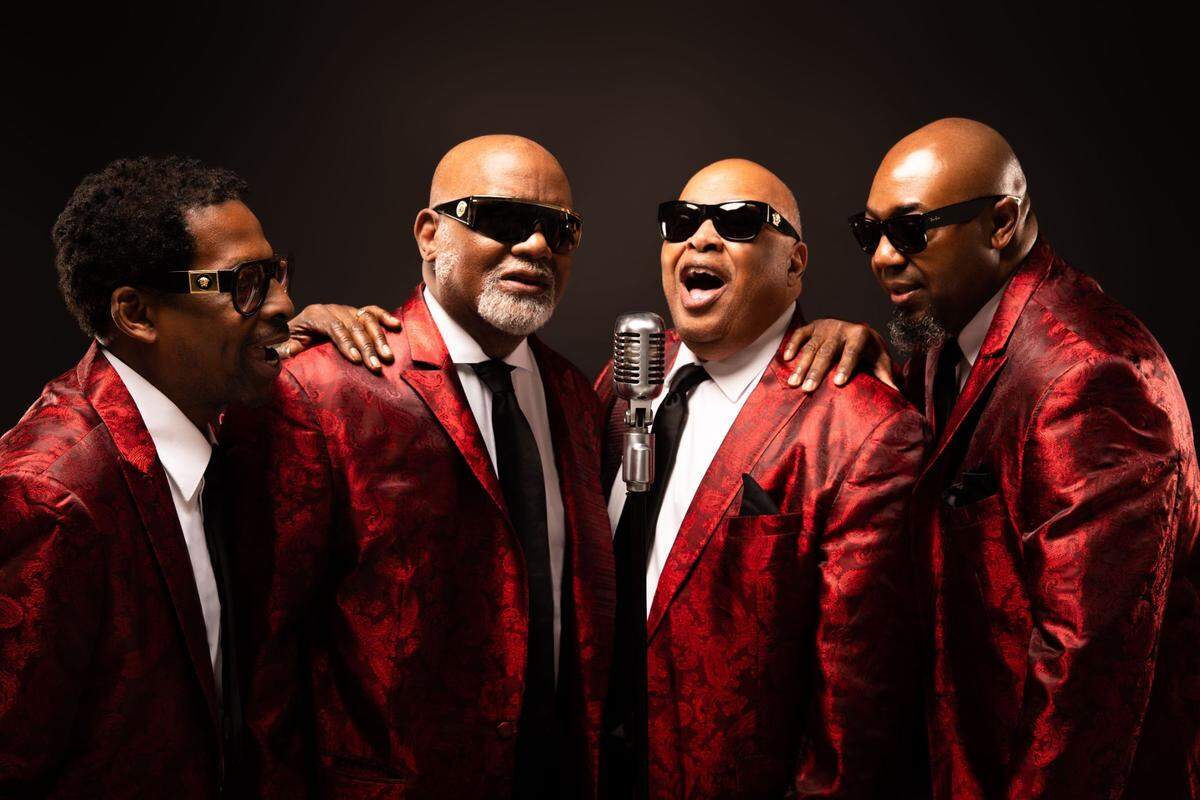
Flash forward to today as the Blind Boys prepare for a return concert on Dec. 3 at the Kentucky Theatre. The seemingly inexhaustible Carter has, at the age of 92, retired from the road. Front and center now is Ricky McKinnie, who has spent the last 35 years as a Blind Boy. His tenure has taken him from playing drums with the group to duties as road manager and, eventually, business manager to his role today as one of the group’s primary singers as well as its leader.
And as the man now in charge, he wants audiences to know one thing upfront: Clarence Fountain may be absent (following retirement, he died in 2018) and Jimmy Carter may be through with the road, but the Blind Boys of Alabama are still very much alive. They remain one of gospel’s most enduring and, curiously, secularly popular groups.
“You might miss somebody by name. I guess people do miss Jimmy and they miss Clarence, but when we get through singing and doing what we do, it’s going to be awesome,” McKinnie said.
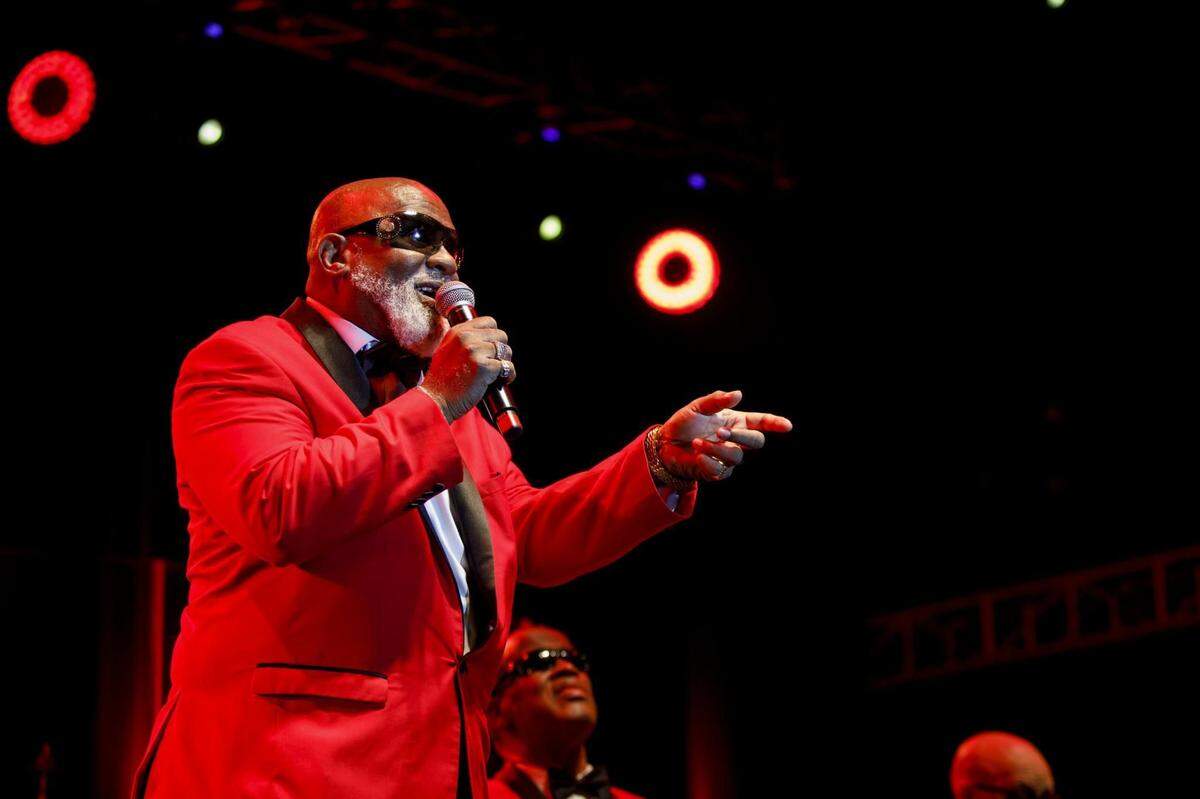
“Joey (Williams, the Blind Boys’ longtime guitarist/co-vocalist and current music director) used to say to me, ‘Are you going to mention to the audience that Jimmy’s not here? I said, ‘No, I’m not going to mention that. People are not coming to see one person. People are coming to hear the Blind Boys of Alabama.’ And, hey, we are the Blind Boys of Alabama.”
The Blind Boys began as a chorus at Talladega’s then-named Alabama Institute for the Negro Deaf and Blind before blooming into a professional career that gathered momentum during the 1940s as The Happy Land Jubilee Singers. Gospel inspirations were ripe throughout the state at the time, especially 50 miles west of Talladega in Birmingham. But the group that eventually became the Blind Boys soon toured outside the South and, in short order, the country, establishing a gospel singing sound that was resilient enough to resist the growing popularity of blues, soul and pop.
As for the relationship between gospel and the blues, McKinnie said the boundaries often blur.
“You have to remember the blues and gospel go hand-in-hand. You simply have to change a few words here and there to separate them in a song. Take ‘baby’ out and put ‘Jesus’ in.”
The group’s fortunes shifted dramatically with its 2001 album “Spirit of the Century.” While the gospel fervency remained solid, the artistic source material reached out to spiritually inclined music from secular artists. Alongside traditional gospel tunes were songs by The Rolling Stones, Tom Waits and Ben Harper with instrumental help from such blues and non-gospel roots music die-hards as John Hammond, Charlie Musselwhite and David Lindley.
The album won the Blind Boys their first Grammy. From there, attention from the pop and rock worlds exploded. The group toured with Peter Gabriel and cut songs by the likes of Stevie Wonder, George Clinton and Prince. What they offered wasn’t crossover music. It remained devoted to the Southern gospel traditions the group had long remained loyal to. The Blind Boys didn’t go to the celebrities; the celebrities came to them.
A gospel-driven Christmas album, 2003’s “Go Tell It on the Mountain” (one of two holiday recordings the Blind Boys will lean on for its seasonally themed performance at the Kentucky this week) featured all-star support from Mavis Staples, Aaron Neville, Chrissie Hynde and the late Lexington jazz pioneer Les McCann. It earned Grammy No. 3.
The Blind Boys’ newest recording, “Echoes of the South,” brought the group its sixth and most recent Grammy as recently as February.
“When you create a style of singing as you come into the group, you want to keep things as close to the sound that it was as you can,” McKinnie said. “That’s what the people want to hear. People want to hear good singing. We’ve had opportunities to go to places where people have accepted us real well. In my experience, people just love good singing, and we like being there when the people enjoy it.”
These days, the Blind Boys aren’t exclusively tied to Alabama. McKinnie hails from Atlanta while the group’s newest members, Sterling Glass and J.W. Smith are from North Carolina and Ohio, respectively. The other half of the group moniker, though, is still very much in evidence. While McKinnie was not born blind or deprived of sight as a child as many of the initial Blind Boys members were, his vision was lost in young adulthood.
“I was traveling on the road with a group called the Gospel Keynotes out of Texas,” he recalled. “We were in Fort Wayne, Indiana. I remember that day like it was yesterday. All of sudden it seemed like my eyesight began to fail. I asked one of the guys to walk me to my room. That’s when I lost my sight. I was 23 years old. It was from glaucoma.
“I never really owned up to the fact that I was blind, because I had what they called phantom sight. I had seen for so long that my mind would paint a mental picture of things. Like, if I put my hand on a mixing board or if I was playing my drums, I could visualize that in my mind. I was going to the optometrists and they would say, ‘Ricky, really, you’re blind, but you have phantom sight.’ I didn’t really accept the fact that I was blind at first.”
How did losing his sight effect McKinnie’s relationship with music? Well, for starters, it didn’t sharpen the other senses, as so many adages have attested to through the years.
“I’ve heard people say that, but for me, everything was the same. I’ve heard people say that if you lose one sense, it enhances another. Well, being without sight, automatically, you have to use your ears to maneuver because you use your ears as your eyes, so they kind of work together. Besides, just because you can’t see don’t mean you can sing.
“I remember my aunt coming up to me one day and saying, ‘Ricky, you’re not blind. You just can’t see.’ And that stuck with me. So I’m not blind. I just can’t see. I might have lost my sight, but I never lost my direction.”
The Blind Boys of Alabama
When: Dec. 3, 7:30 p.m.
Where: Kentucky Theatre, 214 E. Main
Tickets: $45.50-$55.50 through kentuckytheatre.org/troubadour