
Bluegrass star Billy Strings returns to Rupp for back-to-back shows
AI-generated summary reviewed by our newsroom.
- Billy Strings returns to Rupp Arena June 20-21 for two sold-out shows.
- Strings blends traditional bluegrass with rock and jam band influences live.
- Young fans embrace bluegrass roots through Strings’ genre-spanning sets.
If examples of how Billy Strings unassumingly cemented himself as figurehead for a new bluegrass music generation could have been whittled down to just one instance at his sold-out two-night engagement at Rupp Arena a scant 14 months ago, it would have centered around when he sang about his uncle — namely, his Uncle Pen.
“Uncle Pen,” as any bluegrass enthusiast will tell you, is one of the signature tunes of bluegrass patriarch Bill Monroe. One of the genre’s most recognizable works, it’s also a trial-by-fire for any takers of the trade, a test of the two core elements that make the music work — soul and speed. Soul without speed means little most of the time. Speed without soul means nothing all of the time. Both have to be enacted simultaneously.
That the then-31-year-old Strings made mastering those traits look ridiculously easy was practically a given. In fact, the performance — the first of his two April 2024 concerts at Rupp — went far deeper into the bluegrass well than a single Monroe classic. Aside from his own sterling tunes, Strings took on works by such elder inspirations as the Stanley Brothers, the Delmore Brothers, Jimmy Martin (by way of a stunning, show-closing “Sophronie”), Doc Watson, Larry Sparks and Jerry Reed. Oh, and given the location, Strings further enforced his bluegrass cred by bolstering the show’s first set with two additional Monroe gems, “My Rose of Old Kentucky” and “Kentucky Mandolin.” When in Rome, you know.
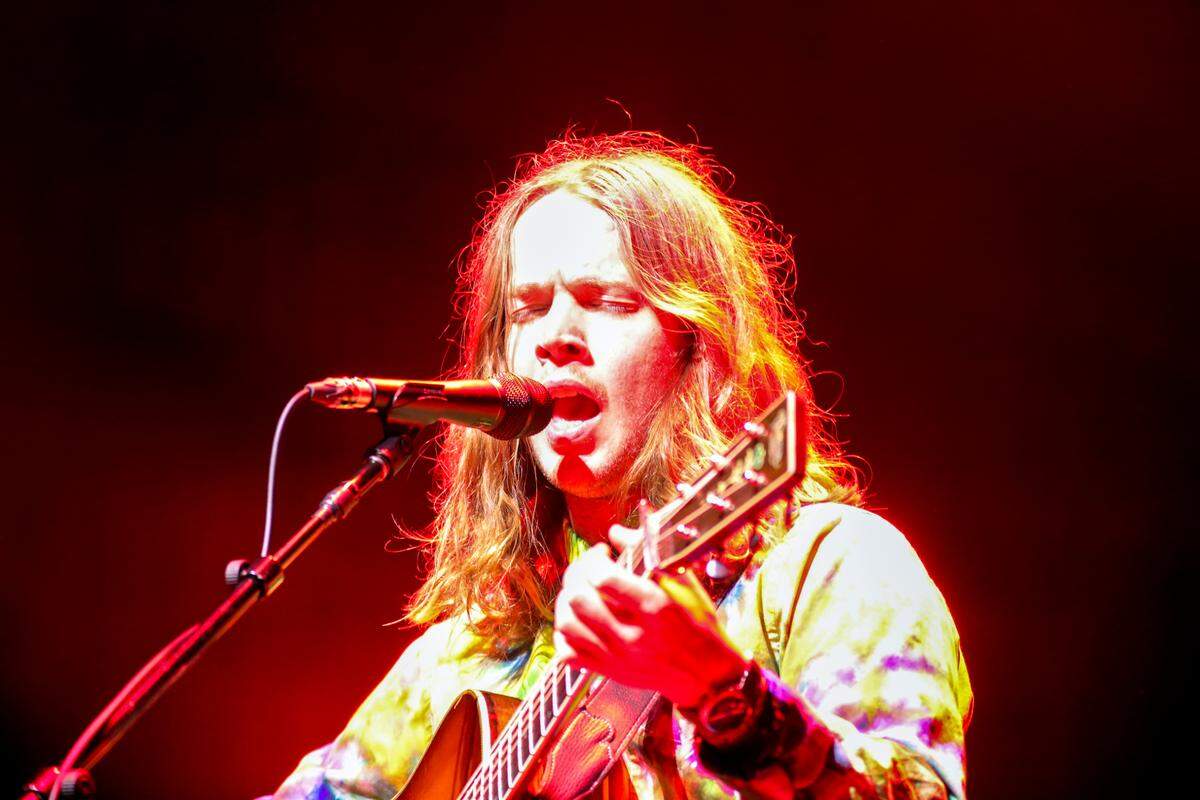
Billy Strings played Lexington’s Railbird
It wasn’t exactly a surprise to the see the capacity crowd at Rupp, where Strings returns for another two-night run this weekend, embracing such a presentation of bluegrass tradition in action. Lexington audiences had been following Strings through his formative years playing clubs like The Burl every few months up through two performances at Railbird — the first during the festival’s inaugural 2019 outing on the Burl’s third stage and the second prefacing headlining mainstage sets by Leon Bridges and My Morning Jacket in 2021.
But taking in the rapturous reception from young audience patrons at Rupp, many of whom who were likely not even born when Monroe died in 1996, was a signal that bluegrass’s cornerstone inspirations were alive enough for a new generation to recognize and honor them. Even Strings took a moment from the stage to acknowledge the ready acceptance of tradition by a new order of enthusiasts.

Still, one of the primary reasons for Strings’ credibility and popularity — aside from his astonishing technical gifts as a guitarist — is that while he is inspired by bluegrass tradition enough to literally sing its praises, he is not shackled to it. For all of the respect his April 2024 Rupp shows gave to past bluegrass chieftains, they also embraced more recent and still active innovators like banjoists Bela Fleck and Danny Barnes. And, yes, there was also a rock ‘n’ roll spirit knocking at the door at times, even though Strings and his band stuck to acoustic instrumentation. Peppered amid the bluegrass nuggets was a jam-hearty take on “Crown of Thorns,” a tune by the Pearl Jam precursor band Mother Love Bone. And, yes, for all its acoustic foundation, Strings showed no hesitation twisting a knob, tapping a pedal and bringing a torrent of electric fire to his acoustic guitar that made him sound less like a bluegrass stalwart and more like a psychedelic bluesman on the order of Mike Bloomfield.
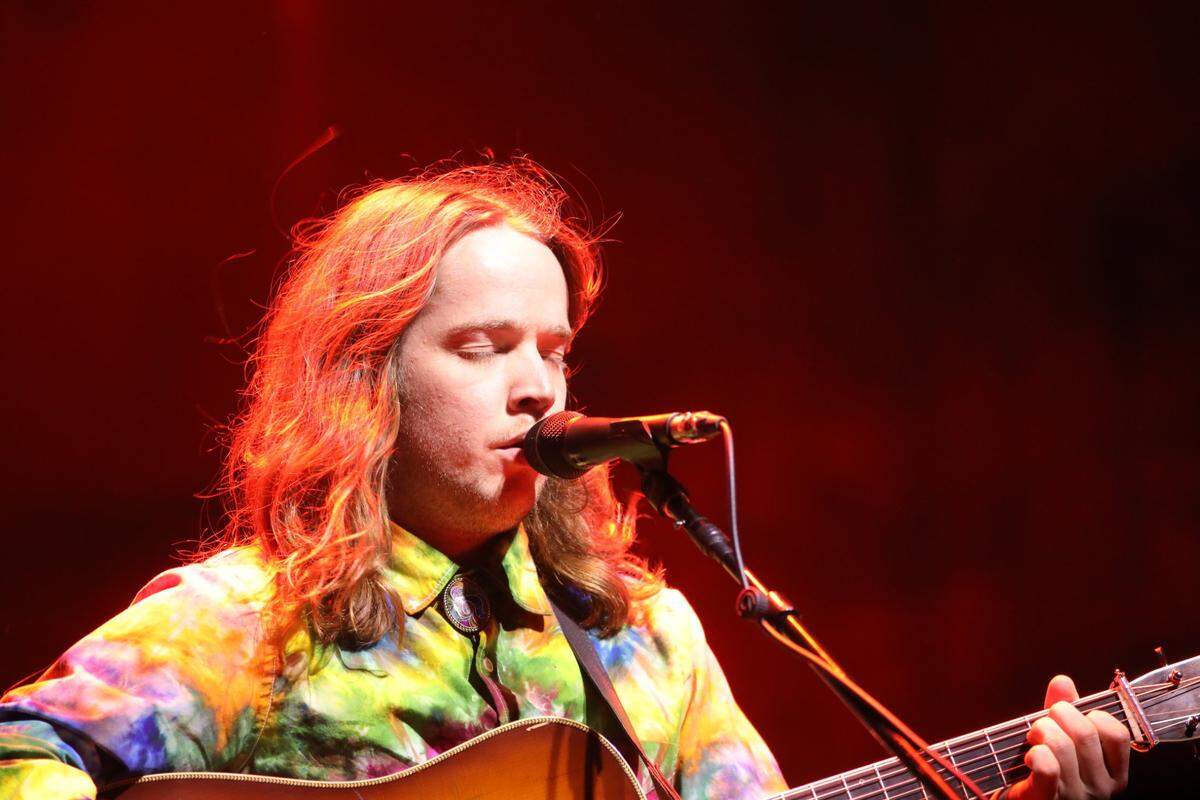
Young artists seeking to modernize — or, least modify — the inner string music workings of bluegrass is nothing new. Still active innovators like Fleck, Jerry Douglas, Sam Bush, Mike Marshall and Darol Anger were doing that decades ago, usually by extending the music’s improvisational heart into jazz territory. Then with the loose, Grateful Dead-inspired advent of a jam band movement that reestablished itself in the late ’90s and early ’00s, legions of ensembles with acoustic bluegrass instrumentation — usually, guitar, mandolin, banjo and bass with fiddle added by bands that could foot the bill for an extra player — distanced themselves modestly (but still respectfully) from folk-inspired tradition in order to champion looser grooves of a more progressive nature. Remember that Grateful Dead guitar guru Jerry Garcia’s roots extended directly from bluegrass before tripping, so to speak, into psychedelia.
Collaborations with other artists including Bob Dylan
Strings is of a different breed. He makes no secret of regularly straying outside bluegrass parameters through his performances and, especially, his collaborations.
At concerts given as recently as two weeks ago, he was mixing bluegrass staples, new original compositions and string music re-wirings of songs by The Moody Blues, Black Sabbath and Led Zeppelin. Back up to May and Strings was jamming onstage with Widespread Panic, Primus and, during the initial leg of the touring Outlaw Music Festival, Bob Dylan. The latter, who tends to shy away from inviting co-billed artists to share the stage with him, had Strings sit-in during a Spokane stop on the tour to help propel a righteously ragged “All Along the Watchtower.”
Even with such contemporary thrill-seeking, Strings’ devotion to — and scholarly command of — bluegrass tradition greatly outdistances the scope of his contemporaries. Two key recordings in his catalog place such inspiration on brilliant display. The first, 2022’s “me/and/dad,” is a collection of traditional tunes revisited by the artist who introduced most of them to Strings, stepfather Terry Barber. An all-star troupe of players that included Jerry Douglas, Mike Cleveland and members of the Del McCoury Band serve as support, but it is the father-and-son flow of the music that makes the record sound effortlessly timeless.
The second teams Strings with a very different bluegrass elder, guitarist Bryan Sutton. On “Live at the Legion” (available now on some digital platforms, but set for vinyl and CD release in August), the two pickers trade licks, songs and clever asides in a concert setting cut not in the kind of arena setting that is now standard fare for Strings, but at an American Legion post in Nashville just a few weeks prior to last year’s Rupp concerts.
Soul, spirit and playfulness abound on the recording before the first note is played. Sutton introduces the set-opening “Nashville Blues” as “a song about Nashville that Billy wrote on the way here while stuck in traffic.” That’s a playful fib, of course. “Nashville Blues” was penned and first recorded by the Delmore Brothers as far back as 1936 and then re-popularized by Doc Watson on his self-titled 1964 debut album. But the remark triggers crowd replies reflective of the intimacy inherent in the performance space as well as the unshakable familial feel that beams from vintage bluegrass.
“I-65,” says one patron, seemingly familiar with the route and its frequent congestion.
“Gonna be a long song,” chimes another, triggering a round of laughter.
Sutton sums up the exchange and the mood without missing a beat. “Yeah, we’re going to get about half way through and just stop.”
Strings and Sutton will return to Kentucky to showcase the album and the traditional luster of its music with concerts Sept. 5 and 6 at the Woodward Theatre of the Bluegrass Music Hall of Fame and Museum in Owensboro. Good luck finding tickets. Like both of Strings’ return shows at Rupp this weekend, they’re sold out.
Billy Strings
When: June 20 & 21 at 7:30 p.m.
Where: Rupp Arena
Tickets: Both performances are sold out
Online: Both performances will be livestreamed on nugs.net.