
UK concert Violins of Hope connects student musicians to Holocaust history
AI-generated summary reviewed by our newsroom.
- About 70 Violins of Hope instruments are brought to UK students.
- Students perform Mahler; UK Symphony members join school visits linking music to history.
- Exhibit, film and lectures preserve owners' Holocaust stories through sound.
Imagine for a moment that, during one of the darkest eras of history, the very thing that sustained you artistically and perhaps spiritually was also what dictated whether you lived or died.
In essence, this is what Violins of Hope is about. It is a collection of violins, violas and cellos that belonged to Jews before and during World War II — instruments either abandoned by Jews as they were forced into concentration camps or carried by the prisoners themselves into the camps.
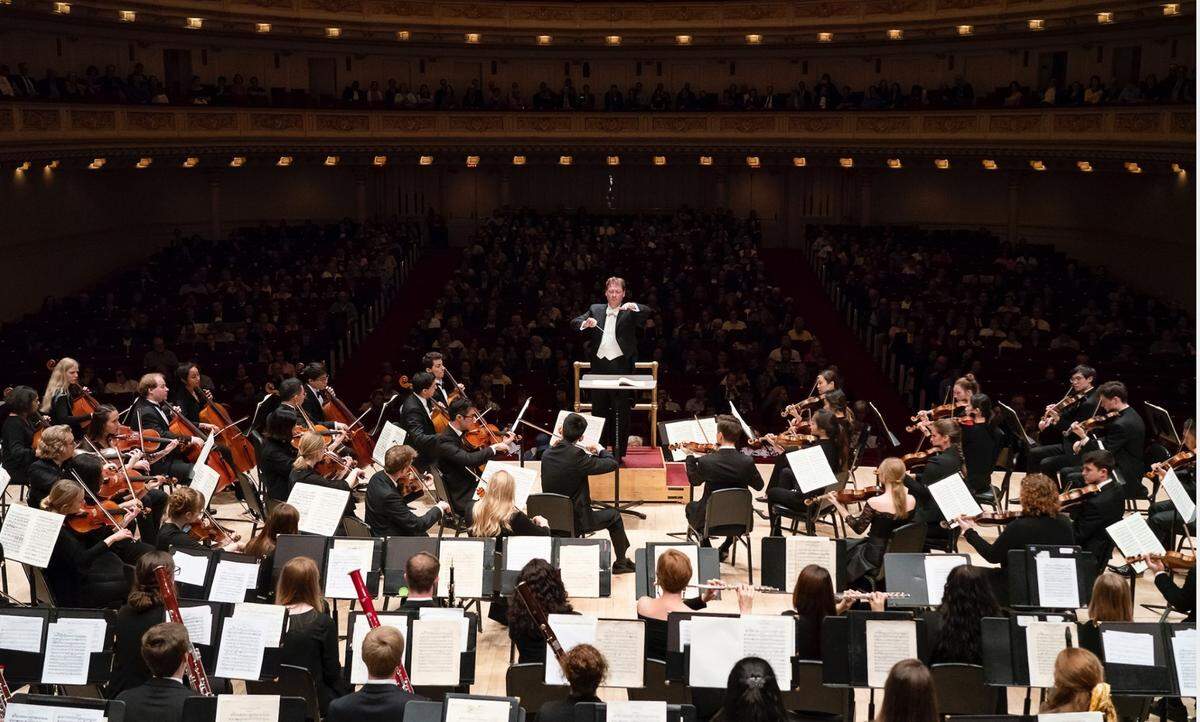
This week, those instruments, their stories and especially the music they are still capable of summoning, are on display in a series of events culminating in a Saturday concert by the University of Kentucky Symphony Orchestra with Mahler’s Symphony No. 4 serving as the centerpiece. For the latter event, student musicians will perform on instruments from the Violins of Hope collection to bring to life a little-known chapter in the history of the Holocaust.
“It’s totally overwhelming,” said UK Symphony music director and conductor John Nardolillo. “The students are overwhelmed. I’m overwhelmed. I think the audience is also going to feel that way at the concert.
“In our rehearsals, we are often talking about the history of the music. But to actually pick up the very instruments which have these powerful stories behind them is incredible. I have wanted to do this project here for at least 15 years, maybe more, because I’ve been thinking about what an impact it would have on the students. I’m just thrilled the project is here and we’re able to play the music on instruments that are so connected to such remarkable stories.”
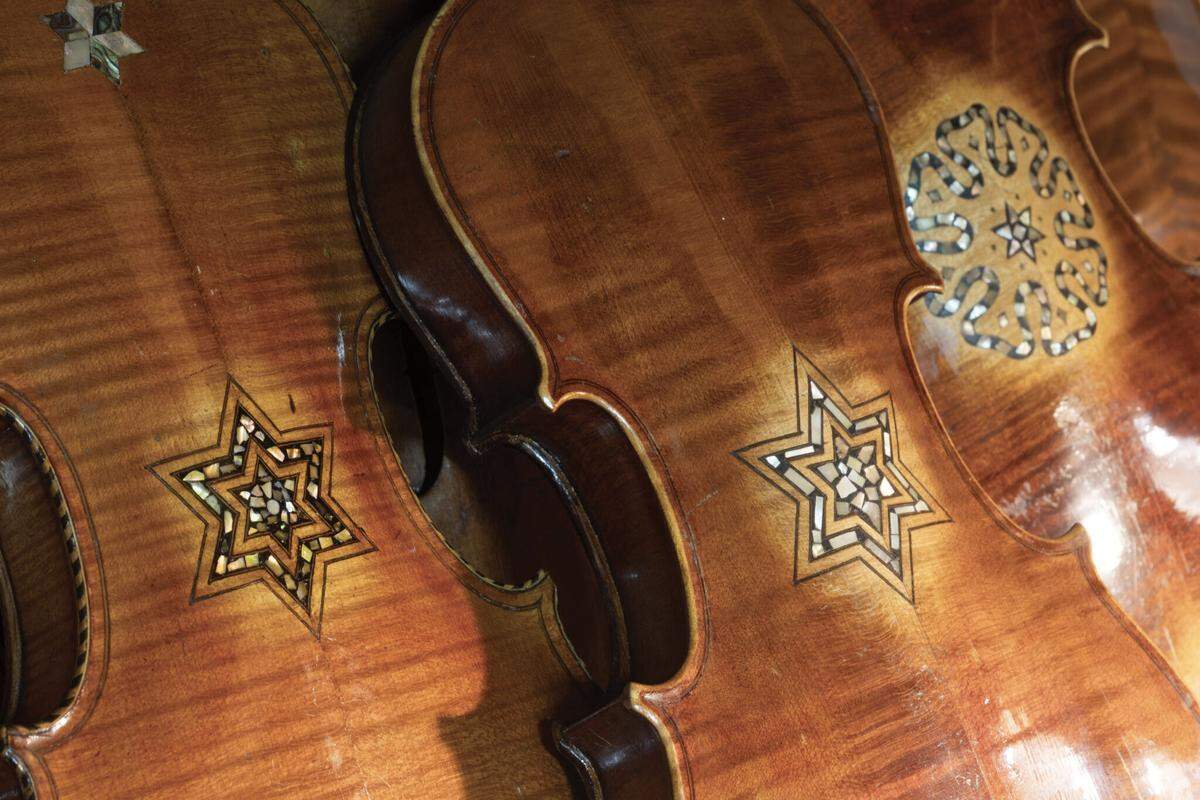
What are some of the stories? In one instance, a violin was buried in the ground by their Jewish owner prior to deportment to a camp. The prisoner and her family were eventually killed. In another, a child harbored by Christians was smuggled by the Kindertransport to safety in England. Her family was killed, but she — and her lone possession, a violin — survived. There is also a violin in the collection that was kept for years by a French soldier who caught the instrument as it was thrown from a train by a Jewish prisoner enroute to a camp.
Some Jews were allowed to take instruments into the camps themselves. Camps in Dachau and Auschwitz actually had orchestras made up of prisoners, although the music they played was more the product of coercion than creation.
“Many people were compelled to make music, not because they wanted to, but because the Nazi officers wanted to hear music,” Nardolillo said. “They were forced to make music. For many people, it was the way they stayed alive, because the people who couldn’t play were killed. The people who could play to entertain the officers, they were spared.
“I mean, what a twisted relationship with music when you go into a situation where you’re loving music and having it be an important part of your spiritual life and then to be put in that position where your very life depended on it.”
Violins in the collection
The Violins of Hope collection has been curated by father and son violin makers Amnon and Avshalom “Avshi” Weinstein, who work in Tel Aviv and Istanbul, respectively. Gathering the instruments began through simple solicitation.
“We asked people if they had instruments with connections to the war that they would like to share with us for an exhibit, concerts and so on,” said Avshi Weinstein last week by phone from Istanbul. “The next morning we had our first violin. Now we have about 400 instruments.
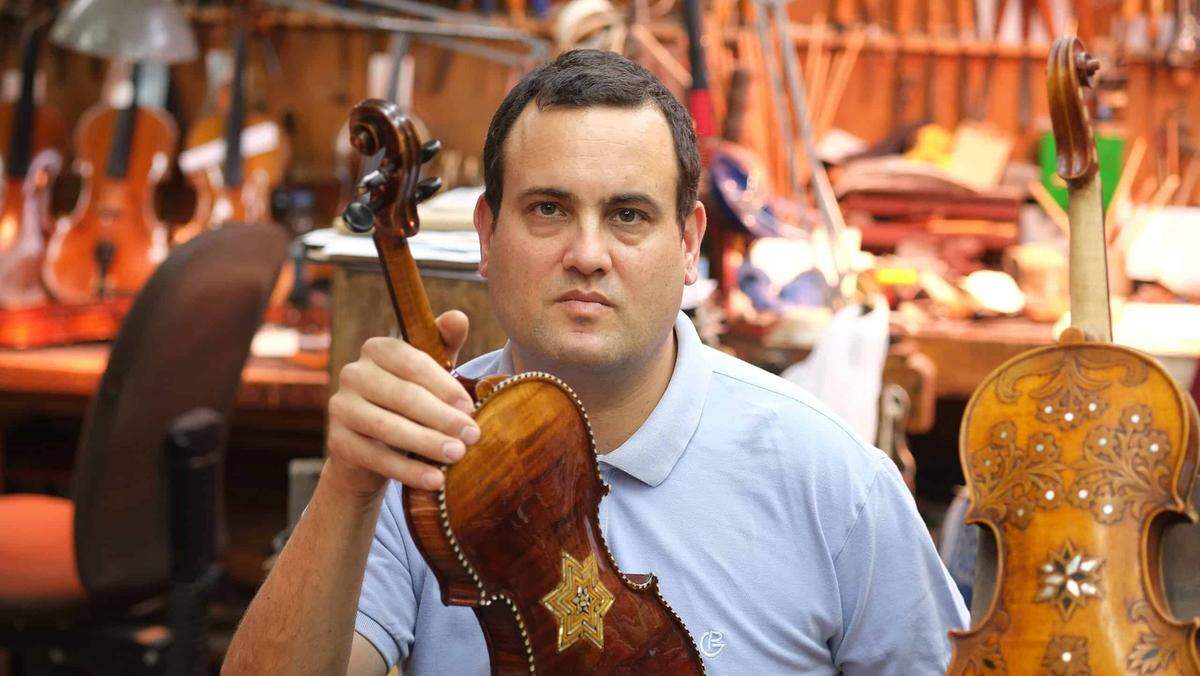
“The instruments were gathered through word of mouth. Most of them were brought to us by people who started hearing about the project. They would call and say, ‘We have this, we have that,’ so we would get more and more instruments.”
After they were donated and/or discovered, the instruments — many of which bore a Star of David inlay in their frame — underwent varying levels of restoration.
“It could be anywhere from a few weeks to over a year-and-a-half,” Weinstein said. “It depended on the condition.”
Once restored, the Violins of Hope became a traveling exhibition that would visit cities where local orchestras could bring the instruments back to life in performance. The concerts were presented alongside direct exhibitions of the instruments along with lectures emphasizing the stories of the original owners and how they performed or parted with their instruments.
How to see the violins
In addition to the Saturday concert, the Kentucky Theatre will host a Tuesday screening of a documentary on the project, “Violins of Hope: Amnon’s Journey” that Weinstein and Nardolillo will participate in. The two, along with members of the UK Symphony, will also be playing and discussing the instruments at 11 area Fayette County middle and high schools this week. In addition, Weinstein will present lectures on Violins of Hope at the Singletary Center for the Arts on Wednesday and prior to the concert on Saturday.
“Every violinist in our orchestra will be playing on one of the instruments for the entire program,” Nardolillo said of the UK Symphony’s Saturday concert. “I think we have 70 instruments in Lexington right now. Every student knows the story of the instrument, the person who owned it and what happened to them.”
“I’m part of a third generation of survivors,” Weinstein said. “This project is a very big part of me. We all know Holocaust education is not really something people pay attention to, but this is something you can hear. It’s not just a photograph you can see. You can hear it. This history has its own way of speaking.”
“There is a definite sense of the sacred when we’re looking at these instruments,” Nardolillo added. “Even when you’re just standing and looking at the instruments, you’re going to feel it.”
Does Weinstein feel young audiences in this country distanced from the Holocaust by generations as well as geography are sensing some of the sacred and historical aspects of what the Violins of Hope project is trying to convey?
“I would like to believe so. We took the project to Livermore, California (home city to the East Bay Holocaust Education Center). A woman came up to us in the parking lot and said, ‘My daughter, last week in school, saw the lecture.’ Usually, the child wouldn’t really talk to her mother about what happened in school, but her mother said she couldn’t stop talking about the stories and what she heard at the lecture. So, yes, maybe we are making a difference.”
Added Nardolillo, “It’s hard to explain just how big this project is, how important it is and how deep it is.”
Violins of Hope exhibits, concert
These are the events making up this week’s Violins of Hope exhibition.
“Violins of Hope: Amnon’s Journey,” Feb. 10 at 7:30 p.m. at the Kentucky Theatre, 214 E. Main. Tickets: $6.50 at kentuckytheatre.org.
Visions of Hope Lecture, Feb. 11 at 5:30 p.m.at the Singletary Center for the Arts Recital Hall, 405 Rose St., Free
Violins of Hope Exhibition, Feb. 13 and 14, 10 a.m.-8 p.m. at the Singletary Center for the Arts President’s Room, Free
Visions of Hope Pre-Concert Lecture, Feb. 14 at 6:30 p.m. Feb. 14 at the Singletary Center for the Arts Recital Hall, Free
University of Kentucky Symphony Orchestra: Visions of Hope – Blue Cathedral and Mahler Symphony No. 4, Feb. 14 at 8 p.m. at the Singletary Center for the Arts Concert Hall. $10 students, $20 public at finearts.uky.edu/singletary-center/events.