Longtime Lexington Philharmonic conductor and music director George Zack dies
AI-generated summary reviewed by our newsroom.
- George Zack died at age 90 after serving as Lexington Philharmonic conductor and music.
- Zack joined the orchestra in 1972–73 and later expanded its budget and concerts.
- Zack conducted 1,385 concerts and gave his final concert on Sept. 12, 2008.
A pioneer and an indisputable institution in the Lexington arts community has died.
George Zack, the Lexington Philharmonic’s conductor and music director for 37 seasons, died July 12, his family said. He was 90.
Zack joined the orchestra for its 1972-73 season, when it had a budget of $55,000 and a schedule of five concerts. More than three decades later, Zack grew the orchestra to a $1.4 million budget, more than 40 performances annually and outreach programs to improve music education.
“For many in our community, George was more than a conductor. He was a mentor, colleague, teacher, and friend,” LexPhil said in a social media post. “His influence extends far beyond the years of his tenure and remains woven into the fabric of this orchestra.”
During his 36 years on the podium, Zack was the most widely recognized figure in the Lexington’s arts community. He was often involving himself with community organizations and appearing around town to talk about the orchestra.
“George Zack is probably one of the most impactful conductors that we have had in Lexington,” said Everett McCorvey, director of the Opera Theatre program at the University of Kentucky and the current chair of the Kentucky Arts Council. “He grew the orchestra, not only the orchestra program, but he grew the arts in Lexington in a way that really no one had done before, and what amazed me about George is that he made arts approachable to all.”
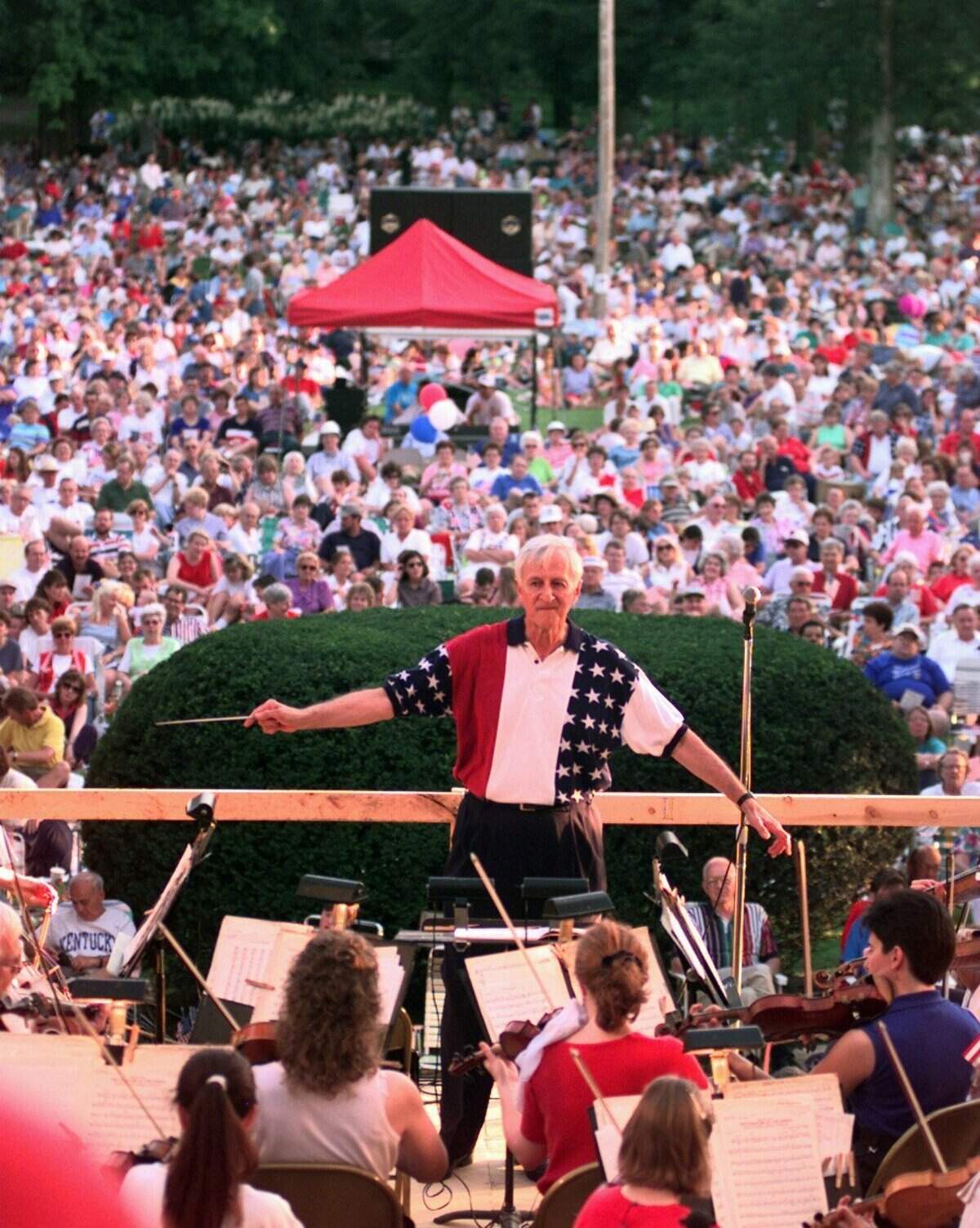
Zack, an Arkansas native with degrees from Wichita State University, the University of Michigan and Florida State University, anticipated a short stay when he arrived in Lexington in 1972 at age 36. At the time, there were only 66 musicians in the orchestra.
When he retired at age 72, the local music group had 79 contract players.
One of those was Daniel Mason, who served as concertmaster to Zack for 26 years.
“George made the Lexington Philharmonic an essential part of the fabric of the arts community,” said Mason, noting Zack’s knack for remembering names and faces.
“He genuinely cared,” said Mason. “The people in the audience were not just a lot of faces to him. They were friends. They were neighbors. They were people that he knew.”
McCorvey said Zack was his role model, and he made everyone, not just artists feel special
“I would see George in Kroger’s, and he would be standing there talking to a patron, and he would stand and talk to that patron as long as that patron wanted to talk. And I thought this is how you make the arts accessible,” said McCorvey.
During his time in Lexington, Zack conducted 1,385 concerts. His final bow came Sept. 12, 2008, with the Lexington Philharmonic Orchestra to thunderous applause after conducting Brahms’ Symphony No. 1 in C minor, Op. 68, the same work with which he started his career in Lexington in 1972.
Zack was an influential voice in the arts other than the Lexington Philharmonic. He served as interim conductor of the Central Kentucky Youth Orchestra, was a founding member of the Humanitarian Center for Culture and Diversity, and served on advisory boards for Kentucky Educational Television (KET), the National Society of Arts and Letters, and the Jazz Foundation. He also hosted the weekly WEKU radio program, “George Zack’s Enhancement of Music.”
He received numerous honors, including the Kentucky Governor’s Award for Lifetime Achievement in the Arts, the Hellenic Ideals Award and the Kentucky Arts Council’s Lifetime Achievement Award.
“His influence was so widespread, and he cared so deeply about making the arts accessible to everyone” Lexington Philharmonic Executive Director Brooke Raby said. “The steps that he made, the foundation that he built, is not just important for the Lexington Philharmonic. It’s important for the entire arts ecosystem of Lexington.”
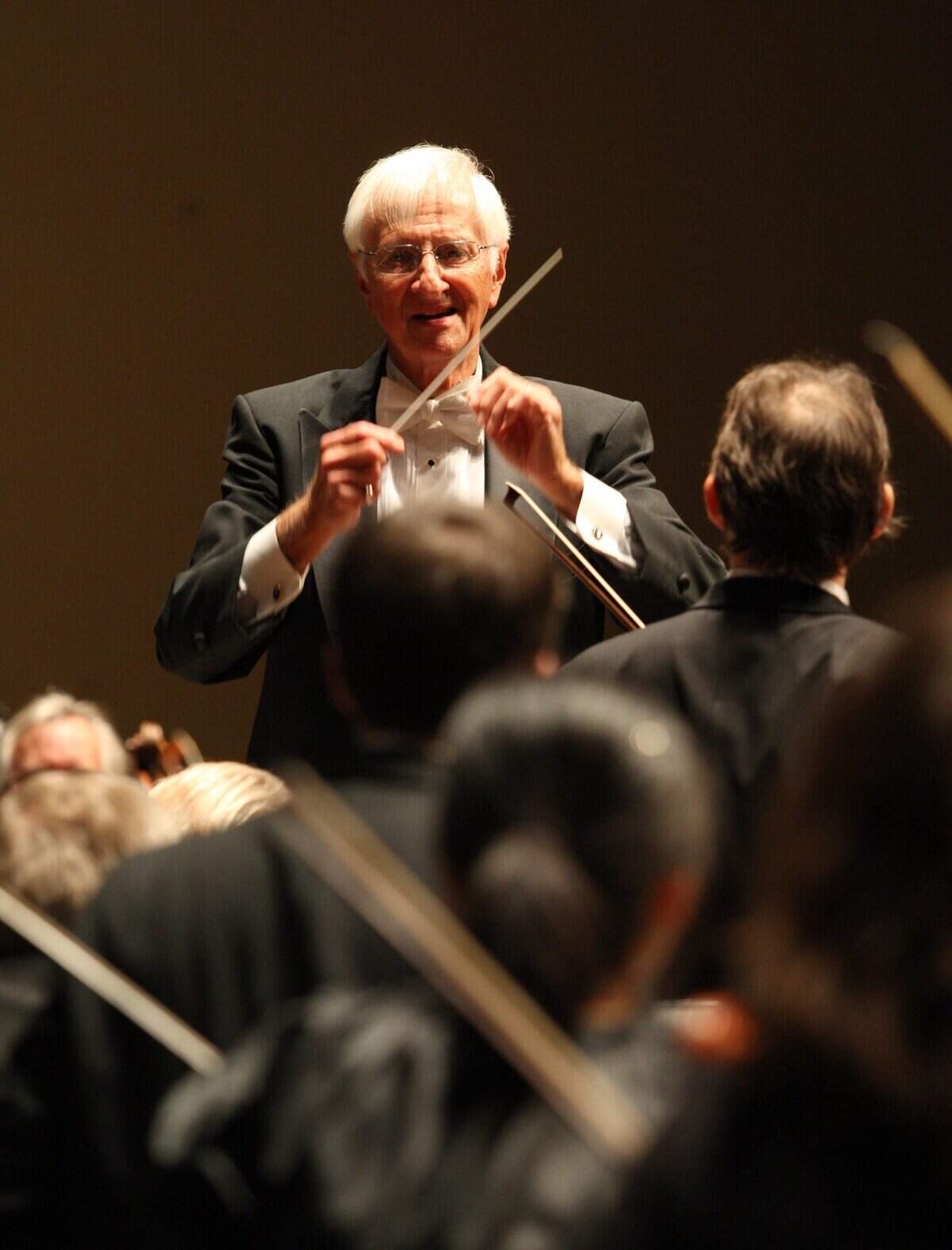
Zack helped with the two-year search to find his replacement, passing the baton to Scott Terrell.
After retiring, Zack and his wife Kerry spent a lot of time at their home at Kiawah Island, South Carolina, later relocating to Indiana to be closer to family.
Arrangements are still being finalized, but the family plans to honor Zack’s life with celebrations in Indiana and Lexington.
“Generations of musicians performed under his baton, countless audience members discovered the joy of live orchestral music through his leadership, and his vision helped establish the Lexington Philharmonic as the organization we know today,” LexPhil said.
Zack is survived by his sister, Mary Wildgen, two daughters, Katherine Bender and Melissa Johnston, their husbands, Andrew Bender and Mark Johnston, and four grandchildren.
This story was originally published July 13, 2026 at 1:30 PM.