
Mannheim Steamroller's founder now runs the band from offstage
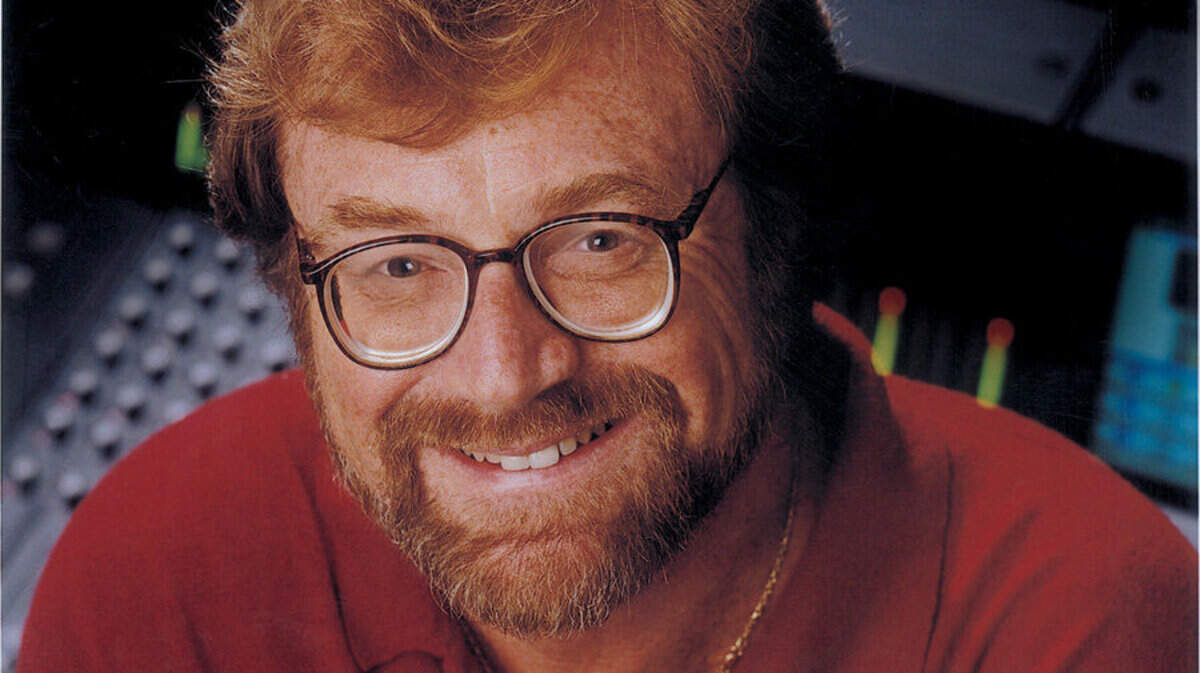
Chip Davis has seen the popularity of his music evolve for more than three decades, both as a recording artist and as a concert drummer for the classical-pop crossover ensemble Mannheim Steamroller. But he never fully appreciated what the audience saw in the music until he sat there himself.
About six years ago, when Mannheim Steamroller took up residence in a Branson, Mo., theater, Davis took time out from his onstage duties to experience, as a spectator, what his group was capable of.
"I sat in the back row of the theater just so I could see how the crowd reacted," Davis said. "Well, I got tears in my eyes. I walked away thinking, 'Now I see what everyone loves about this music.'
"When I was sitting up on the drum stand, I was so focused on playing the show that I never got what the audience was getting until I was actually in an audience. There was this connection between what I had created and what the audience was connected to. It was just one of those drop-dead moments."
Davis is now permanently off the bandstand. Sidelined from full-time performance work three years ago after back surgery, he now oversees a contemporary music phenomenon that continues to flourish even in his absence from the stage.
Mannheim Steamroller's albums, the newest of which is Christmas Symphony, continue to sell in platinum or multiplatinum numbers, and concert tours promoting Davis' take on holiday music have seen two touring versions of the band. The group visits the EKU Center for the Arts in Richmond on Friday.
Davis said that retiring from the stage was under serious consideration even before his surgery.
"I used to love getting out and being in front on an audience. It was fun being a drummer. It was fun being in the studio. It was fun making records. But as things really started progressing, I realized there were a lot of things I could do from a business standpoint as far as exposure went for the whole Mannheim brand that I could do. And being behind the drums every night was not the place to do that from.
"Obviously, the decision was made for me. But now we're playing 94 cities. There is no way I could have done 94 dates had I not been taken out of the mix. I never would have thought about forming two touring companies had I not been taken out of the original company."
Such a move probably shouldn't be considered unexpected for Davis, especially considering the origins of Mannheim Steamroller. After studying music (and majoring in bassoon) at the University of Michigan, he became engaged in recording-studio work that involved composing commercial jingles. There he concocted, with singer/lyricist Bill Fries, a country music enterprise called C.W. McCall that scored a major '70s "trucking" hit called Convoy.
"Quite a bit of the original Mannheim band was the same as the band for C.W. McCall," Davis said. "They were the same players I used in my jingle sessions. So when C.W. McCall took off as a country artist, these were the only players I knew of to draw on.
"C.W. McCall had to do this concert one time when the front act, some other country artist, didn't show. So we put on tails and coats over our blue jeans and tennis shoes and went out as Mannheim Steamroller for the first half of the show and came back in blue jean jackets for the second half as C.W. McCall. The audience was stunned. You saw a lot of blank looks on their faces."
The C.W. McCall craze ran its course as Mannheim Steamroller's music was just beginning to catch on with a series of independent recordings titled Fresh Aire. Mannheim essentially was Davis' nom de plume. "I never thought of Mannheim as a group as a compositional idea," he said.
The music combined elements of classical, pop, folk, instrumental rock and more that would evolve by the '80s into what was then labeled New Age music.
"I was working then in a climate of, 'Oh, that will never work.' In my music history studies at the University of Michigan, I listened to composers like (Béla) Bartók that mingled folk songs with various symphonic forms. So I thought, 'Wouldn't it be cool to create something in today's world with a similarly eclectic concept but with modern instruments."
Starting in 1984, Davis hit creative and commercial pay dirt by issuing Mannheim's first yule-themed album, Mannheim Steamroller Christmas. Although successive recordings would gradually sport a higher instrumental pop profile, his initial attraction to holiday carols was tradition.
"One of my favorite things in the world, musically, was Renaissance music. I really got hooked on composers like Johann Herrman Schein, who wrote what were probably the first Christmas songs in celebration for Emperor Rudolph in northern Germany. I found it fascinating that this was some sort of revolutionary thing that was going on back then all over Western Europe.
"So the origin of what Mannheim does now came from listening to those Renaissance Christmas recordings and discovering the whole origin of Christmas music."
This story was originally published November 11, 2011 at 12:00 AM.