
Four decades later, early hits keep pop duo America on the road
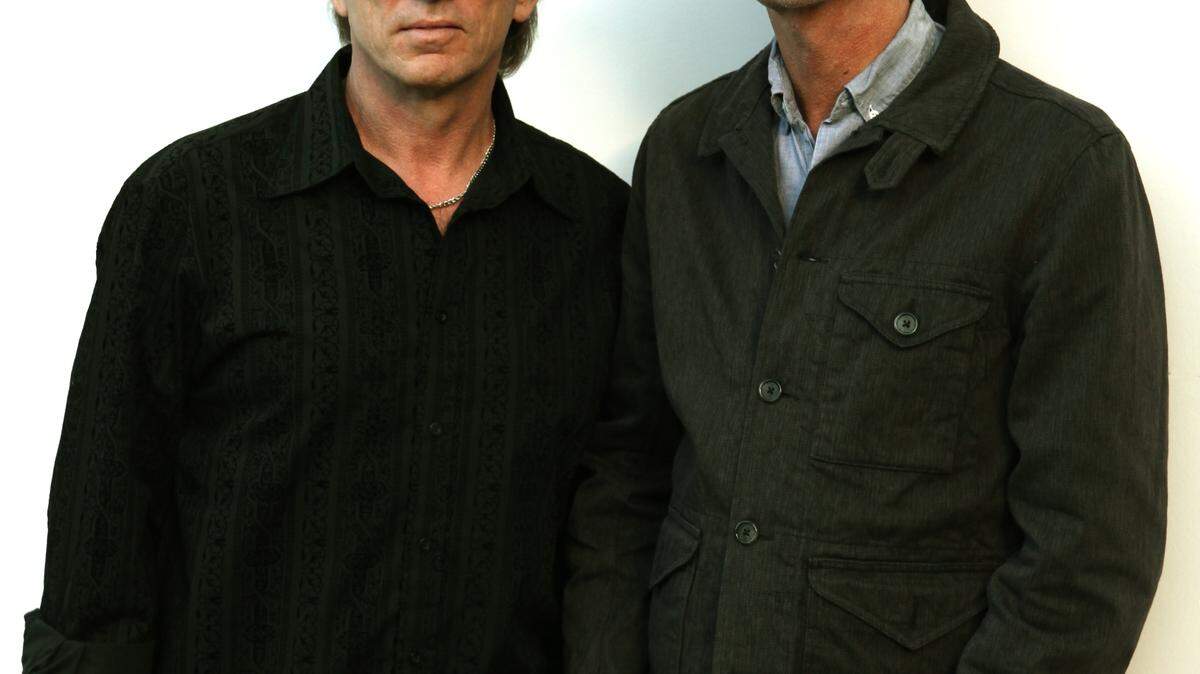
How far can the appeal of pop music take you? In the case of Dewey Bunnell and Gerry Beckley, collectively known as America, the distance can seem limitless.
More than four decades have passed since a series of radio-friendly singles defined America as one of the pre-eminent pop ensembles of its day — beginning with the folk-informed, West Coast-flavored songs A Horse With No Name, I Need You and Ventura Highway, and continuing with more spacious, George Martin-produced works that included Tin Man, Lonely People and Sister Golden Hair.
There certainly have been successes since then, most notably the 1982 comeback hit You Can Do Magic. But how do you explain the appeal of those '70s staples — all light, melodic and fortified with effortless harmonies — that continue to keep Bunnell and Beckley on the road?
"That's really an intangible," Bunnell, 60, said. "And as the years go on, it fascinates me even more. We have to assume the music has transcended our own generation. Granted, it's mostly baby boomers out there in the audience every night, and we're all getting older. But there's still a strong enough element of young people out there.
"As we age, all this takes on a life of its own. We're now in our 42nd year. But every night for me presents its own challenge. Nobody onstage is walking through this thing in their sleep. In fact, I'm always a little bit nervous before a show, so that keeps the adrenaline up."
Such are the reflections of the seasoned pop performer. But then, America experienced success at the onset of its career. The band originally was a trio, completed by singer/songwriter Dan Peek. Its first single (A Horse With No Name) and album (titled simply America) were instant hits in early 1972.
"We were naïve and young enough to think, 'Oh, this is the way it works. You get a No. 1 single and a No. 1 album your first time out.' But that was really an anomaly."
Yes and no. Starting with the 1974 album Holiday, America began an extensive collaboration with Martin, who emphasized arrangements and orchestration in the band's music. The partnership would cement America's star power for the next three years.
"At that point, we had sort of been self-producing," Bunnell said. "But that was a big responsibility, and we fell into the deep end a little bit as a result. With George, the stars just lined up. What he brought to us was an element of sophistication. In retrospect, he was also kind of a mentor. We really consider that time with him our peak years."
Peek departed America in spring 1977 for a career in contemporary Christian music. The split was amiable but final. The few hints of reunion discussions that surfaced never panned out. Peek died last year at age 60.
"There was never any conflict or animosity with Dan leaving," Bunnell said. "But there really was a resignation that we weren't going to come back together. We were always supportive, especially in the early years after his split. Gerry and I actually sang on a couple of his projects. But there was a distance.
"Dan's contributions speak for themselves, though. We still do several of his songs, especially Lonely People and Don't Cross the River, which were big hits. So, his legacy will always be there. Life goes on, but it never feels quite right that Dan's not around somewhere."
Beckley, 59, remains Bunnell's co-pilot in America. Friends since before the band formed (in London, oddly enough, not in America itself), the two have weathered considerable personal and professional change over the years, from America's flagship hits to its most recent album, the 2011 covers collection Back Pages.
"I don't hesitate to say Gerry has always been the musical director. He is a schooled player while I'm mostly self-taught. When we get into rehearsals or into arranging songs for recordings, Gerry is at the helm. Still, we have equal strengths and weaknesses in terms of writing and singing and what we bring to the table, so it's a good partnership.
"We've grown up together and been through most all of life's changes together — up and downs, families, divorces. All the elements of life we share. And, of course, we have been on exactly the same roller-coaster ride with our profession in terms of success and failure. That plays into the longevity of the group. We really don't have much conflict at all, which is pretty good considering what we see and have seen in this business."
This story was originally published July 19, 2012 at 9:09 AM with the headline "Four decades later, early hits keep pop duo America on the road."