
The Fixx and its music aging gracefully
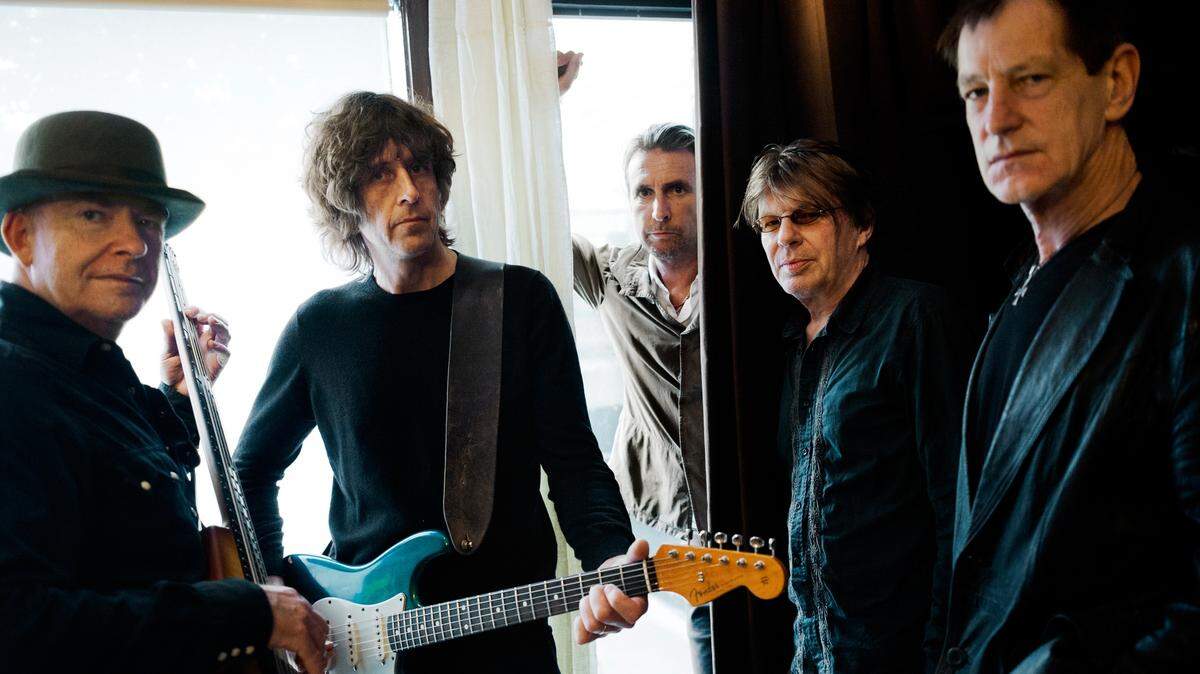
Rare is the artist who views today as a simpler time than the one that earned him fame. But that is exactly the take Cy Curnin has on the pop marketplace today after three decades as frontman for The Fixx.
Perhaps that's because the veteran British band is comfortable today with its collective role as a rock elder. While Fixx hits like Saved by Zero, One Thing Leads to Another and Secret Separation ruled radio and MTV during the first half of the '80s, the band continues to tour and record today with what can be considered a refreshingly modest mindset.
"Things really are a lot simpler and a lot less complicated for us these days," Curnin says. "It's a way-smaller market share that we have now, but it's one that is a lot closer and connected with the fans. So that's a plus. The ease and speed with which we can record things has also greatly improved.
"Of course, the world is still a crazy place to live in. It was then. It is now. We're a group of five guys. We discuss the world around us, and I think our music still reflects that. We're a little wiser than we were then, so the philosophical take on how we see the world has changed a bit. Back then, we were angry young men. Now we're just angry."
The Fixx's first Lexington visit came at the height of its commercial visibility when the band opened a sold-out Rupp Arena concert by The Police in November 1983. Amazingly, the lineup that performed then will be the same as the one playing here on Saturday: Curnin, guitarist Jamie West-Oram, keyboardist Rupert Greenall, bassist Dan K. Brown and drummer Adam Woods.
"The friendship was there," Curnin says. "The respect was there. We kind of came from similar backgrounds, I think. I'm also the youngest in the band by five years. The other guys, the musicians, mentored me, so you didn't get this ego thing happening. We ended up being pretty even-tempered.
"I actually relied on their experience of being wiser adults, because I was very green. I had all the passion but I needed the skills, especially the social skills, to go with it. They helped me with that."
The Fixx's music today is essentially a progression of the sound it established in the '80s. On its most recent album, 2012's Beautiful Friction, Curnin's vocals are stronger and deeper than in the band's early days while the guitar-keyboard give-and-take between West-Oram and Greenall sounds more harmonious, creating a lush, orchestral sound reminiscent of Echo and the Bunnymen and, in some instances, early U2.
"We've actually got another (album) in the can that we're just putting the finishing touches on," Curnin says. "We realize a lot of people may go, 'Whatever happened to that band The Fixx?' Then they see we've just had an album out. It's good for them to see we're still very active in creating new music.
"The '80s, though, was a very original period for music. Even though it's all just called '80s music' today, it was as different as rock is to blues or funk. It was a defined music style. But it just so happened it was named after a time period rather a style of music. It was '80s music. That's what we're stuck with, but it was a very original, quirky era.
"There was a more guitar-based '80s sound and there was a sound with a more rhythmic keyboard extreme to it. What The Fixx did was marry both. That created a sound that served us well. It gave us a very big soundscape. I call it a night sky where we would float lyrical enigmas. Put in a haunting melody and off you go. That was Fixx music."
This story was originally published September 18, 2014 at 8:25 AM.