
Critic's Pick: Bob Dylan, Shadows in the Night
Critic's Pick
Bob Dylan
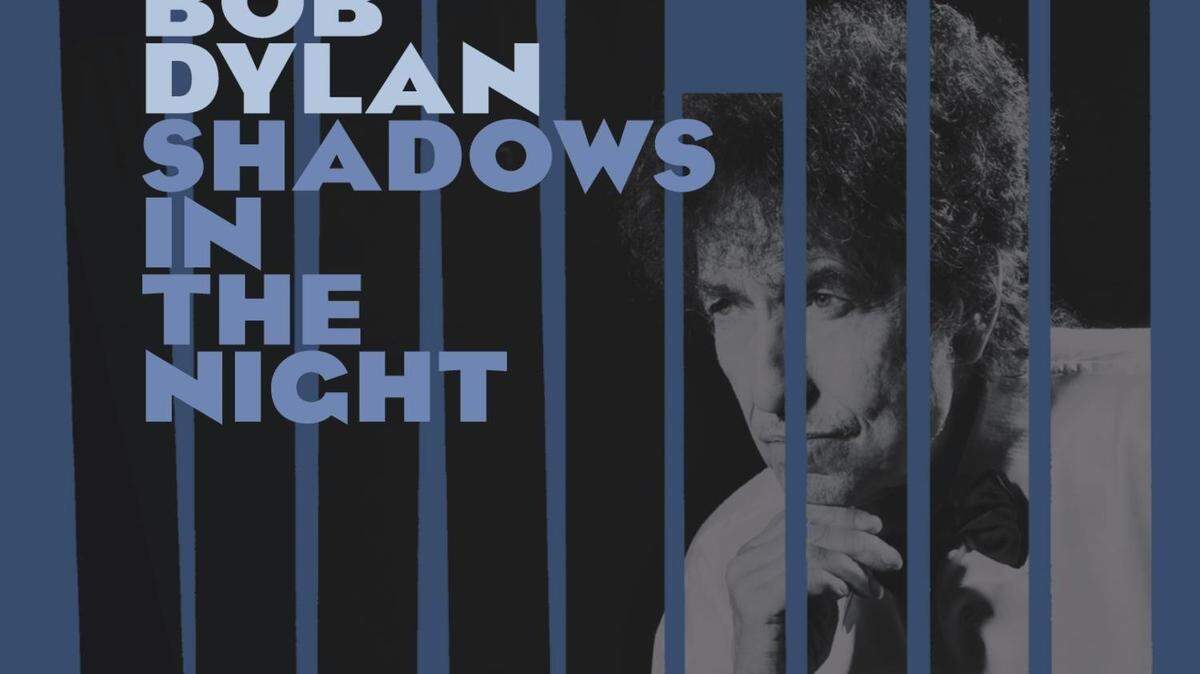
Shadows in the Night
On paper, Shadows in the Night suggests a train wreck. Imagine it: Bob Dylan, the pop poet laureate of several generations — whose singing, at least from a technical standpoint, is perhaps his least admired artistic trait — interpreting an album's worth of standards recorded by Frank Sinatra, a stylist for whom vocal finesse was everything.
But that's what we have in Shadows in the Night, and the results are pretty righteous.
The reasons are twofold. First, there is Dylan's vocal work, which is a real jaw-dropper. Instead of the death-rattle rasp displayed on his most recent albums, Dylan sings with astonishing and wholly unexpected focus. Ol' Blue Eyes he ain't. But that's not even remotely the intention. There is a clarity in Dylan's voice during Why Try to Change Me Now and especially Autumn Leaves that had been absent since the early '70s. To hear such purpose stretched over an entire album, you would have to go back to John Wesley Harding in 1968.
Frankly, it's hard to fathom that Dylan even had this sort of vocal subtlety and control left in him. Year after year, his concerts have descended into performance sketches where singing amounted to scribbling — highly emotive and immediate scribbling, mind you, but scribbling nonetheless. We're not talking Michael Bublé here. Place Dylan's noir-like take on Full Moon and Empty Arms under a microscope, and you hear all kinds of technical hiccups — a flat note here, an over-enunciation there, and a slight overall wheeze that reminds you of who is at work. But place Shadows in the Night next to latter-day Dylan classics such as Time Out of Mind, and it sounds like the work of an entirely different artist.
What completes the vision of Shadows in the Night is its overall mood. All 10 tunes pared down the primarily orchestral arrangements of the versions cut by Sinatra (and others, like Frankie Laine, who had hits with this material in another lifetime) to fit Dylan's combo-size band. Even then, the group, augmented by occasional muted brass, plays at the level of a whisper. The sole dominating instrumental voice is the pedal-steel guitar of onetime BR549 member Donny Herron. But this isn't country music either. This is late night, off-in-the-distance blues speaking in a vintage pop dialect. It is half tradition and half Twilight Zone. Then again, who else but Dylan could make Some Enchanted Evening sound so distinctively surreal?
Maybe half the thrill of the recording is its sheer sense of surprise. For a folk monument like Dylan, who you would think have played every stylistic card dealt to him by now, Shadows in the Night is the sound of something old made remarkably new.
Walter Tunis, Contributing Music Critic
This story was originally published February 2, 2015 at 6:32 PM with the headline "Critic's Pick: Bob Dylan, Shadows in the Night."