
Balagula Theatre's 'Caligula' focuses on revolt, not the revolting
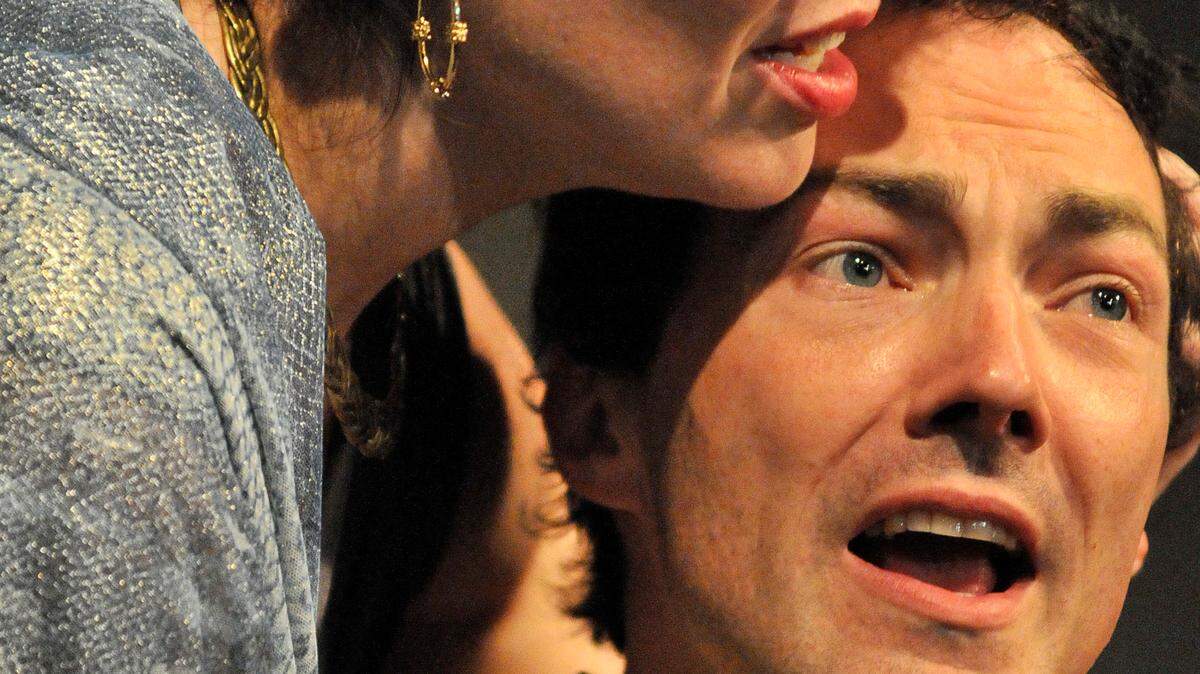
Ryan Case has gotten some strong reactions when people have found out he is playing the infamous title role in Caligula, Albert Camus' play about the incestuous, murderous Roman emperor who believed he was a god.
"People sort of distance themselves because there is such an extreme negative connotation to him," Case says.
That is in part thanks to the notorious 1979 movie starring Malcolm McDowell as the emperor, who ruled from A.D. 37 to 41, and co-starring John Gielgud, Peter O'Toole and Helen Mirren. Despite the high pedigree of the actors, the movie, partly produced by Penthouse magazine founder Bob Guccione, was reviled by critics and audiences for its graphic violence, gore and sex.
Director Natasha Williams scoffs at the film, saying, "In the movie, everyone was obsessed with the sex and the nudity. We are more concerned with what was happening in Caligula's mind."
Camus' play hardly whitewashes Caligula's record, which consistently showed a pattern of murder, self- aggrandizement and sexual depravity. In the first act alone, Caligula demands Rome's wealthy surrender their money or face death, has the relatives of several senators killed (forcing one to laugh at his son's execution), kills another senator he suspects is trying to thwart Caligula's plans to murder the senator, rapes the young wife of another senator and eventually forces all of them to work as slaves. As he enters, Caligula has been away three days mourning the death of his sister Drusilla, with whom he is suspected of having had a sexual relationship.
Again, that's just Act I.
"It's a descent," Case says, "a descent into madness."
But much of the mayhem takes place behind the curtain. Onstage, the outrageousness is in the behavior of Caligula, whom Case plays with wild mood swings, mocking cruelty and breathtaking narcissism.
"It's a rewiring of the system in order to go through this and give the audience the experience and honestly deliver the lines," Case says. "It's taking down the mental barriers to give a vivid, raw, honest delivery and be as truthful to the character as I can be."
Case says he is not a Method actor, trying to immerse himself completely in the role onstage and off. In fact, in rehearsal, the second a scene stops, he is joking around, pretending to give a Realtor-like tour of the palace set and saying that his flowy costume is a Stevie Nicks outfit. But Case says, "I can tell when a character begins to invade my personal space, when he shows up in my dreams," something he says Caligula has done.
Williams, who is co-director of Balagula Theatre with Case, says she chose the 1938 play because she wanted Case to take on the challenging role.
"It is interesting, challenging and difficult," she says. "It's an awesome drama, but he has to exercise control because it is such an intellectual play."
Case jokes, "Adam and Kevin have played Hamlet, so I'm playing Caligula," referring to Lexington actors Adam Luckey and Kevin Hardesty, who have played Shakespeare's iconic Danish prince.
Despite Caligula's cruelty, Case says, he finds things to like in the character, including the lyrical speeches Camus wrote for him and in the twisted nobility of the motivation the playwright has given the emperor.
"He wants to teach people what will happen if you don't rise up against tyranny," Case says of Camus.
He also is showing people how their priorities have become twisted, Case says, including those who think money is more important than life. At one point, Caligula gives a slave who will not admit to a crime he did not commit freedom and an enormous sum "because that was a truly noble act," Case says. On the other hand, he lets people who say they would die for him do just that.
"He is saying you take life too lightly," Case says. "He's saying if the world is unbearable, why are you permitting your leaders to do this to you? Revolt against me, or I will give you a reason to."
In Camus' play, there are plenty of reasons.
This story was originally published May 31, 2012 at 8:49 AM with the headline "Balagula Theatre's 'Caligula' focuses on revolt, not the revolting."