
WTVQ children's program becomes fodder for film
Michael Crisp remembers getting off the school bus just after 3 p.m. one day when he was a student at Great Crossing Elementary School in Georgetown in the late 1970s.
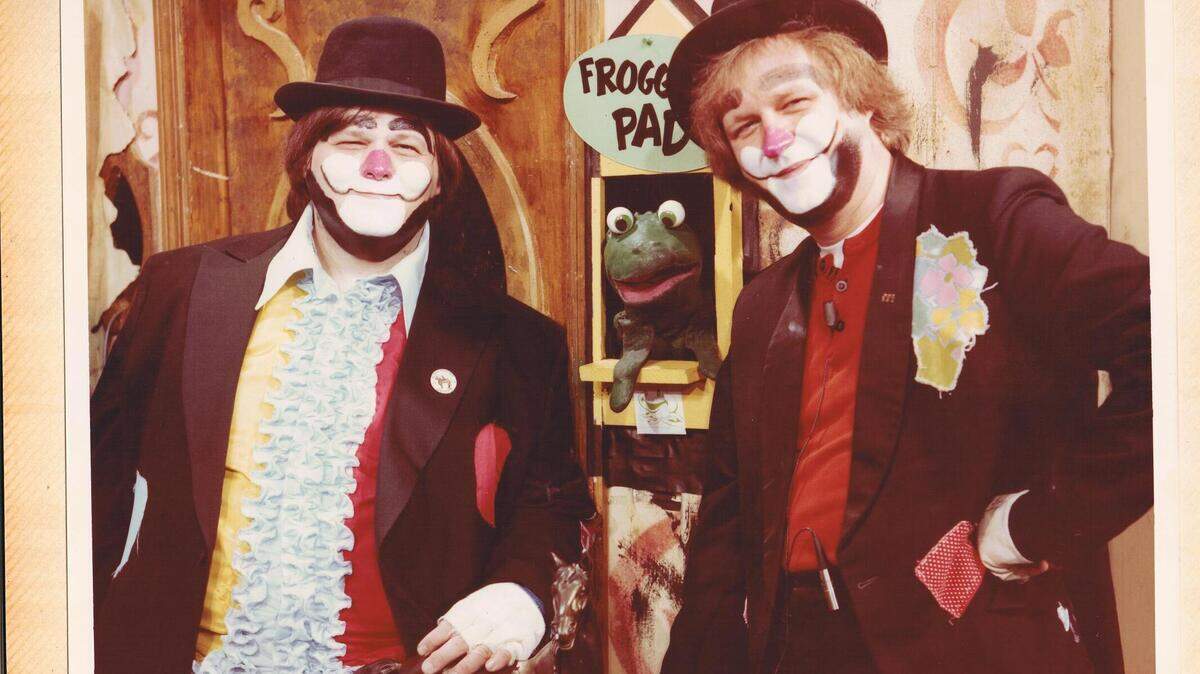
He would rush home, plop down in front of the TV, turn it to Channel 62 and spend the next hour with his old friends Happy the Hobo and Froggie, the stars of Happy's Hour, a locally produced children's television show on WTVQ.
"The show was set up for Little Rascals and Three Stooges films, but Happy and Froggie quickly became the stars," Crisp recalls.
Crisp, 41, is a filmmaker, and during the past year he has rekindled his fascination with Happy's Hour to make a documentary, When Happy Met Froggie, with producer Scott Hall that will premiere Wednesday night at The Kentucky Theatre.
The film will take viewers back to the last days of basic over-the-air television, before cable and home video changed the medium.
"You don't see shows like this anymore," says Crisp, who still lives in Georgetown and now has children of his own. "Now all the shows are very corporate and safe.
"But there was a time every market had shows like this. The host would be something the kids would like and identify with like Cowboy Joe or a clown or a hobo."
Coming off several years working on The Very Worst Thing, a documentary about the 1958 Floyd County bus crash in which 26 students and the bus driver died, Crisp and Hall say they were looking for a lighter topic.
"We want to do Kentucky history documentaries, but we didn't want to become the 'Kentucky tragedy filmmakers,'" says Crisp, who is also working on films about the Lexington Legends and ill-fated early 20th-century cave explorer Floyd Collins.
The Happy film brings back most of the major players in the show, which ran from 1976 to 1980, including the original Happy, Tim Eppenstein; the first and second Froggie puppeteers, Mike McMellon and Gregg Rice; and original director Rick Klein, known to the audience as Ranger Rick.
Other local notables come into play, including sportscaster Kenny Rice, who remembers the show was a hit with students when he was at Transylvania University, and Alan Stein, who remembers the show's crew frequented his bar, 803 South.
What Crisp and Hall found was that behind the whimsical children's world of happy hobos and amphibian puppets were twentysomethings who were getting their starts in television and leading very twentysomething lives that included "gallons and gallons of beer," Crisp says.
In the film, singer-songwriter John Ireson relays how the theme song — which starts, "Hey let's get young again, let's have some fun again" — was based on song that said, "Hey let's get stoned again."
"It was a theme song that just hooked you, and after that, they could have read the phone book and you would have watched," Crisp says.
The cast and crew relate a party-hearty atmosphere with Eppenstein as the host.
As much as it had a frathouse atmosphere, the show also attracted numerous marquee guests who traveled through Lexington, including Dr. Hook; Sha Na Na, Flash Gordon star Buster Crabbe; and Bond girl Lana Wood and Dallas star Morgan Brittany, who visited the show when they were in town at Derbytime.
"We were just sitting relaxing, watching TV, and this ridiculously funny show came on, and we just thought it was a hoot," Wood, younger sister of Natalie, says of her and Morgan in an interview for the film.
"It was five or six minutes of some of the funniest stuff that'd ever been on TV in Lexington," Rice says of the Wood and Morgan appearance.
Some of the facts the film drops include that the house Happy runs into in the opening credits is now owned by Morris Book Shop proprietor Wyn Morris.
There are a lot of laughs in the 53-minute-long documentary, but there are poignant moments when talk turns to personal appearances at children's hospitals and responses the cast got from children.
And like Crisp, children grew attached to Froggie and Happy, and then missed them when Eppenstein, suffering from burnout, left the show and it faded away.
"There's no way this would ever be done today," Rice says in the film, recounting the simplicity of the show's concept. "But they pulled it off and gave everybody good memories."
Crisp and Hall's documentary will give them a few more.
This story was originally published April 5, 2011 at 12:00 AM with the headline "WTVQ children's program becomes fodder for film."