
State’s largest art museum salutes the Ky. horse for first time in its 92-year history
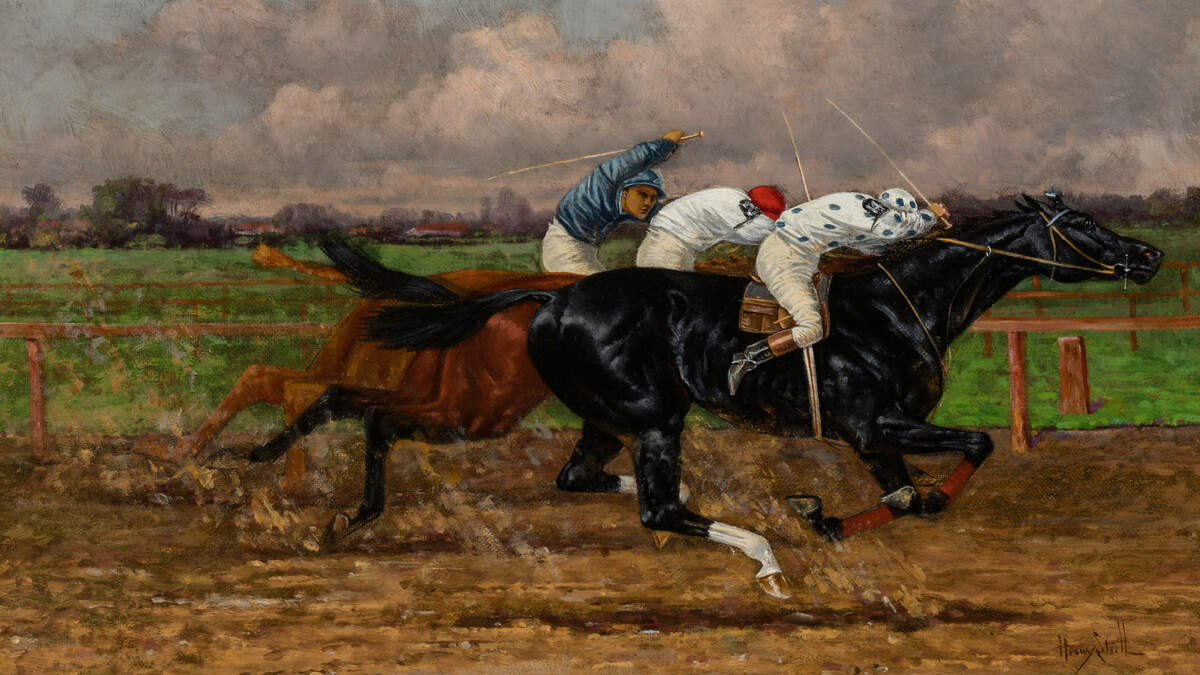
With every brush stroke and dab of tinted oils, animal portrait artists gave us much more than they realized in the nineteenth century. Before camera phones and video, before even the most primitive photography, they left us with the only means of knowing what famous horses and race courses looked like back in the day.
Artists were just guys (and a gal) trying to make a living. They weren’t thinking so much of their future impact when they traveled from farm to farm, looking for commissions. They painted your stallion or your favorite mare or even your dog and signed their names: Edward Troye, Henry Stull, Thomas J. Scott, and a gal named Effie Leone Seavey Lucas who wore pants to the stables to paint when women didn’t do either. The body of work they left us is now priceless – and pricey.
For the first time in its 92-year history, The Speed Art Museum, on the campus of the University of Louisville, has gathered a number of paintings, sculptures, manuscripts, silver, and photographs in an exclusively equine exhibit featuring Thoroughbreds, Standardbreds, and American Saddlebreds of Kentucky.
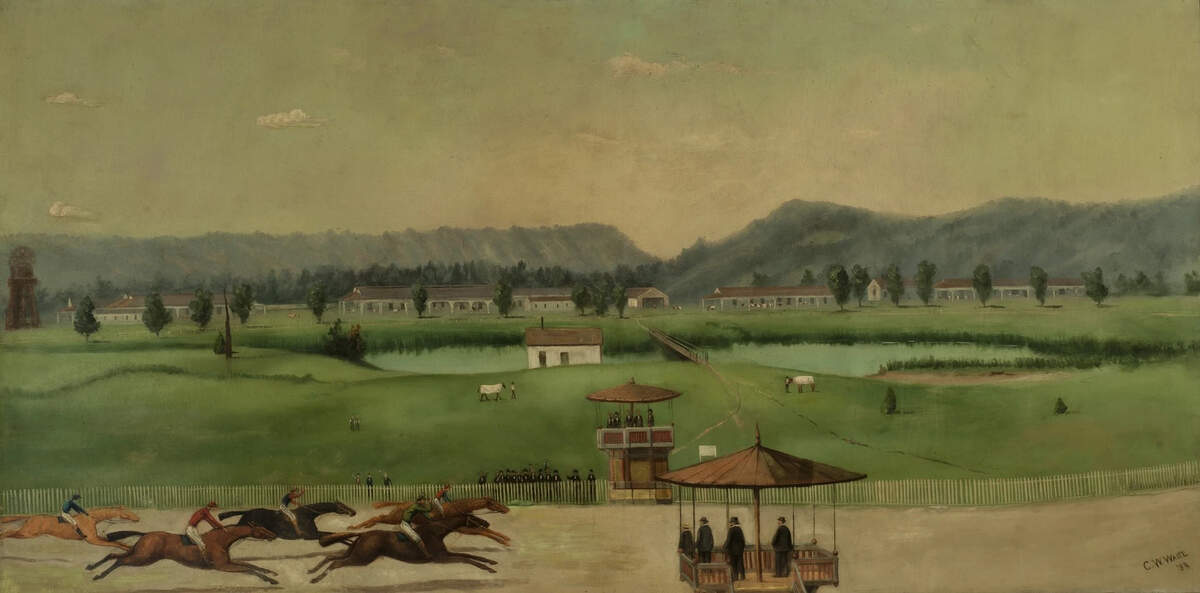
This represents a departure from Kentucky’s largest art museum’s own history, for as show curator Erika Holmquist-Wall revealed, The Speed doesn’t even own a painting of a horse. (It does, however, own paintings of two Kentucky race courses: Oakland and Latonia).
The special exhibition is titled “Tales from the Turf: the Kentucky Horse 1825-1950.” Holmquist-Wall, as the Mary and Barry Bingham Curator at The Speed, worked for 18 months with a team to assemble the temporary collection, which will be shown through March 1, 2020.
Art fanciers and historians will appreciate the look into Kentucky’s namesake industry as they stroll among the paintings and recognize well-known works. But Holmquist-Wall said she also tried to make the exhibition appealing to a wider audience. “The question for me was how do I make some 160 brown animals exciting,” she said. She found her answer in the back stories that go with nearly every horse.
Every piece tells a story
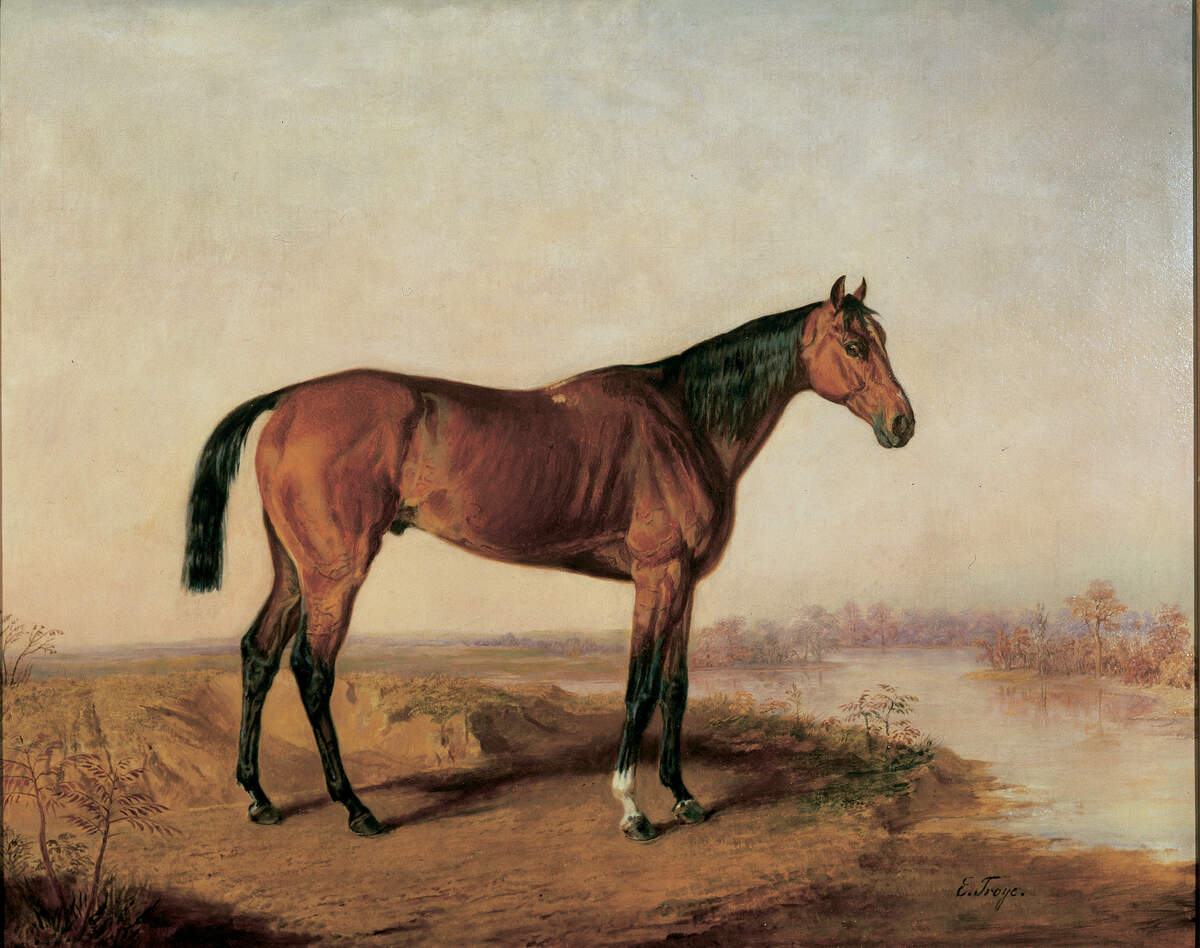
And so we are presented Lexington, a record-holding racehorse who was hidden and saved from outlaw thievery near Midway during the Civil War. Following the war, he became the most influential Thoroughbred sire until Northern Dancer a century later.
Troye, who painted Lexington numerous times at Woodburn Farm on Old Frankfort Pike, became a bit of a nuisance to his host: he was the house guest who wouldn’t leave. He ate well at his benefactor’s table and got in the way around the farm. But he did leave good work behind with R. A. Alexander, eccentric squire of Woodburn.
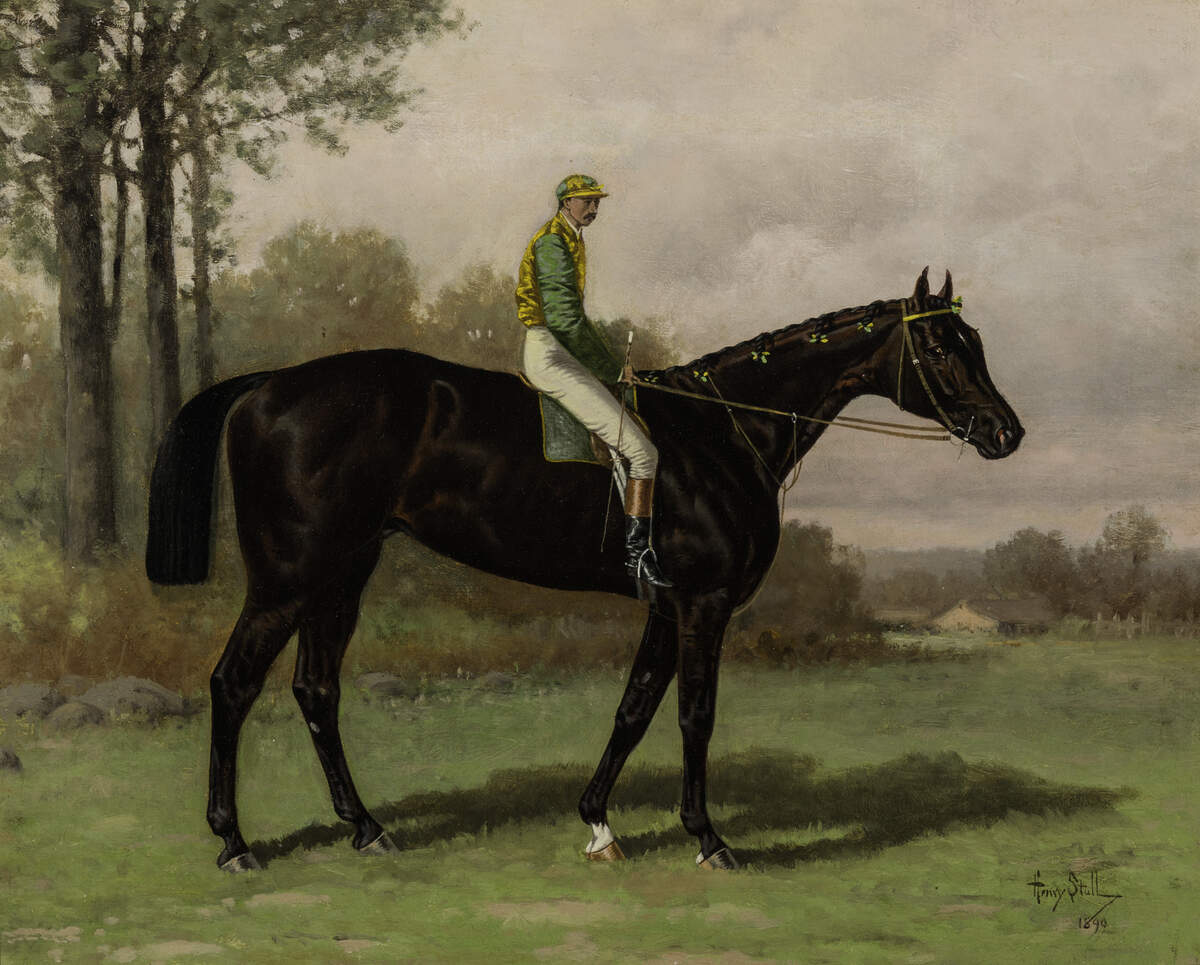
North vs. South — on the track
The exhibition also presents a painting of Oakland Race Course, a predecessor of Churchill Downs. Oakland, situated in the neighborhood of Seventh and Magnolia streets, was the scene in 1839 of a match race that put Kentucky racing on the map.
Congress was arguing about rising sectional divisions pitting North vs. South; this two-horse race did the same. Virginia-bred Wagner represented the South while Kentucky-bred Grey Eagle raced for the “North,” since Kentucky was not considered a southern state back then, despite what folks came to believe later.
Wagner won the match. Grey Eagle fans disbelieved the outcome, so the horses raced again in a rematch, Wagner winning for the second time. If anyone thought these contests foreshadowed the outbreak of the Civil War two decades later, as some historians have suggested, their bets on the winner were dead wrong. But the interest aroused in these races served as a sort of run-up to the war: North versus South.
Cato, Wagner’s jockey, was a slave who won his freedom from his grateful owner by winning these two races. Things went like that in Kentucky, back in the day.
Asteroid and the outlaws
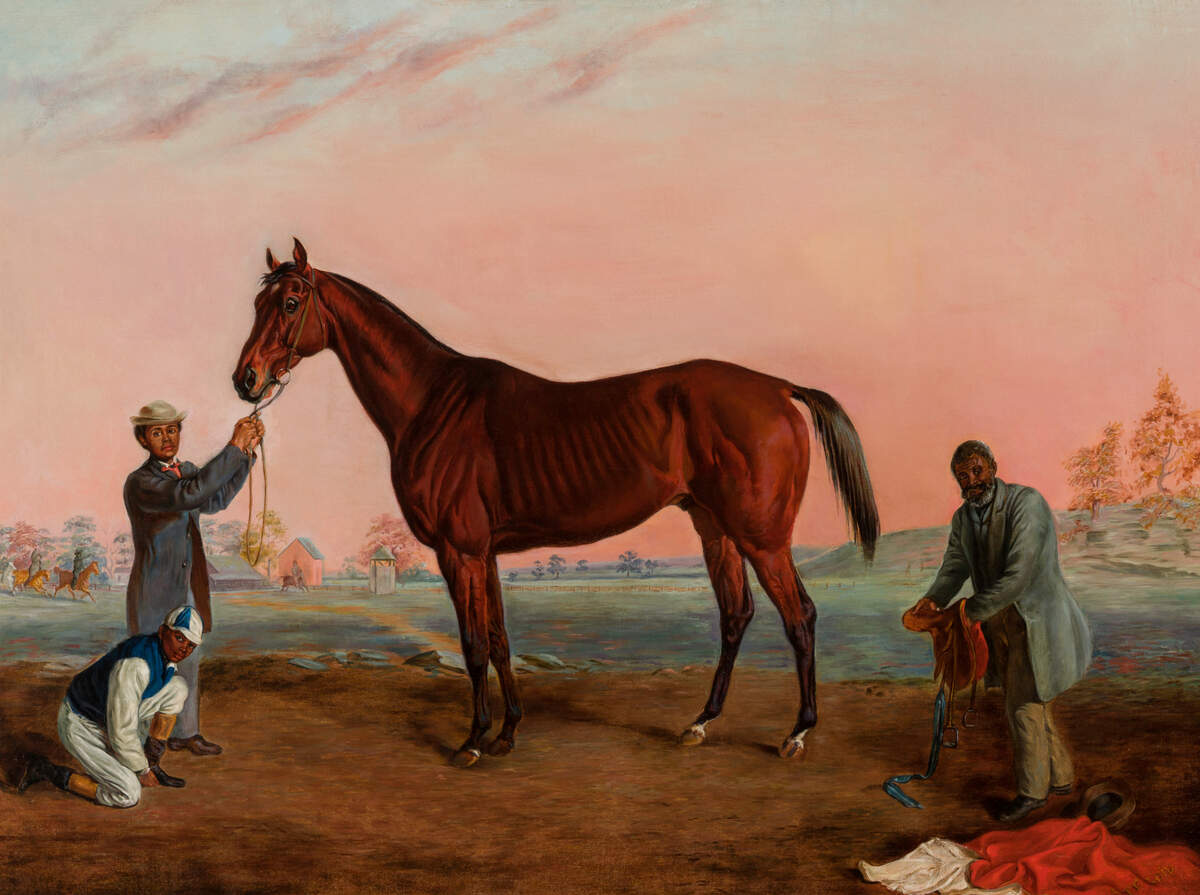
A painting of Asteroid, also by Troye and from Woodburn Farm, shows three African American men who were “rediscovered” during the Twentieth Century for their contributions to the sport. These were Ansel Williamson, a renowned trainer; Henry Overton, stallion supervisor at Woodburn Farm, and jockey Edward Dudley Brown. The painting is titled “The Undefeated Asteroid” and shows Confederate guerrilla fighters in the background raiding Woodburn Farm. That’s precisely what took place in October 1864, when outlaws rode onto the farm and ran off with Asteroid, undefeated and the greatest horse in America that year.
The outlaws did not realize the prize they had. They simply thought they’d snagged a fast horse without knowing its name. A neighbor of Alexander’s chased the outlaws down and negotiated for the return of Asteroid for $300, telling the ruffians that the horse was a beloved pet. All’s fair in war.
The woman who painted in pants
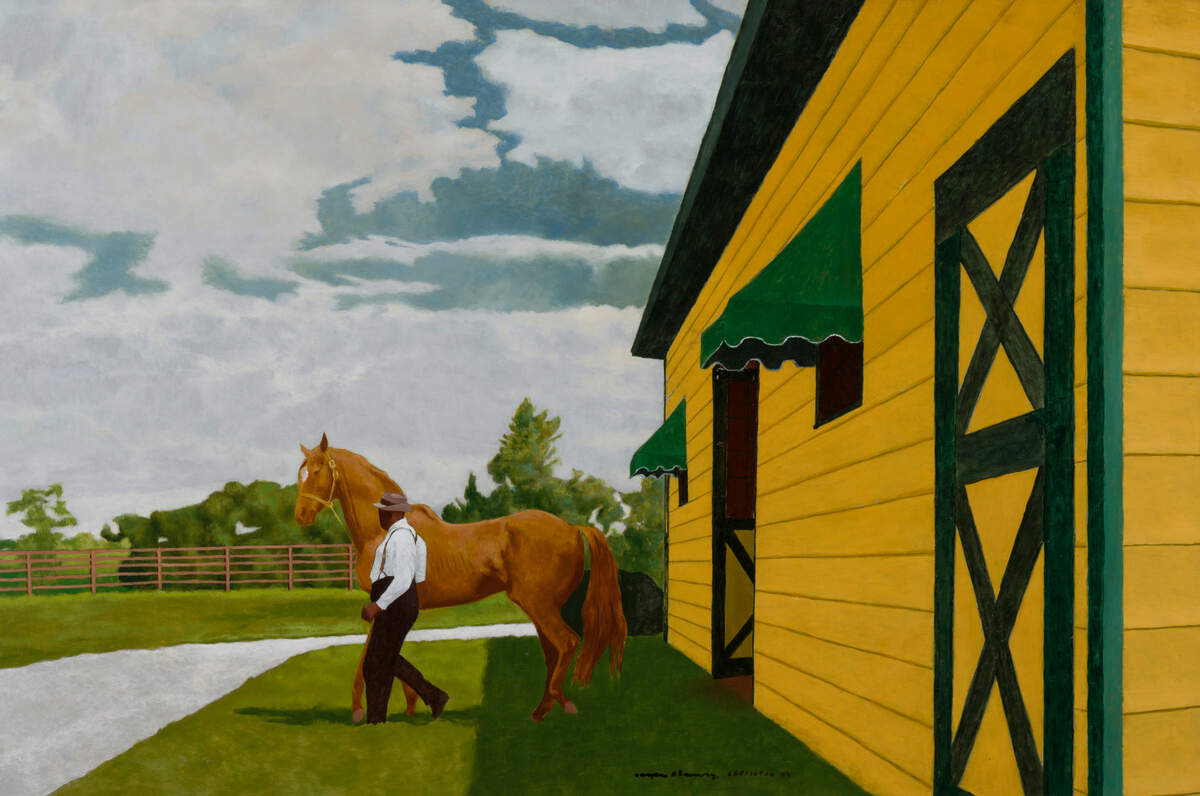
The surprise during research for this exhibition came with additional information learned about Effie Leone Seavey Lucas, born in 1875, the woman who painted in pants. She followed Troy, Stull, Scott and others by some years, and continued to paint Thoroughbreds and trotting horses into the first three decades of the Twentieth Century.
As Genevieve Baird Lacer wrote in an essay in the show catalog, Lucas’ began her career by signing only her first initial and surname on her paintings to conceal her gender.
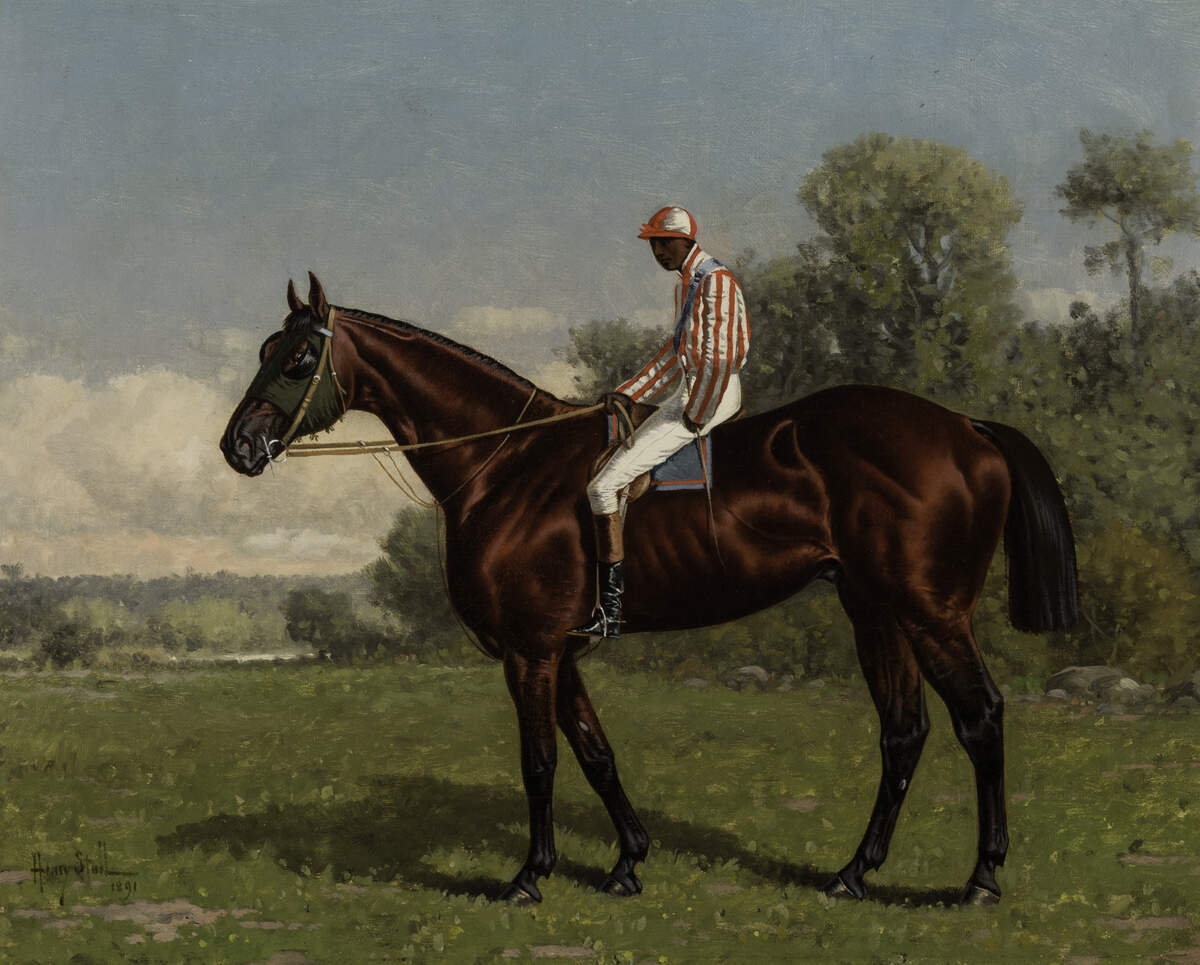
Holmquist-Wall has related the appearance of famous horses and an ever-fluctuating interest in horse racing with historical events as they affected Kentucky. The exhibit, as she explained, is really a portrayal of the state’s history expressed through art.
The artwork shines a light on that history. Yet as Holmquist-Wall wrote in the catalog, “There is much work to do, and many stories to tell.”
Speed Art Museum
Where: 2035 South Third Street, Louisville
Hours: Wed., Thur., Sat.: 10 a.m.-5 p.m.; Fri: 10 am.-8 p.m.; Sun: noon-5 p.m.; Closed Mon. and Tue.
Dates of Exhibition: “Tales from the Turf: the Kentucky Horse 1825-1950” runs through March 1, 2020
Admission: Members: free; Adults: $18; Seniors 60-plus: $12; Age 4-17: $12; Age 3 and under: free; College students with valid ID: $12; Military: $12; University of Louisville students, faculty and staff: free
Online: Speedmuseum.org
Call: (502) 634-2700