
Memorial to Kentuckians lost to COVID pandemic will be dedicated in Frankfort
When visitors come to the verdant, shady home of the Kentucky COVID-19 Memorial on the grounds of the State Capitol, they will find a monument to loss, and hope, deeply rooted in Kentucky but universal.
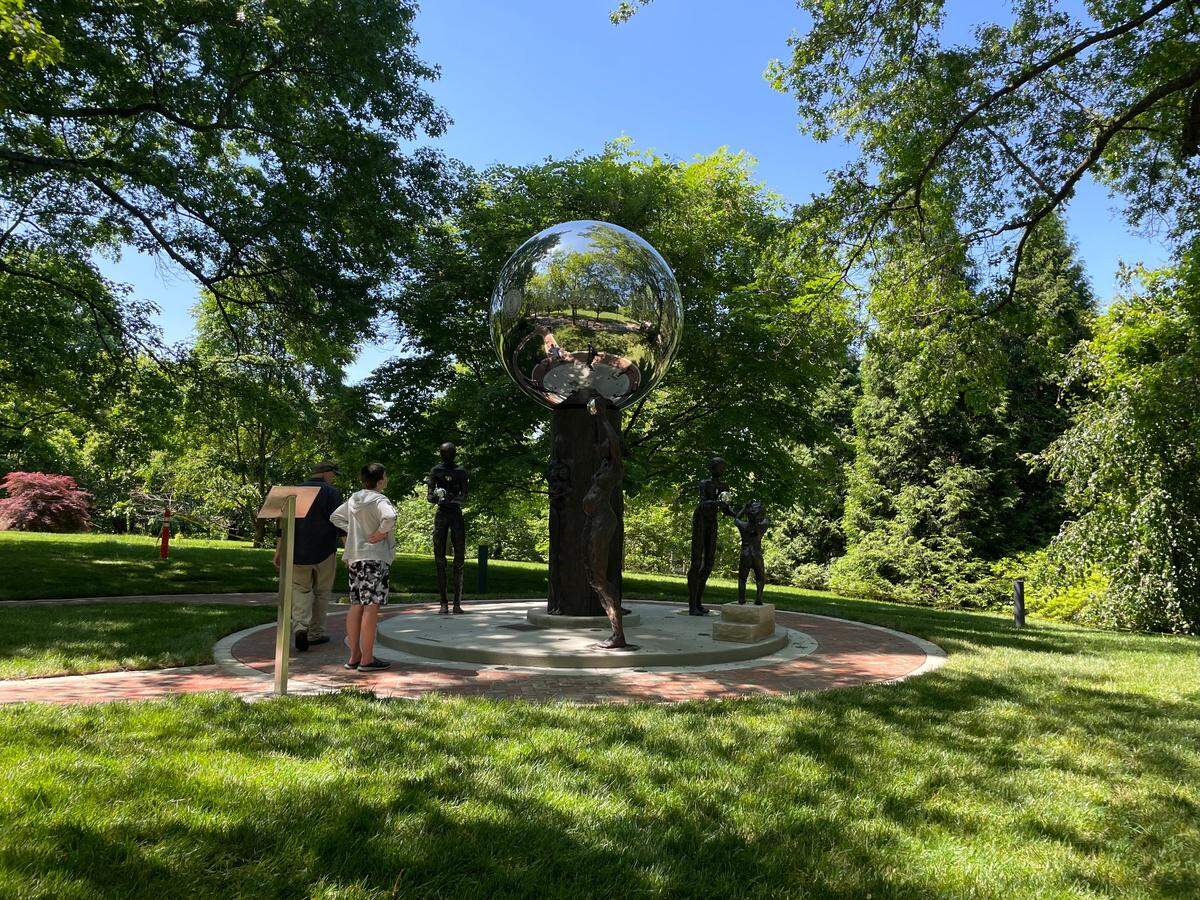
Titled “United We Stand, Divided We Fall,” the installation conceived and executed by Kentucky sculptor Amanda Matthews, includes several figures around a central column that supports a giant reflecting sphere containing the state’s motto and seal.
In conceiving and designing the memorial, Matthews said, “I set out to be extremely inclusive and diverse but also find those elements that bind us together.”
Thinking of the pandemic, she said, “the common element was a feeling of loss and fear.”
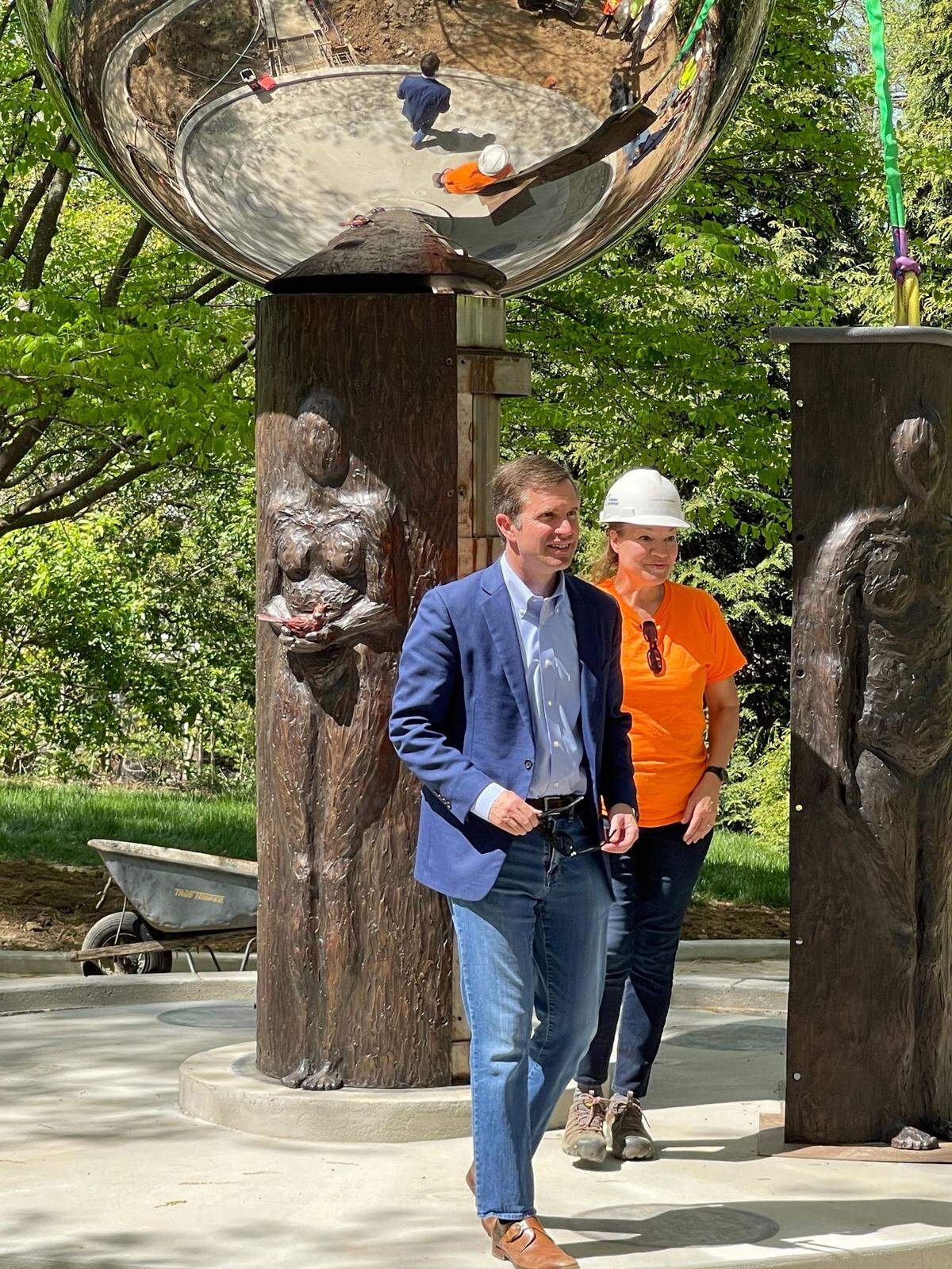
So, in each of the slightly-larger-than-life figures that surround the column, Matthews placed a hole just above the breastbone. “When you grieve deeply, it affects your whole body,” she explained, “but it really, truly affects your heart space and I wanted to show that emptiness.”
By the time the memorial is dedicated on May 24 at 2 p.m., the number of Kentuckians dead to the disease will have grown close to 19,000, a count that far exceeds all who the state lost in World War II, the Korean and Vietnam wars combined.
But Matthews thought it was important to represent more than just loss and so added a small silver bell in each of those voids, “to let people know that we still feel our friends and our loved ones that we lost.”
She hopes that the bells, universal spiritual signs often used by churches, will give visitors a sense that the spirits of those lost are present.
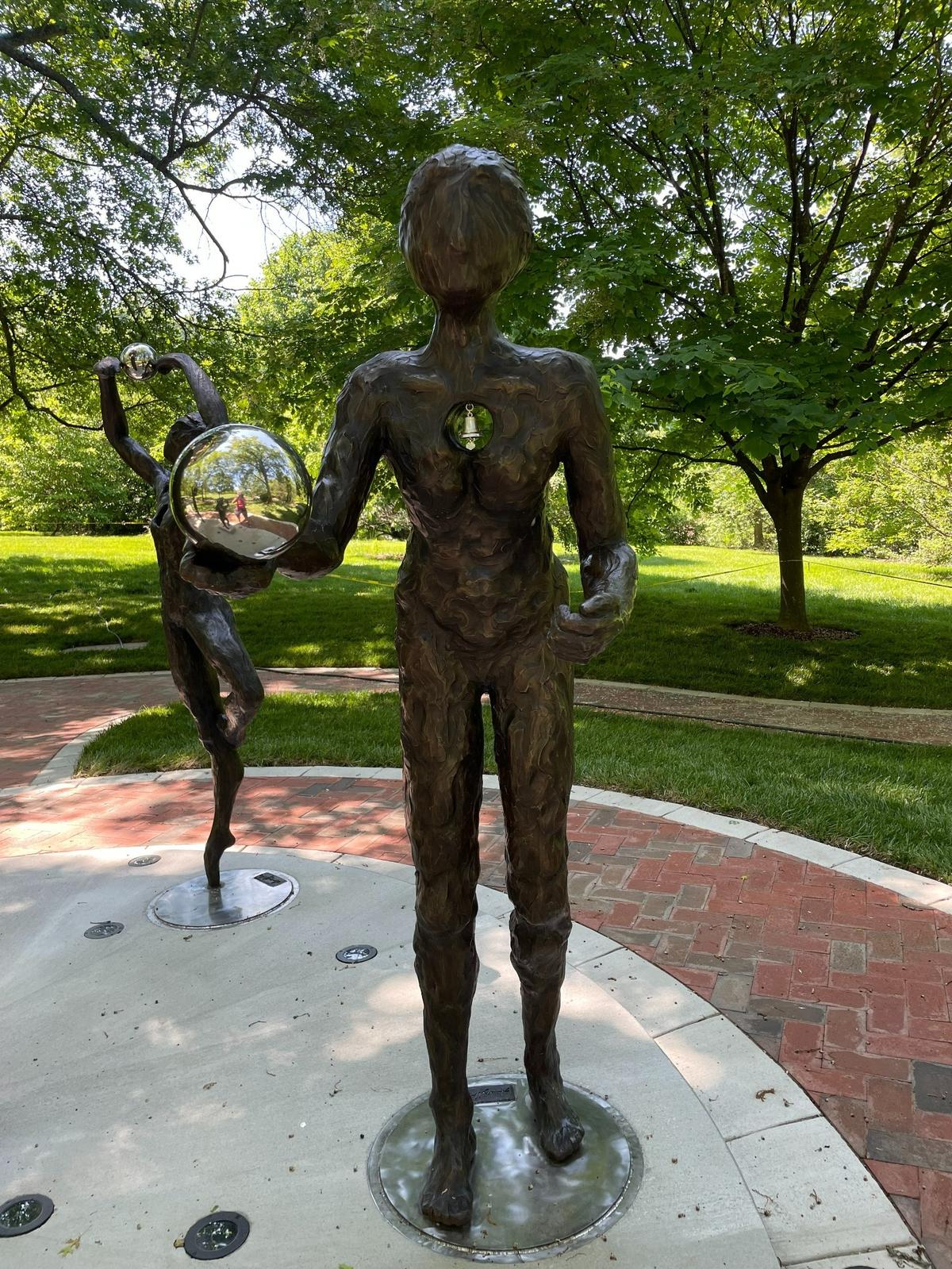
“When the wind rings those bells my hope is that it will be a reminder that the angels really are near,” she said.
Drawing on the message of Kentucky’s motto, Matthews also thought it was critical to express the strength of unity, of working toward a common cause. The message in the motto, she notes, first appeared in one of Aesop’s fables in the 6th century B.C. but was echoed in the New Testament and again in a British protest song in the late 18th century before being chosen as Kentucky’s motto a few years later.
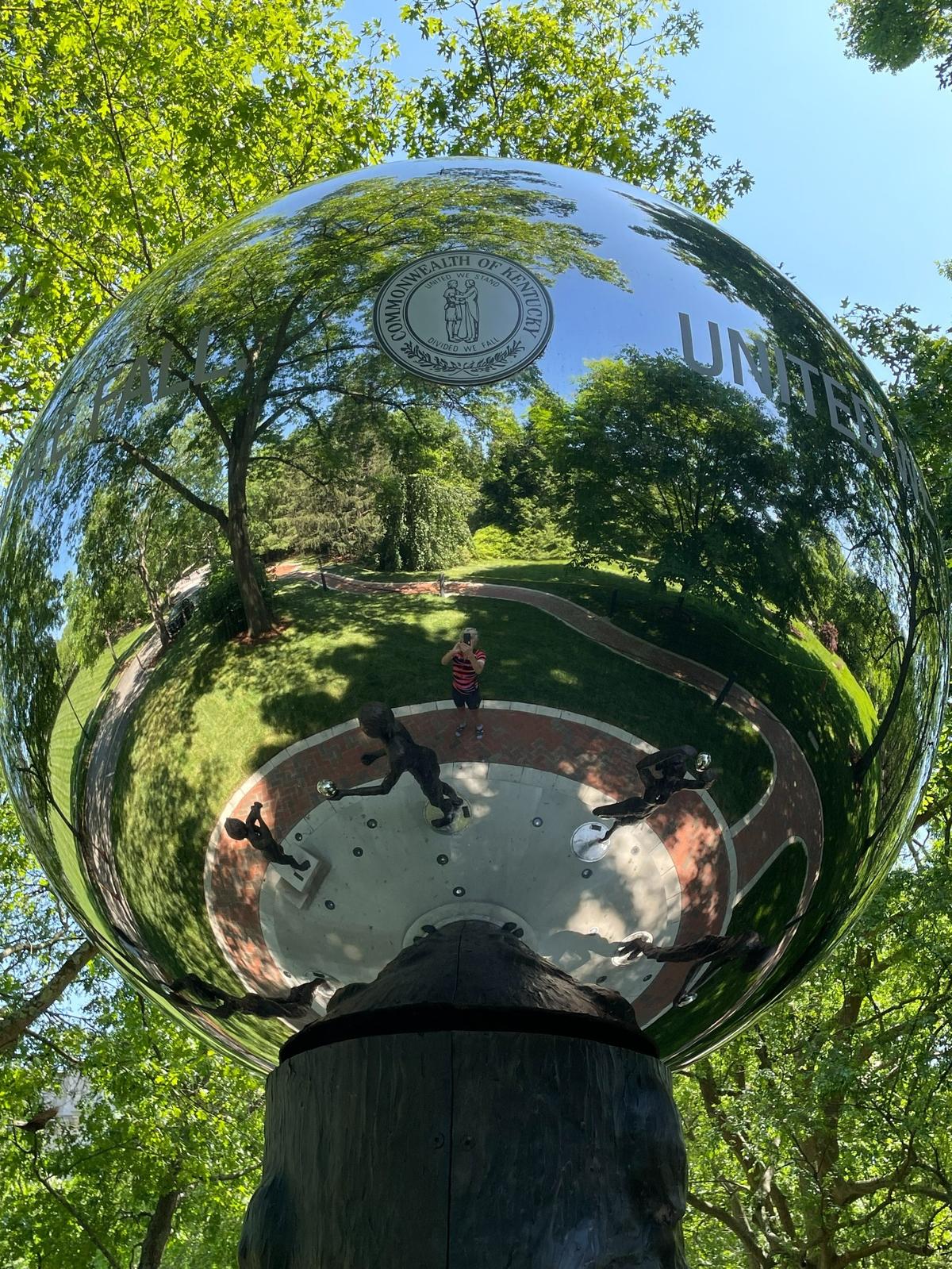
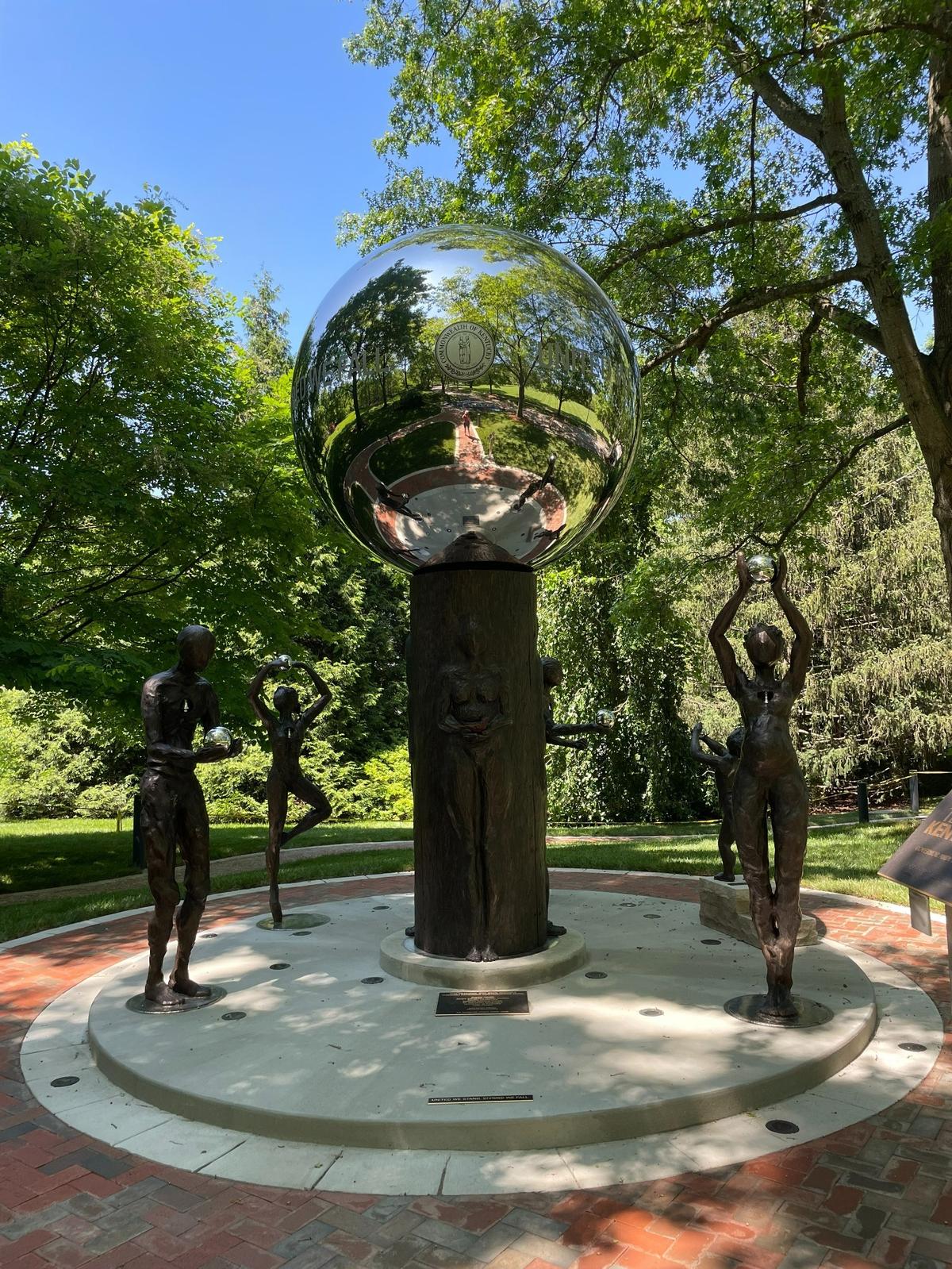
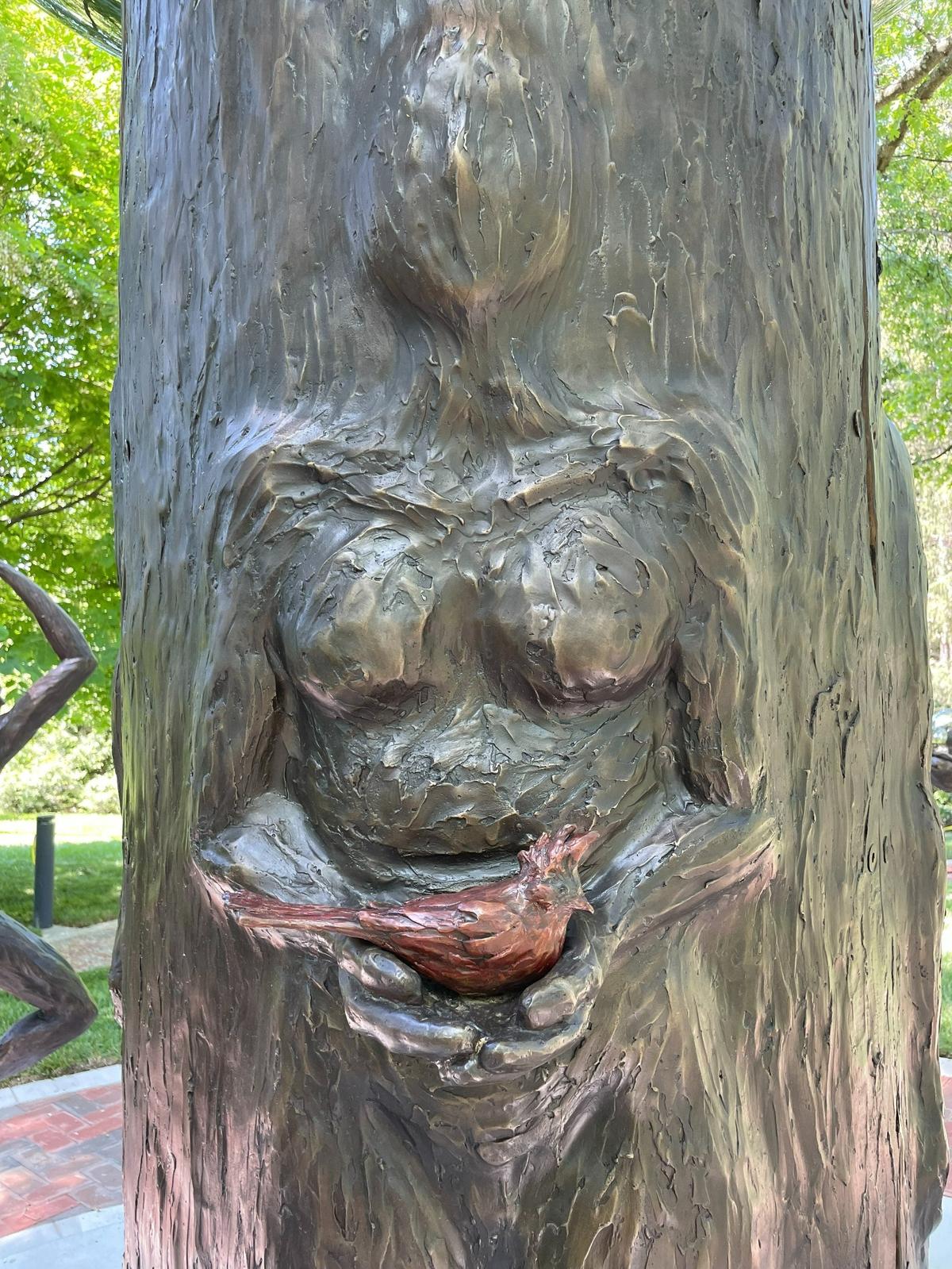
Matthews calls the central element a “column of support,” representing the healthcare workers, first responders, front-line service workers and many others who cared for people and kept things operating during the pandemic.
That theme of unity and working together is also reflected in the large sphere and the smaller ones held by each of the figures surrounding the central column. A sphere “is the only shape in the universe where all points on its surface are an equal distance to its center,” she wrote, much like the idea of a commonwealth where each person has an equal voice.
Matthews, who grew up in Louisville and now lives in Lexington, earned the commission to design the memorial in a nationwide competition with the final choice made by a panel of COVD-19 survivors, people who lost loved ones to the disease and healthcare workers who cared for people during the pandemic. No public money was used for the memorial, with all the cost funded by donations from hospitals, healthcare providers and members of the public.
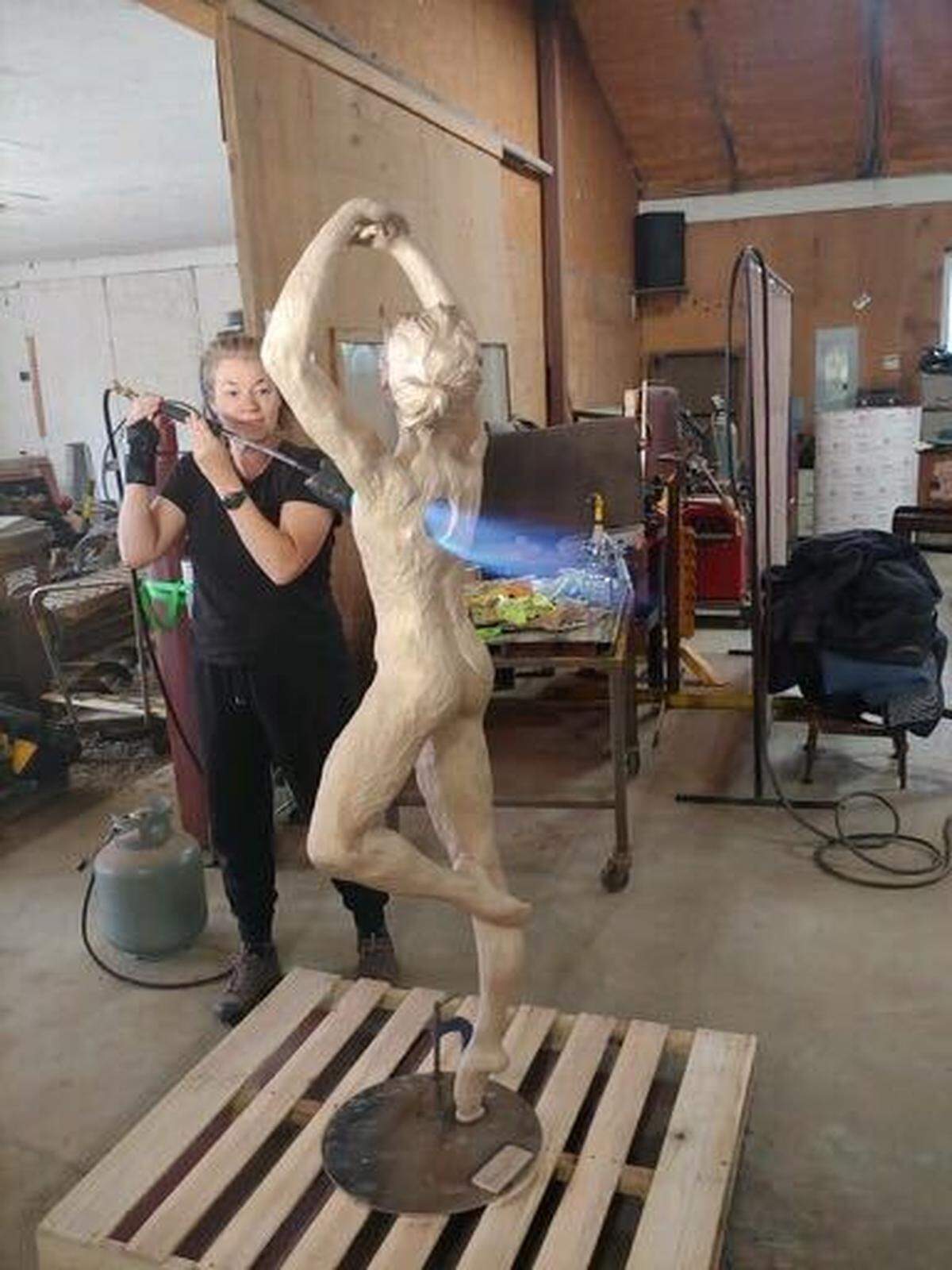
Winning the competition was one challenge but completing and installing the large, complex set of bronze cast figures on a tight schedule was a challenge if it’s own. Typically, when sculpting one life size or larger sculpture, she said, “I like to have 12 months,” because the process is so labor-intensive. “Going from a tiny maquette to enlarging it, adding clay, molding, casting waxes, investing waxes, poring the bronze and THEN fitting it all up and welding and chasing the metal and patina, transportation, there’s so many steps.” But for the COVID memorial there were eight large pieces to be completed in about a year.
She and her husband and sculpting partner Brad Connell have a foundry to create bronze figures but the timeline demanded they hire a larger foundry in Atlanta to cast the pieces, requiring several trips there while all the other steps were done in-house. “We’ve been working seven days a week for several months.”
The installation was also complex because the huge pieces are both very heavy and tall so they must be thoroughly anchored to remain stable. Assuring that required both a geological survey to find bedrock below the site and an engineer to determine how to tie the bases of the sculptures into it.
“We are very proud that we met our deadline,” Matthews said.
This story was originally published May 23, 2023 at 12:31 PM.