
Curious how restaurant inspections work in Lexington? A look at some common violations
If you enjoy eating out, you might be wondering what goes into your favorite restaurant health inspection score. How thorough are they really, and do they fully capture what’s going on in those kitchens outside of the public’s view?
According to Luke Mathis, who oversees the inspections for the Lexington-Fayette County Health Department, each establishment is inspected twice a year, with additional visits if there are complaints.
Here’s a rundown of how the health department handles the process. Such inspections don’t just apply to restaurants, but any establishment that serves food to the public.
What do health inspectors look at when visit Lexington restaurants?
Mathis said inspectors spend a lot of their time looking at how food is prepared. They take temperatures, look at the overall cleanliness of the facility and check records to make sure everyone has been trained to handle food safely.
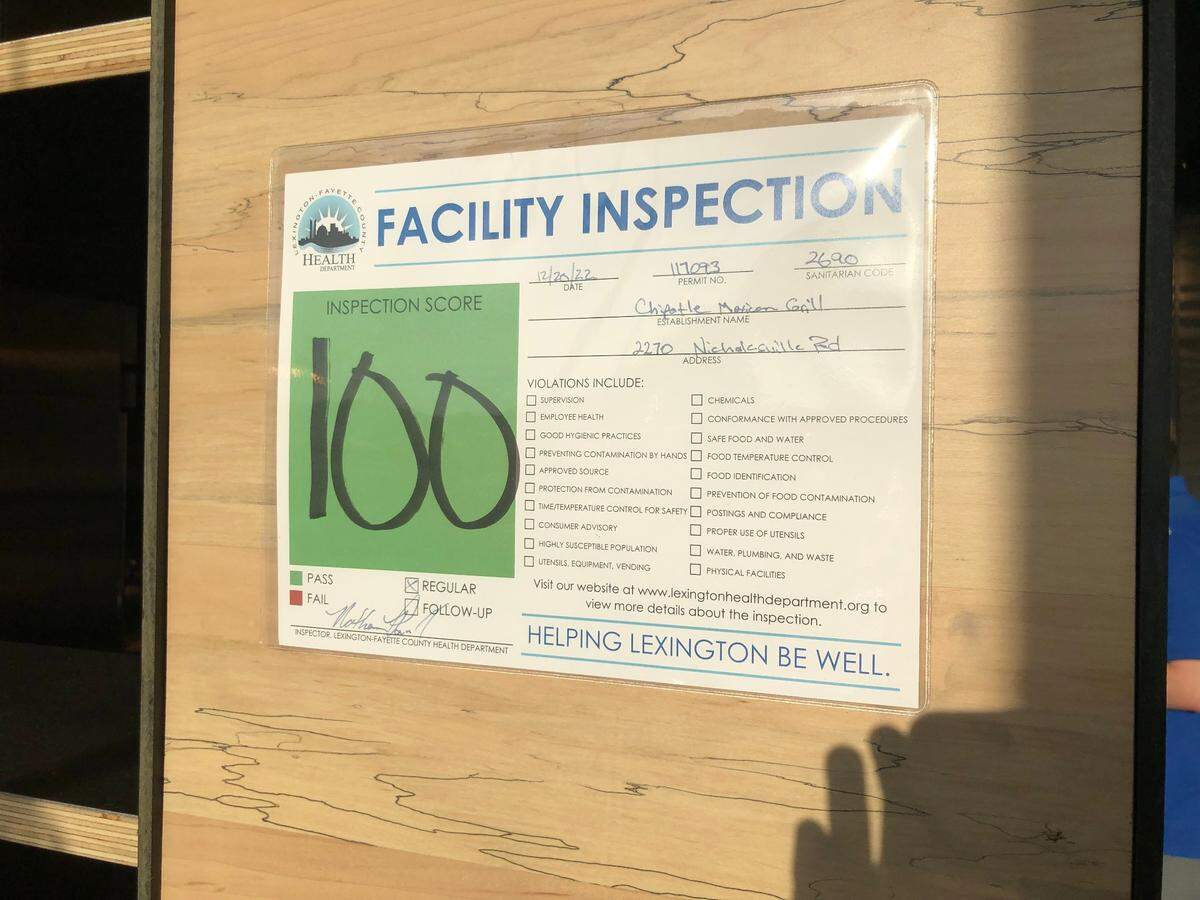
A sample inspection form available on the health department’s website shows inspectors evaluate compliance across broad areas of food safety, including preventing contamination by hands, among others. Inspectors look at whether specific practices within those categories, such as cooking food to the proper temperature, are being observed.
The inspection form also allows inspectors to make notes about specific violations, such as “meatloaf held beyond expiration” or “employees not washing hands prior to gloving,” for example.
What do the green and red placards outside of restaurants mean?
According to health department policy, scores of 85 or higher with no priority violations — the most severe kind of lapses — are posted with a their score on a green placard, while scores 84 or lower or those with priority violations are posted on red placards.
Those “priority violations” could be anything from poor food-handling practices to issues with the facilities themselves, such as backed-up plumbing, Mathis said.
What health code violations require follow-up inspections?
Scores lower than 85 or those with priority violations require follow-up inspections.
According to Mathis, if the issue can be addressed quickly, the health department can immediately send another inspector to conduct a follow-up visit. Otherwise, the second inspection occurs 10 days after the initial one.
What is enhanced regulatory enforcement?
Originally referred to as the health department’s “probation program,” enhanced regulatory enforcement, or ERE, applies when establishments score below an 85 on their regular inspection, fail an assigned follow-up inspection or require closure due to an imminent public health issue — like raw sewage overflow, pest infestations or have no electricity and running water.
Those establishments are subject to additional inspections and remain under ERE until they can successfully pass two inspections in a row. After they exit ERE, inspections are conducted at their regular interval: at least twice a year.
What are the most common restaurant violations in Fayette County?
Mathis, who has been with the health department for 23 years, said in his experience the most common violations pertain to general cleanliness, such as areas along the floors, walls, ceiling or others not being cleaned often enough.
According to statefoodsafety.com, the following tend to be the most common food safety violations for establishments in general:
Storing or using chemicals on or near food and food-contact surfaces
Not cleaning and sanitizing utensils, equipment or machines often enough
Infrequent or improper handwashing
Having ill employees handle or cook food
Temperature abuse of time/temperature control for food safety, referred to as TCS. If certain foods are allowed to be in the temperature danger zone (41 degrees Fahrenheit to 135 degrees Fahrenheit ) for too long, pathogens can grow to dangerous levels and cause foodborne illness.
What violations lead to immediate closure in Lexington?
According to the LFCHD, restaurants should close if:
There’s a water emergency
If there is a sewage overflow
After a fire, flood or some other emergency
If they have no electricity
When employee illness or other conditions threaten public health
If an infestation of pests occurs, whether they be rodents or insects
Does the health department make the reports available to the public?
The LFCHD doesn’t post full inspection reports at restaurants or on its website, and they’re only available by request.
The Herald-Leader regularly covers and reports on health inspections and closures of area establishments.
Do you have a question about entertainment and dining in Lexington for our service journalism team? We’d like to hear from you. Fill out our Know Your Kentucky form or email ask@herald-leader.com.
This story was originally published June 6, 2023 at 10:33 AM.