How to spot counterfeit Pappy and other pricey bourbons, from an expert
With federal and District of Columbia alcohol officials investigating potentially fake bottles of expensive whiskeys, how can consumers know what they are buying is real?
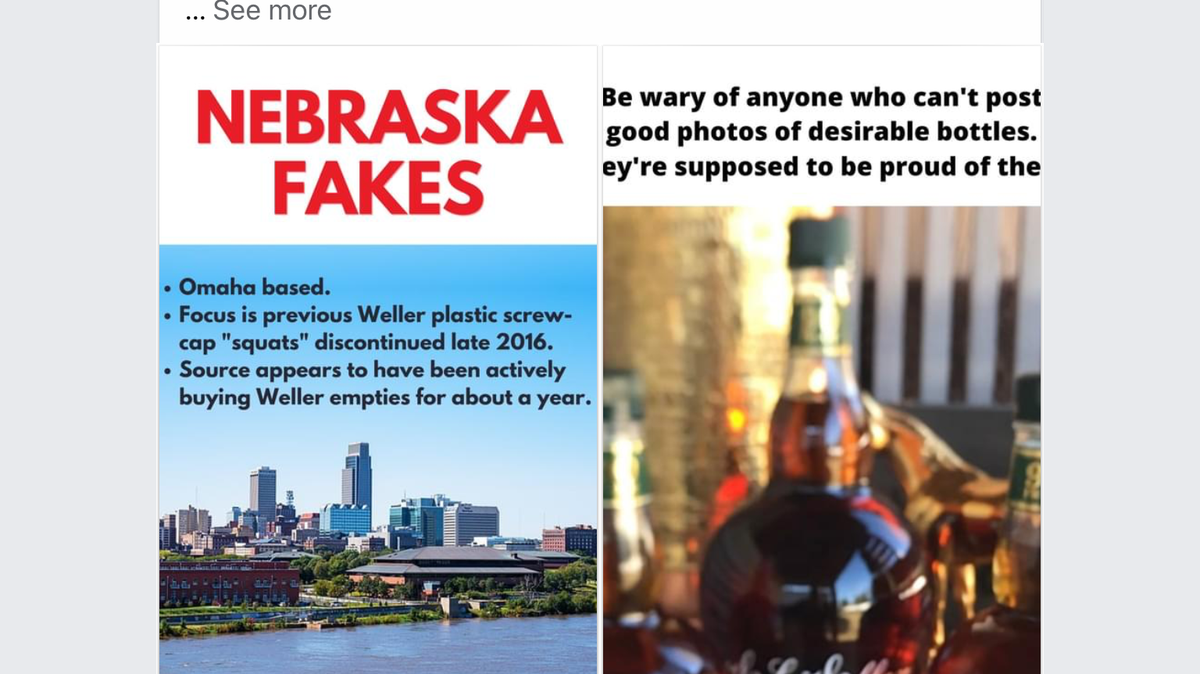
Adam Herz, who has been tracking down fake Pappy Van Winkle and other pricey bourbon for nearly a decade as a hobby (he’s a screenwriter best known for writing the “American Pie” franchise in his day job) has become the go-to expert.
He helps identify and “out” fakers on his Facebook page, Herz’s Serious Whiskey Info, and he’s been on “Inside Edition” and in “The New York Times” for his efforts.
Herz said in an interview with the Herald-Leader that in many cases counterfeits are nearly undetectable because often unscrupulous sellers are refilling empty bottles.
“In the U.S., most counterfeits are made from refills. People are buying legitimate empty bottles off of eBay, Etsy, Craigslist, Facebook, from bars, where ever,” he said. They often have the machinery capable of resealing the bottle, which is then resold for hundreds or sometimes thousands on the online black market.
“If someone does that perfectly, the only thing fake is the contents. So until you crack it open, there’s no way to tell by sight that it’s real or not,” Herz said.
Who is selling collectible bourbons?
In Kentucky and in many places, it’s illegal for an individual to buy alcohol directly from another individual. But it happens all the time. For many collectors, it’s a great way to find and enjoy vintage and hard-to-find spirits.
Kentucky 2017 vintage spirits law made it legal for individuals to sell just about anything directly to retailers such as Justins’ House of Bourbon, which has been under regulatory scrutiny for its business practices in Kentucky and Washington, D.C.
Justins’ has not been charged with anything and has not been implicated in selling fake bourbon but concerns abut counterfeits were raised by investigators in the D.C. case, which is ongoing.
What can bourbon makers do?
Sazerac, which makes Pappy Van Winkle, Blanton’s, Weller and other much sought after bourbons, has been the subject of high-profile lapses in inventory control at its distillery in Frankfort. Remember the 65 cases of Pappy Van Winkle bourbon and rye the company reported stolen in 2013?
The company has issued warnings not to buy bottles online but Herz has long advocated for the American bourbon industry to adopt the kind of security measures that the high-end Scotch industry now uses, including tamper-proof seals with holograms that cannot be replicated.
Some have taken steps but until that happens across the board, there will always be a market for counterfeits of hard-to-find and expensive bourbons, he said.
How to tell if a bottle is fake
Here are his tips for how to buy with confidence:
▪ Know what the bottle is supposed to look like. That’s the easiest way to tell if what you’re being offered is correct. Is it supposed to have a cap or wax on top? Is the cap supposed to be plastic or metal? Does the wax look indistinct, like the bottle has been re-dipped?
▪ Think like a faker. Even legitimate bottles have things like printing errors, double “capsules” (the seal on top of the bottle) and squiggly laser codes (which indicate where and when a bottle was filled) on them, Herz said. “You have to think: Would I make this error?” But hand-written numbers that look altered can be a giveaway.
▪ Look for “bottle drips” on the label, vertical streaks that often happen when a bottle of bourbon is opened and poured. Because counterfeiters are often lazy, if desperate they will use bottles that aren’t perfect, he said. Those can be easy to spot.
▪ Do your due diligence. Ask where the bottle came from. “I have seen a store owner in Kentucky sell a fake. He swore he bought it from a major retail chain but those guys do not buy secondary or fakes,” Herz said. Eventually the store owner confessed that he’d bought the bottle via social media.
▪ Buy from trusted sources. If the seller can’t provide documentation (that the bottle came from a raffle or private auction, for instance) “you have to walk away,” Herz said.
▪ Test the proof. If you open a bottle and don’t think it tastes legitimate, you can check to see if the alcohol by volume is what it should be.
▪ What about taste? Unfortunately, Herz said, unless the discrepancy is obvious, most people (even experts) can’t tell a spirit by taste.