Now that you’ve mastered making bread, here’s the perfect thing to top it: your own jam
If you’ve spent the last two months of the coronavirus shutdown baking, then it’s about time to turn your hand to a new kitchen hobby. And spring is the perfect time to experiment with jam.
Strawberries are starting to appear at farmers’ markets in Kentucky and at local fruit farms like Eckert’s Orchard in Versailles, where they have 3 1/2 acres of strawberry fields, as well as blackberries, pears, peaches, apples and pumpkins.
Normally, Eckert’s would be welcoming families in to pick berries together.
This year, said Megan Fields at Eckert’s, they won’t be able to offer families that experience. They just don’t feel they can do it safely, Fields said.
But they will still have plenty of fruit available to take home.
And if you’re looking for a way to bond over berries, it’s hard to beat making jam. Especially freezer jam, the easy no-cook version.
Eckert’s will have an online tutorial on jam making on May 21 at 6 p.m. if you want to see how it’s done.
How to make freezer jam
The recipe that Fields uses, which came from the Woodford County extension service, is simple enough even for first-timers like me.
Take a quart of berries, washed and topped, and smash them up good. (My grandmother used her hands for this step; I gave the kids a potato masher and let them have at it.)
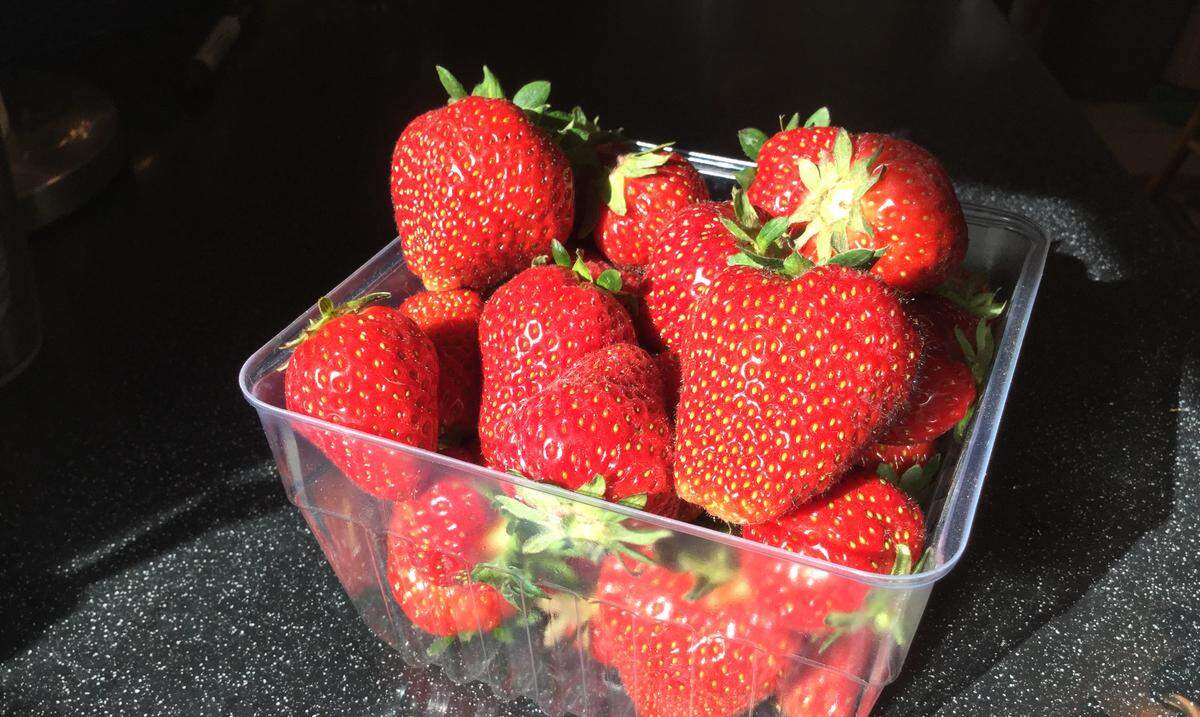
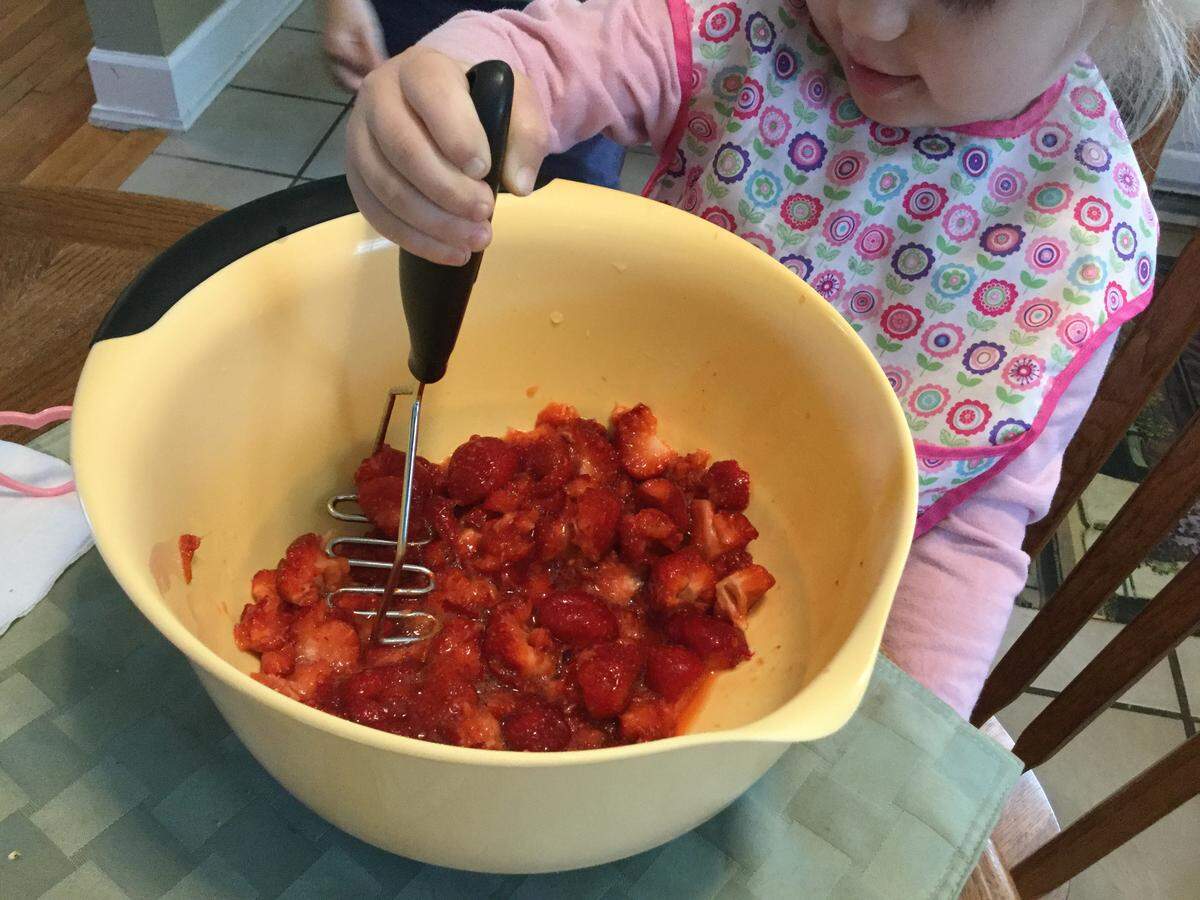
Add four cups of sugar and stir well. Let it stand about 20 minutes. Dissolve a package of pectin in a cup of water and boil for one minute, then add to the berry and sugar mixture. Stir for two minutes.
Then pour the jam into freezer containers or canning jars, close up tightly and let them stand at room temperature for 24 hours. You can store it in the refrigerator for up to three weeks and up to a year in the freezer.
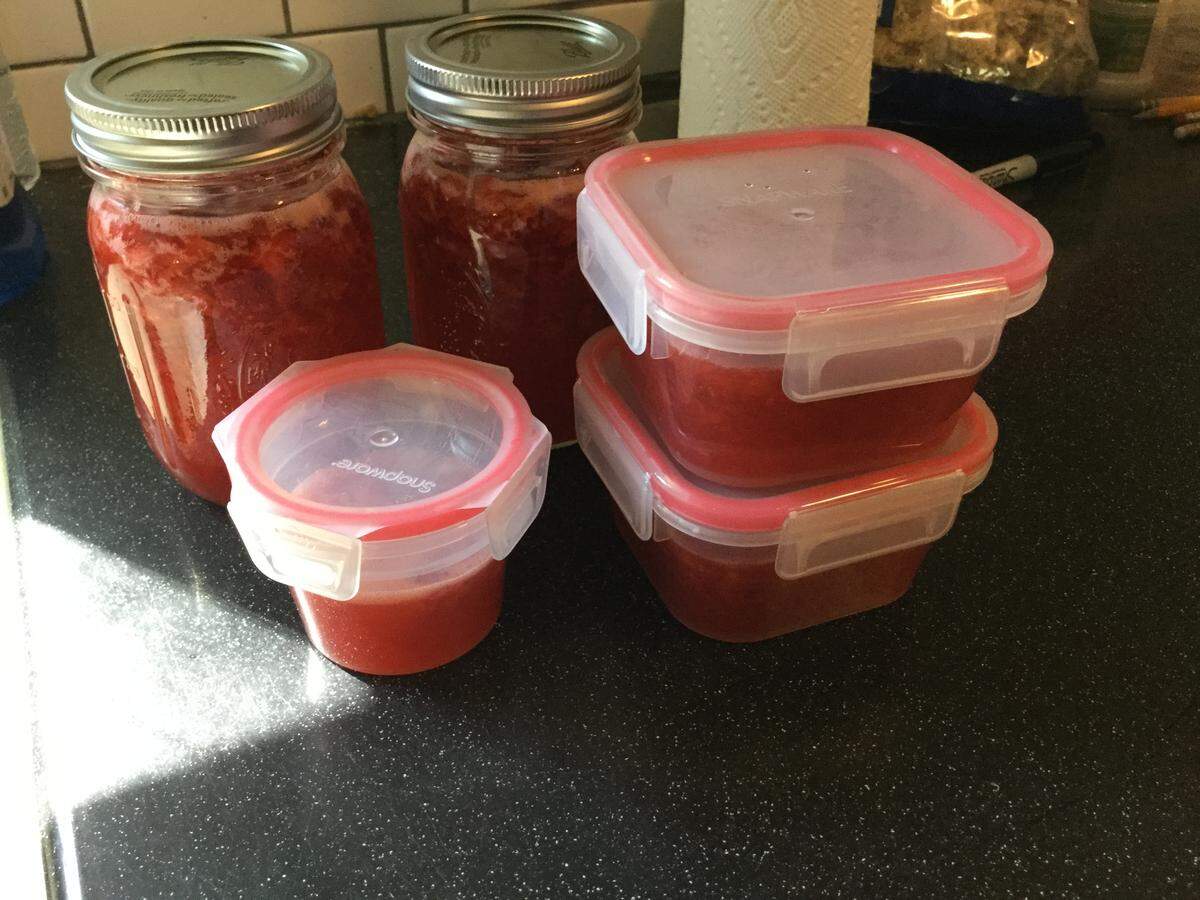
This recipe will make about 5 or 6 cups of jam, so have plenty of containers ready before you start. I used two pint jars and three smaller freezer containers. But a wide variety of options are available.
Canning jam
This process was considerably easier than actually canning jam in boiling water but that method will let you store jars of jam on the shelf for a year (assuming jam lasts that long in your house.)
That might be a better option if you don’t have a lot of freezer space but has a bigger front-end investment in equipment and is trickier.
My suggestion if you want to try it is to check out America’s Test Kitchen, which has great videos that will demonstrate the whole process. They also have a cookbook, “Foolproof Preserving.”
Local orchards
Besides Eckert’s, other orchards in Central Kentucky include Evans Orchard in Georgetown, which hopes to have strawberries available by the end of May or early June. Evans hopes to have a plan for “you-pick” and should have blueberries, apples and peaches.
Reed Valley in Paris doesn’t have strawberries but has blueberries and blackberries, which come on later in the year. Reed Valley won’t be able to do its Saturday pancake breakfasts this year but does anticipate allowing “you-pick.”
The orchard scrambled on May 8, lighting dozens of fires throughout the orchard to keep the blueberries from freezing, and hopes that they have saved the crop.
So even if you miss the strawberry window you’ve still got a chance to make homemade jam to spread on that bread you’ve been perfecting.
This story was originally published May 13, 2020 at 4:35 PM.