
The cake pop is an adorable Easter treat, but it can test your patience
Professional bakers and the beautiful photographs of their work in cookbooks can grab us quicker than chocolate melts in the sun. Their step-by-step instructions and how-to tips manipulate us into thinking we can duplicate in our home kitchens what they've perfected.
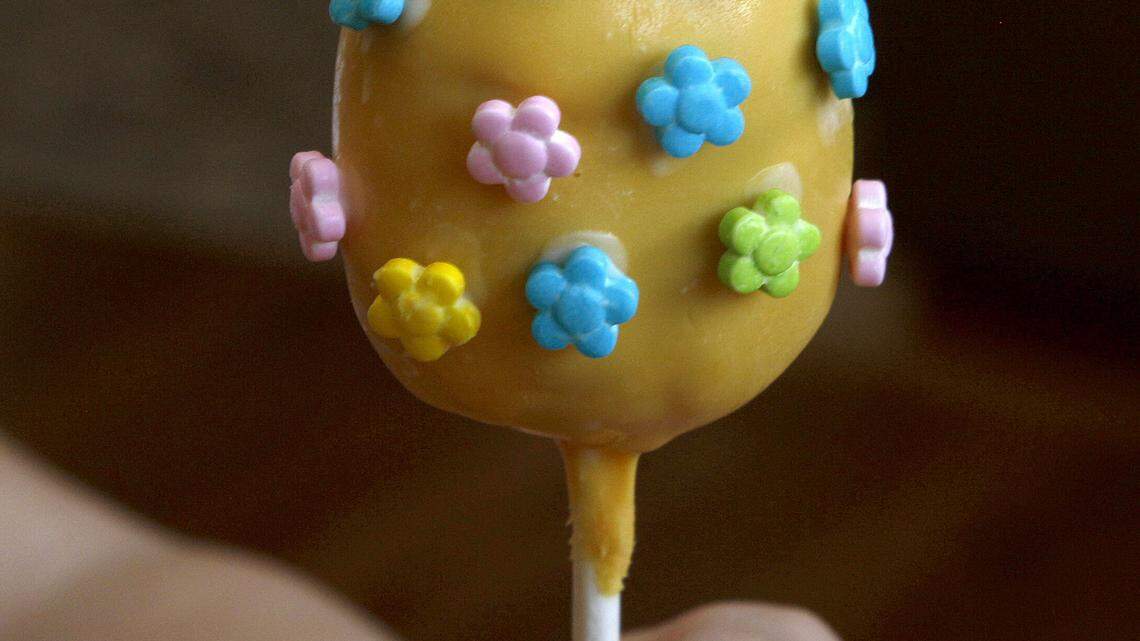
I know this is true because I tried to make cake pops, a popular food trend. Cake pops are bite-size round cakes on a stick, decorated with fun designs. They're everywhere. They've pushed cupcakes off the wedding cake table; they're the rage on food blogs; they were the third most-popular dessert search on Yahoo in 2011. There are several cookbooks on the market devoted solely to cake pops; Starbucks offers them in the dessert case, and almost every local bakery makes them.
You can even buy electric cake pop makers, and a tool for making the same size ball every time. Cake pops are a combination of baked, crumbled cake mixed with frosting, rolled into a ball, placed on a stick, then dipped in various colors of candy melts.
With Easter almost here, parents who enjoy making adorable treats with their children just might be tempted to take on this task, even involving their youngsters.
But back up.
Cake pops are not as easy to make as you might be led to think. Sure, anyone can bake a cake, crumble it up, mix it with frosting, roll the mixture into a dozen or so golf ball-size balls, and dip them in melted candy.
Or you think you can. It's dipping the ball that's tricky. Let me assure you, from personal experience, it takes practice and patience. Those precious little lambs, ducks, chicks and bunny cake pops can take on a crazed look if you don't have a steady hand.
Before you tackle those Easter cuties, practice on a few round balls. Too much candy coating will send the youngsters into high gear; a too-thin coating with send your hard work dripping down the stick.
The instructions in the recipe I used said to add vegetable oil to the melted candy. You'll have to dip several cake balls before you get the consistency right. But when you get it to the point that the cake ball is covered after a couple of swoops through the melted candy, you're ready to go.
If you choose to make cake pops for Easter and they turn out perfectly — or even if they don't — post your experience and photos on Facebook.com/sharonthompsonhl. We'll hand out a few baking cookbooks to readers with the best photos and/or stories.
Here are the instructions.
RECIPES
Making cake pops
Favorite cake mix recipe
Frosting:
1 stick unsalted butter, softened
1¾ cups confectioners' sugar
1 teaspoon vanilla extract
Preheat oven to 350 degrees. Line an 8-inch baking pan with wax paper. Prepare cake mix, pour the batter into the prepared pan, and bake according to recipe. Let cool.
To make frosting: Beat together butter, sugar and vanilla extract in a mixing bowl until thoroughly mixed.
Making the cake balls
Break or slice the cooled cake into manageable pieces. Crumble pieces by hand or, for a finer result, use the grater attachment in a food processor.
Using your hands, mix the frosting into the cake crumbs. Add a tablespoon at a time; you might not need it all. Too much frosting will make the pops too wet to stay on the sticks when being dipped. The mixture is ready once it holds together when rolled in your hands.
Divide mixture and roll into balls about the size of golf balls, or form into the required shape for your pop design.
Once the balls are shaped, put them on a plate and cover. Place in refrigerator for at least an hour, until mixture is firm. They can be kept, covered, in refrigerator up to 2 days.
Once the balls are firm to the touch, they are ready to dip.
Dipping the cake pops
1 bag candy melts
Microwavable bowl
Spoon
Vegetable oil
20 cake balls
20 lollipop sticks
Toothpick
Empty candy melts into microwavable bowl, and heat on medium for about 2 minutes. Stir at 20- second intervals to make sure candy melts evenly and doesn't burn.
Stir vegetable oil, a tablespoon at a time, into the melted candy. This will help thin the candy and achieve a silky, workable texture. The finished candy should run off a spoon.
Remove cake balls from refrigerator. Dip ½ -inch of a lollipop stick into the melt and insert into the center of a ball, going about halfway through. Be careful not to push too hard, but make sure it is in far enough to secure the ball. Let set upright (a block of Styrofoam is handy here).
When it's set, dip cake pop into melted candy making sure it is completely covered.
Gently tap stick on the side of the bowl to remove any excess candy. Flip the pop and tap the other side to gain a smooth, even coating. Use the pointed end of a toothpick to remove any bubbles that might appear in the candy melt when you're tapping.
Let dry upright. Once dipped, the cake pop will keep for 3 to 4 days in a cool, dry place.
Decorating the cake pops
■ To add edible decorations once the cake pop is dry, dab melted candy with a toothpick onto the surface and attach your chosen decoration.
■ To make a lamb, cut miniature marshmallows in half and let cut edges dry. As soon as the cake ball is dipped in candy melt, start adding marshmallows, leaving room for the face. To make a face, pipe melted dark chocolate in a circle on a sheet of wax paper. Add ears. Make eyes and nose by dipping a toothpick in white candy melt and adding to the circle. When dry, attach with a dab of melted candy.
■ Gum drops are a quick way to decorate a cake pop. Cut gum drops horizontally in half. Sprinkle granulated sugar on work surface.
Place gum drops on granulated sugar and flatten with a rolling pin. Then shape.
Sources: Wilton, Cake Pops by Helen Attridge and Abby Foy, Bakerella.com
Bunny cake pops
White candy melts
Mini marshmallows (tails)
Pink and white candy corn (ears)
Tiny heart sprinkles (noses)
Pink, blue and black edible ink pens
Styrofoam block
Toothpicks
Shape cake mixture into an oval. Chill until firm.
Melt candy. Dip a lollipop stick in a little of the melted candy and insert into the body almost halfway. Then dip the bunny body in melted candy. Make sure the bowl is deep enough to dip and remove easily. Tap off excess coating.
For the tail: Use a knife and make criss-crossing indentions on a mini marshmallow. Don't cut through, just enough to give a cottontail effect. Attach tails with melted candy coating and let dry.
For the ears: Use the rounded side of a cookie cutter and cut off the tip of the candy corn. Dip the cut end in a little bit of melted candy and adhere it to the top of the bunny head. Hold in place until it sets. If your candy coating isn't too hot, this should take just a few seconds.
Let the bunny heads with ears sit in the Styrofoam block until all the ears are dry. When dry, use a little bit of melted candy coating to glue facial features on. Use a toothpick to place a dot of candy coating for the nose and attach a tiny heart sprinkle, and dab a little of the coating in position for the eyes. When eyes and nose are dry, use your pink pen to draw on the mouth. Then use the blue pen to draw on the eye color and the black pen to draw on pupils.
Source: Bakerella.com
This story was originally published March 28, 2012 at 1:30 PM with the headline "The cake pop is an adorable Easter treat, but it can test your patience."