
Country ham becomes a delicacy in four-course menu
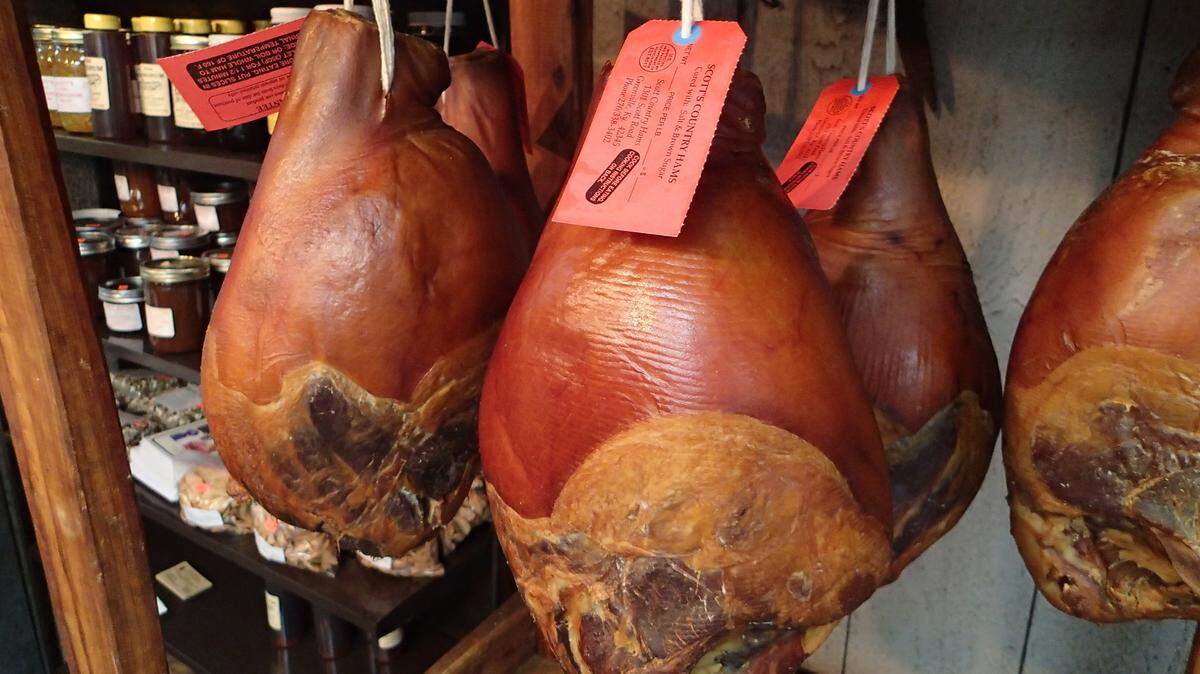
When you think country ham, do you see plate-sized slab, drenched in red-eye gravy? Or maybe teeny beaten biscuits with a chaw of salt pork inside?
Food writer Steve Coomes wants you to clear your palate and your mind of those images.
Think charcuterie, the art of savory meat, Coomes said.
His new book, Country Ham: A Southern Tradition of Hogs, Salt & Smoke, explores how something once viewed as the food of common folk is being re-envisioned as a delicacy.
"I had country ham growing up but it was always cooked, always leathery and salty," Coomes said. But a few years ago Coomes wrote about Nancy Newsom of Princeton, Ky., known to many as the Ham Lady. She has been invited to participate in the World Ham Congress — the Congreso Mundial del Jambon — held annually in Spain.
To thank him, Newsom sent a small package of her ham.
"And I thought, this is what I've been missing all my life," Coomes said. "It was an epiphany for me."
This was country ham comparable to prosciutto — salty, yes, but flavorful and not dried out, overcooked — not really cooked at all.
Then he had the country ham platter at Garage Bar, a Louisville eatery. A virtual "flight" of ham — several versions of country ham served with really good baguette and red-eye aioli, he said. "Absolutely delicious. Nobody else at the time was serving country ham like that," Coomes said.
He began researching ham makers in the "country ham belt" of Kentucky, Tennessee and Virginia for his book. He found that while chefs love serving country ham thinly sliced, charcuterie style, those serving country ham at home think they have to cook it.
"It's still in the mindset — that it's raw," Coomes said. But it isn't. "It's cured. It's a beautiful thing."
Curing ham in salt and then smoking it is "a dying art," Coomes said, once practiced by nearly every farmer as a way to keep meat, especially pork, throughout the year.
And now it's on the rebound, rediscovered by chefs looking for authentic American flavors — and for ways to serve good food for less.
Country ham tastes like prosciutto or European cured pork but costs far less. Coomes said that an expensive whole ham might cost $125. But the top Spanish version will go for more like $100 a pound.
What makes a ham "country" instead of "city?"
A country ham is cured in salt, for six to nine months (depending on where it is hung) and smoked. The salt migrates from the surface all the way through the meat to the bone, he said, until the meat loses at least 23 percent of its moisture.
City ham — the typical grocery store ham, or even a "honey baked" ham — is just wet-brined to give it flavor.
Kentucky, like Tennessee, Virginia and a few other states, provides perfect temperatures for curing ham. The same hot and cold cycle that creates great bourbon helps the ham, too, he said.
"That just happens in this little sliver of the world," he said. "We're on the same latitude as Spain and Italy."
Ham makers like Newsom, Jay Denham of Woodlands Pork, Allan Benton in Tennessee, and Edwards and Sons in Virginia have come to realize that a whole new market is opening up to them.
"That's their future — it's not the Grandma cooking in Coca-Cola, it's charcuterie," Coomes said. The country ham is "an accent piece, not a main course. ... Once people taste it, the lights come on."
On Thursday, Azur in Lexington will serve a special meal built around this concept. Chef Jeremy Ashby created a four-course menu inspired by Coomes Country Ham book.
For instance, Ashby took a recipe for a ham and cheese-ball idea and "geeked it out" to make it fine dining.
"The cheese ball is stuffed inside a quail and deep fried," Ashby said. His big finish will be "sweet and savory country ham-infused ice cream with sweet potato biscuits, sorghum and roasted apple caramel."
Ham ice cream?
"It makes perfect sense to me," he said. "Who doesn't like pork chops with a sweet applesauce? Salty and sweet go together great."
This story was originally published September 23, 2014 at 4:40 PM with the headline "Country ham becomes a delicacy in four-course menu."