
Chefs, scientists focus on 'science of flavor' at UK symposium
As anyone who has tried to change their diet knows, we eat what we like, and knowing it's bad for us is pretty much irrelevant.
But why do we like what we like? Can we change what we like? And can we use this knowledge to make healthy food more palatable?
Those were they types of questions raised at the first annual International Society of Neurogastronomy symposium at the University of Kentucky on Saturday.
The relatively new field explores the intersection of science and food.
Keynote speaker Dr. Gordon Shepherd of Yale University coined the term neurogastronomy in 2006 to highlight that taste and smell happen in the brain rather than in the mouth or nose.
At Saturday's symposium, Shepherd said he hopes the field can establish a "science of flavor" that unites research with nutrition and public policy.
Shepherd outlined the need for further exploration of the evolutionary implications of food, the need for chefs and scientists to work in tandem to study the brain functions of taste and how that affects all aspects of health.
Shepherd and University of Kentucky physiology professor Tim McClintock have researched the way odors impact taste.
McClintock said his work has found different odors create very distinct patterns on our olfactory systems, sending specific signals to the brain about what we are eating.
"My claim is the human flavor system engages more of the brain than any other activity we engage in," Shepherd said. "You hear our visual colleagues claim we are visual animals but evidence is increasing that we are heavily olfactory."
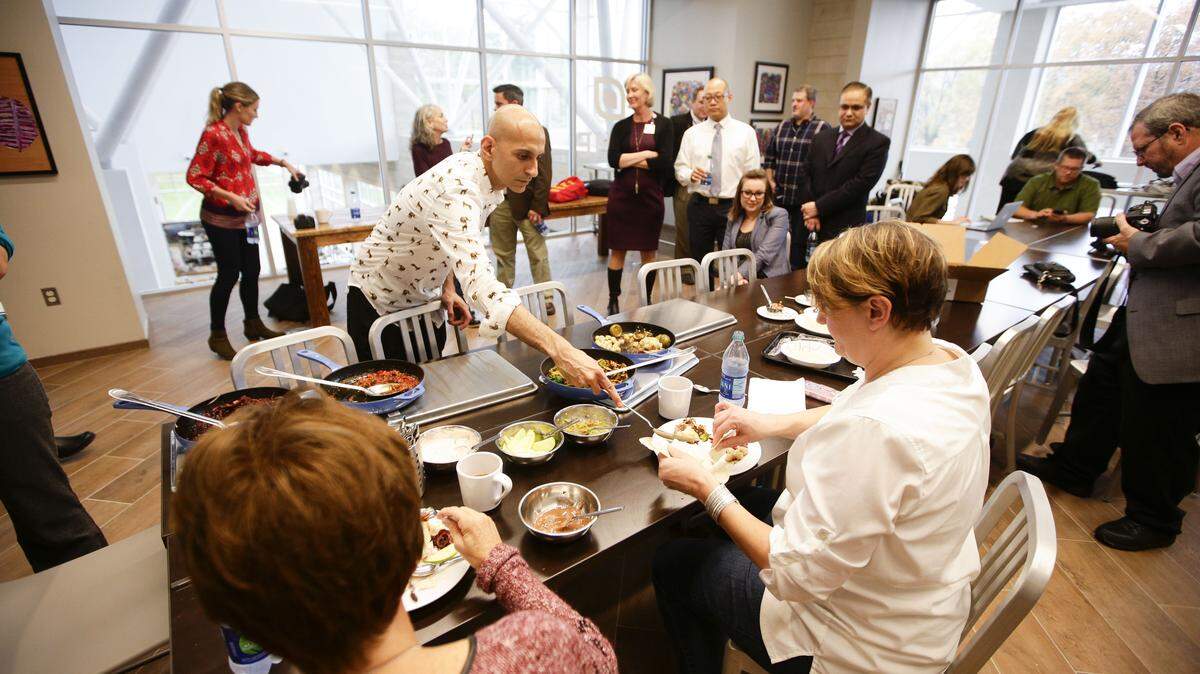
The chefs, academics, medical professionals and others at the symposium had a chance to put these concepts to the test, at a variety of sensory stations.
Some tested how color or texture influenced perception.
For instance, they were asked to sample three bites of gelatin — two black and one bright green — and asked what flavors they tasted. Without the proper visual cue of color, it was almost impossible to tell that one was strawberry and the other orange. And the green one? It was chicken flavored, which caused several people to react with disgust.
Another table had attendees sample purees while wearing a blindfold and holding their noses to see if they could identify the fruit.
That turned out to be harder than it sounds.
The tests illustrated what many chefs have long known — we eat with our eyes and our noses as much as anything.
Chef Fred Morin of Joe Beef in Montreal said this hit home for him visiting his father in the hospital, where his father was told to eat an unappetizing bowl of oatmeal because it was good for him.
"There is such a thing as 'it's not your fault, it's the food,'" Morin said.
He and chef Jehangir Mehta put their talents to the test at the symposium with an "applied neurogastronomy challenge."
They were paired with scientists and clinicians to cook for real patients with a history of cancer and taste changes to see who could come up with a more appetizing meal.
Morin won with a chunky potato soup served with a variety of savory garnishes, including fried chicken skin and bacon that the judges could use to dress their dishes.
This story was originally published November 7, 2015 at 4:08 PM with the headline "Chefs, scientists focus on 'science of flavor' at UK symposium."