
The invasive spotted lanternfly is now in Kentucky. Here’s what to do if you find one
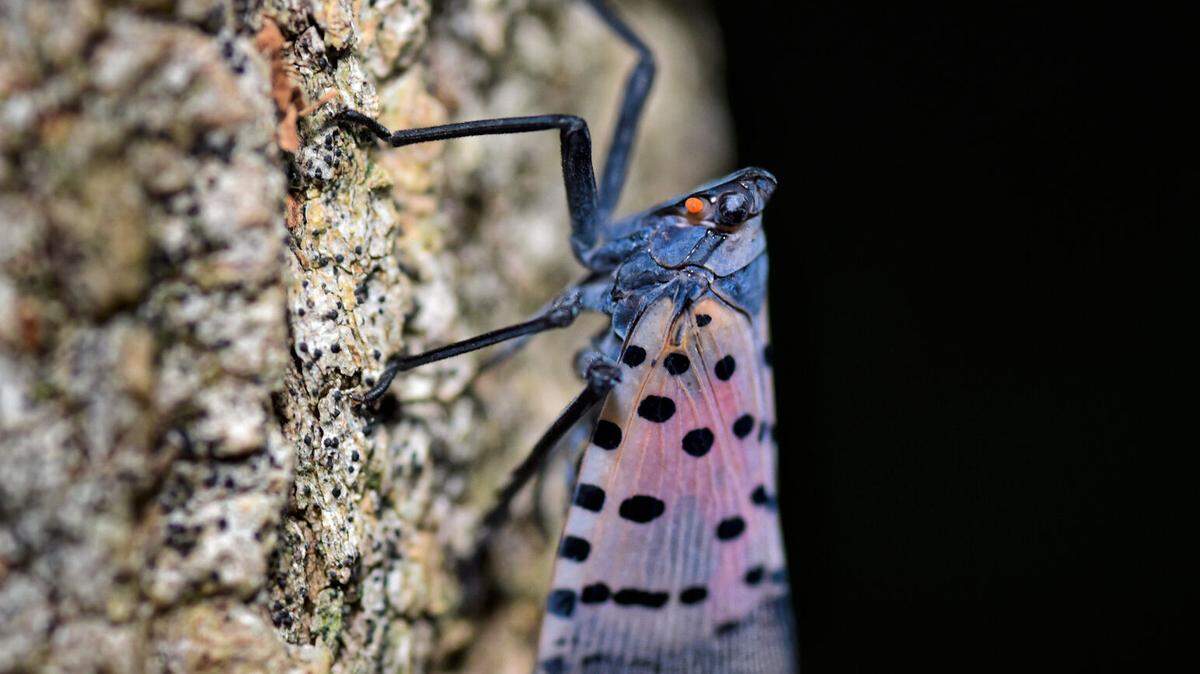
A pest known to disrupt local ecosystems and agriculture industries has been spotted for the first time in Kentucky, and the University of Kentucky is asking the public to help track its spread.
The spotted lanternfly had previously been sighted close to the Kentucky border in Indiana and Ohio. But on Wednesday, UK announced the “critically invasive species” was recently discovered in Gallatin County, which borders the Ohio River with Indiana.
“(The) spotted lanternfly could pose problems for Kentucky grape producers, those working in the hardwood industry, growing apples or hops,” UK entomologist and assistant professor Jonathan Larson said in a news release.
Larson added it may not be long before the spotted lanternfly turns up in other parts of the state.
“It’s possible that adults could lay their eggs on cars, trucks, trains and other modes of transportation that come to Kentucky. Their egg patches look like smears of mud and won’t hatch until next spring,” Larson said.
Even worse, the bugs are known to create a big mess with their poop.
“These sap-sucking pests also create a sticky mess with their fecal material, called honeydew,” Larson said, adding it can create big messes on residents’ property.
Here’s what to know about the spotted lanternfly, including what you should do if you spot one in Central Kentucky.
Why is the spotted lanternfly a threat?
According to the University of Kentucky’s Department of Entomology, the spotted lanternfly feeds by inserting its piercing-sucking mouthparts into its host plant. Feeding on the plant’s sap, the fly drains its resources and stresses the plant, eventually leading to wilted foliage and branch dieback.
The feeding process also leaves behind honeydew, a kind of sugary excrement, on the plant, promoting the growth of black, sooty mold. The sugary substance also attracts flies, bees and wasps who want to feed on it.
Entomologists say the invasive species could impact various agricultural industry sectors, such as wine production, apple growing, Christmas tree farmers and hops growers.
It’s less clear what effect spotted lanternflies have on diverse woodlands, though entomologists speculate their spread could add to existing stressors, such as drought and fire. Combine that with the spread of Tree of Heaven — an invasive plant spotted lanternflies flock to — and the environmental stressors add up for Kentucky’s native trees.
What does the spotted lanternfly look like?
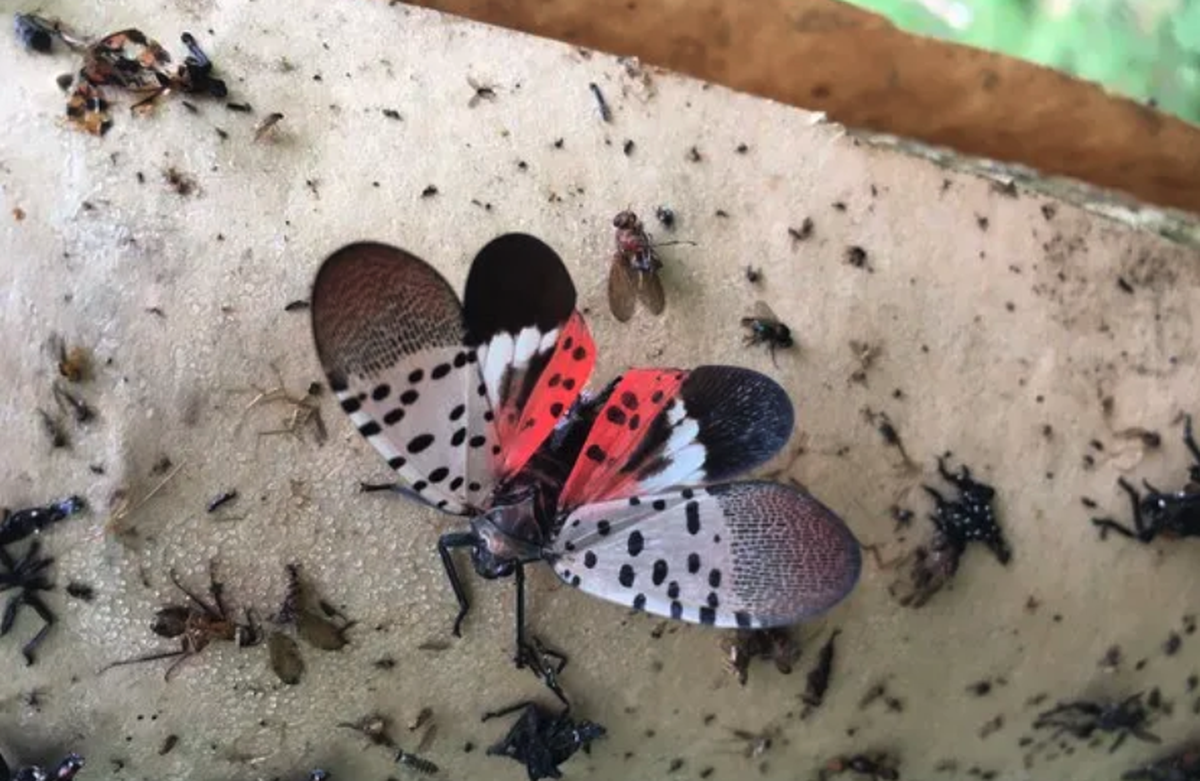
Adult spotted lanternflies hold their striped and spotted front wings in a tent-like position over their body, according to UK Entomology. Their hind wings are bright red, which stands in contrast to the spotted lanternfly’s white, black and khaki-colored body.
Despite its name, the spotted lanternfly isn’t a fly at all but a leafhopper, not unlike cicadas or grasshoppers.
Although they have a distinctive appearance, they’re sometimes confused with other insects. The Department of Agriculture has a guide to their lookalikes.
What should you do if you find a spotted lanternfly?
The University of Kentucky is asking the public to report spotted lanternfly sightings.
If you see one, snap a photo of it with your phone and send it to reportapest@uky.edu and include the county where you found it.
But should you squish it if you find one?
In Michigan, one of 14 states where spotted lanternflies have been found, the state’s Invasive Species Program launched a campaign with the slogan “See it. Squish it. Report it.” It urged travelers returning from out of state to look for an destroy spotted lanternfly insect and egg masses. They can hide on cars, trailers, firewood, camping gear or anything that’s been outside.
In Illinois, where spotted lanternflies also recently turned up, State Entomologist Christopher Dietrich previously told McClatchy News that the best approach is to take proactive steps.
“In my opinion, the most effective measures for preventing their spread would be to thoroughly wash cars, trailers and camping equipment after visiting places in the east where the lanternfly is abundant, especially late in the summer when the females are laying their eggs,” Dietrich said.
“Adult insects are also capable of hitching rides but they can’t survive high temperatures inside a hot car or truck and they also can’t live very long without feeding on a live plant. So, I don’t think movement of adults or immatures (nymphs) is as much of a problem as movement of eggs for this species,” Dietrich said.
Do you have a question about the great outdoors in Kentucky for our Service Journalism team? Let us know through the form below or by emailing us at ask@herald-leader.com.
This story was originally published October 25, 2023 at 4:16 PM.