
Divide now so your daylilies, irises will multiply
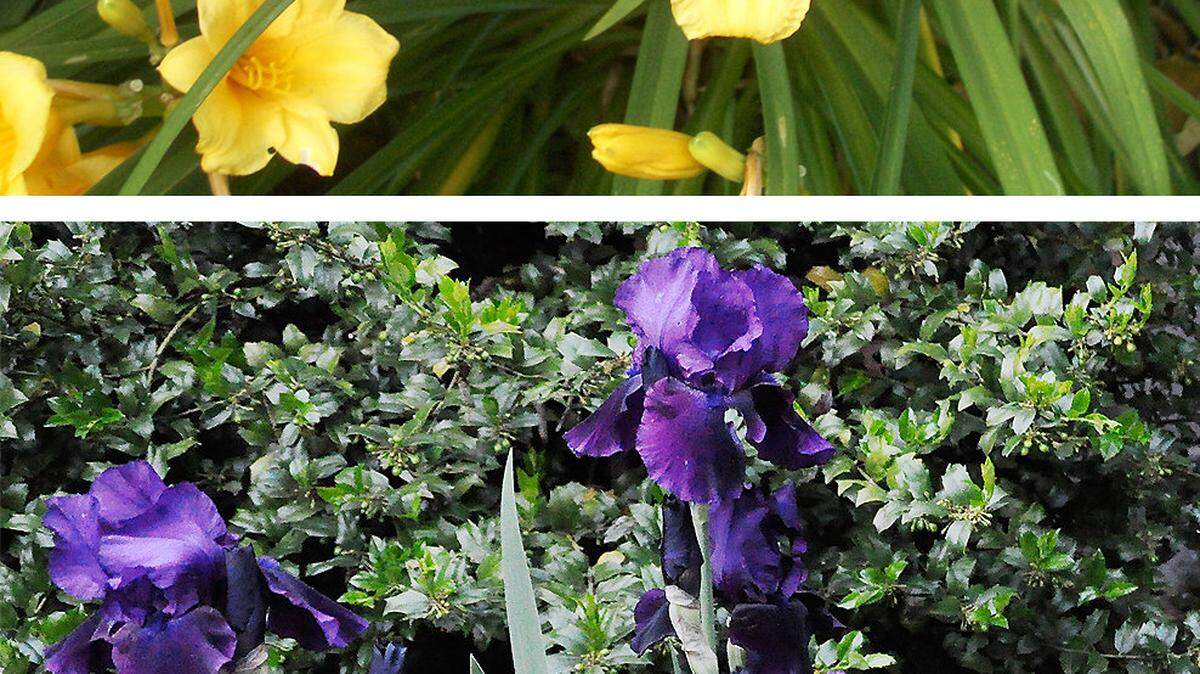
Don't slack off your gardening in August.
This month is an excellent time to divide your daylilies and irises, and to perhaps plant a few biennials around them.
Daylilies are extremely hardy, vigorous-growing members of the lily family. Each flower blooms for one day, but the many buds on the plant open at various times. Depending on the variety of daylily, blooming periods can last for weeks. Some can even rebloom in the fall. There are thousands of hybrids available in orange, red and yellow, with heights ranging from seven inches to six feet.
Daylilies can be divided several ways.
You can dig an entire clump of them out of the ground and then pound or wash as much soil off the roots as possible without damaging them. Divide the plant where roots pull apart easily. Plant healthy roots that have at least three large eyes, or buds, on them about three inches deep. Site them in full sun. Add liberal amounts of compost. Also add kelp, fish emulsion or other balanced organic growth stimulant into the soil around the plant. Water when planting and during dry periods. Daylilies will leaf out in spring and should grow two to three scapes (flowering stems) by next summer, providing flowers on each scape.
An easier way to divide daylilies if you simply wish to thin them is to dig or cut off small clumps from the main root ball. Transplant the pieces you slice away from the parent plant and install them as described above around your garden. They will thrive, but you won't get as many plants from each clump as when you clean the roots and divide them into single pieces.
Bearded and Siberian irises also do well when divided at this time of the year, after flowering. The are both true irises, but bearded irises have a distinctive fan of leaves that grow from their fleshy rhizomatous roots. Siberian irises form a tight mass or clump. You need to divide and transplant them differently.
Many people consider the bearded (also called German iris) the showiest of the late-spring flowers. It has many hybrids that range dramatically in height, and the four-foot cultivars can be primary focal points in the landscape.
When you dig bearded irises, the soil usually falls off of the roots, and they divide rather easily. Keep only the one-year rhizomes (roots about the size of your little finger). Discard the older ones. This will keep your irises free of borers, the plant's most devastating pest. The one-year rhizome should be about three to four inches long and must have at least one large fan of leaves attached. It's all right if there are a couple of smaller fans as well.
Cut fans in half, to about two to four inches in length, and transplant to a new location in full sun, making sure the eye or bud on the rhizome is at or within half an inch of the soil surface. Otherwise, it won't flower. Install with a generous amount of compost.
If you want to divide the iris to generate more plants, dig the entire clump. It will be a tight mass. Knock as much of the soil off the roots as you can. Look for natural divisions, even though you might have to slice them apart where you do not have a natural dividing point. Transplant pieces that have at least three or four leaves on them, and place in the soil at the depth that the parent plant was growing.
To complement your irises and other plants, sow biennials as seeds. Biennials are plants that will germinate next spring if sown now and will produce foliage and possibly blooms next year. The year after that, they should grow, flower and die. Sometimes they can be propagated from offshoots that grow from the base of the parent plant, but it's better to grow them from seeds now or buy them as started plants next spring.
Biennials that grow in partial shade (five to six hours of sun) are hollyhocks, hesperis and forget-me-nots (Myosotissylvatica). Plant foxgloves, larkspurs, violets, pansies, sweet alyssum (Lobulariamaritima) and sweet William (Dianthusbarbatus) in full sun. Some of these will reseed and grow back every year. They are not easily transplanted. Therefore, sow them where you ultimately want them to return in the garden each year.
If they go to seed at the end of their blooming period and return from seed, they might not be as showy as the hybrids you first planted, but they will usually flower again and perhaps surprise you with a new color or form that you weren't expecting.
This story was originally published August 13, 2011 at 12:00 AM with the headline "Divide now so your daylilies, irises will multiply."