
Well-fed, happy slaves? Go inside the Old South narrative and see for yourself.
Hamstrung.
I’ve used that word, read it, heard it perhaps thousands of times but never knew where it came from until I visited the Whitney Plantation.
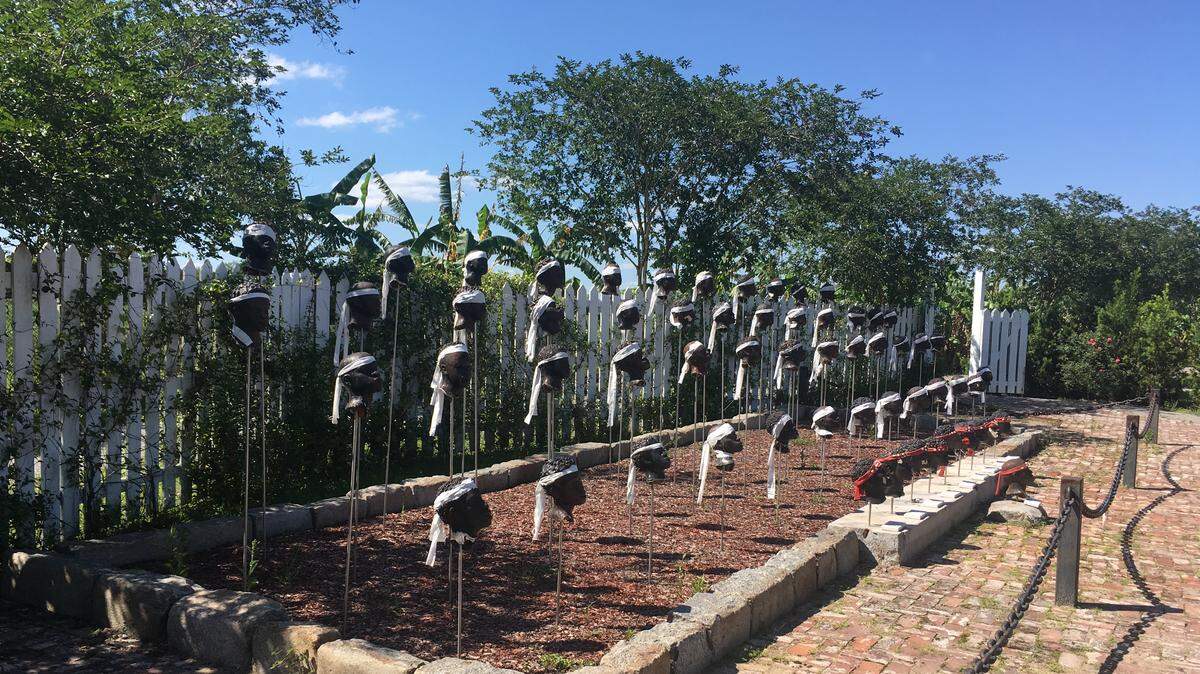
Our guide told us that when an enslaved person ran away once and was captured he was usually beaten. On the second try, if caught again his hamstrings were cut, a mutilation that made walking, much less running, very hard. Hence Webster’s definition, “to make ineffective or powerless: cripple.”
The Whitney Plantation, about a 40-minute drive from New Orleans, is the first of the plantations open to the public that interprets life there through the lens of those enslaved. Long before you get to the gracious “big house” you’ve learned about the dangerous, back-breaking work of growing, harvesting and processing first indigo and later sugar cane, about the economics of slavery, the high mortality rates and the slave revolts that were so rarely taught in American history classes.
Visiting it was a powerful and profoundly educational experience.
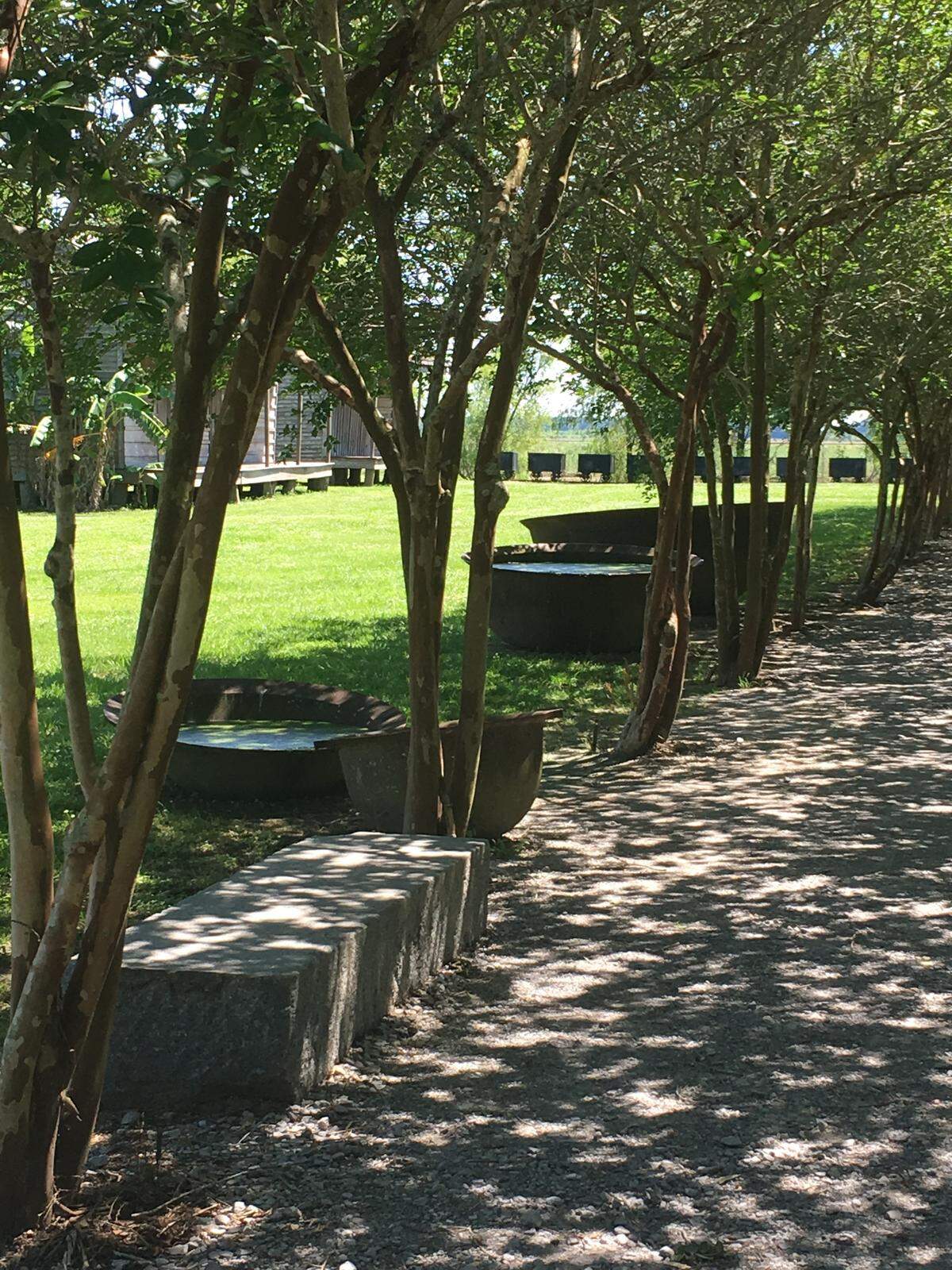
You learn, for example, that early landowners used indentured Europeans to clear the land and attempted to enslave Native Americans but Africans, many immune to malaria and yellow fever were particularly suited to the harsh environment of plantations built out of or near swamplands. In 1795, there were 19,926 enslaved Africans in Louisiana. Only 65 years later, just before the Civil War the enslaved population had skyrocketed to 331,726. The hundreds of thousands of enslaved people – the mortality rates were astounding – had built the wealth that gave rise to the beautiful plantations and gracious life enjoyed by slave holders’ families that became the subject of nostalgia and myth in the 20th century.
The Whitney Plantation is owned by New Orleans attorney John Cummings, who bought it as an investment but has since devoted years, and millions of dollars, to begin to correct the “conscious elimination from history of these most unpleasant facts,” as he explains in an interview with the New Yorker.
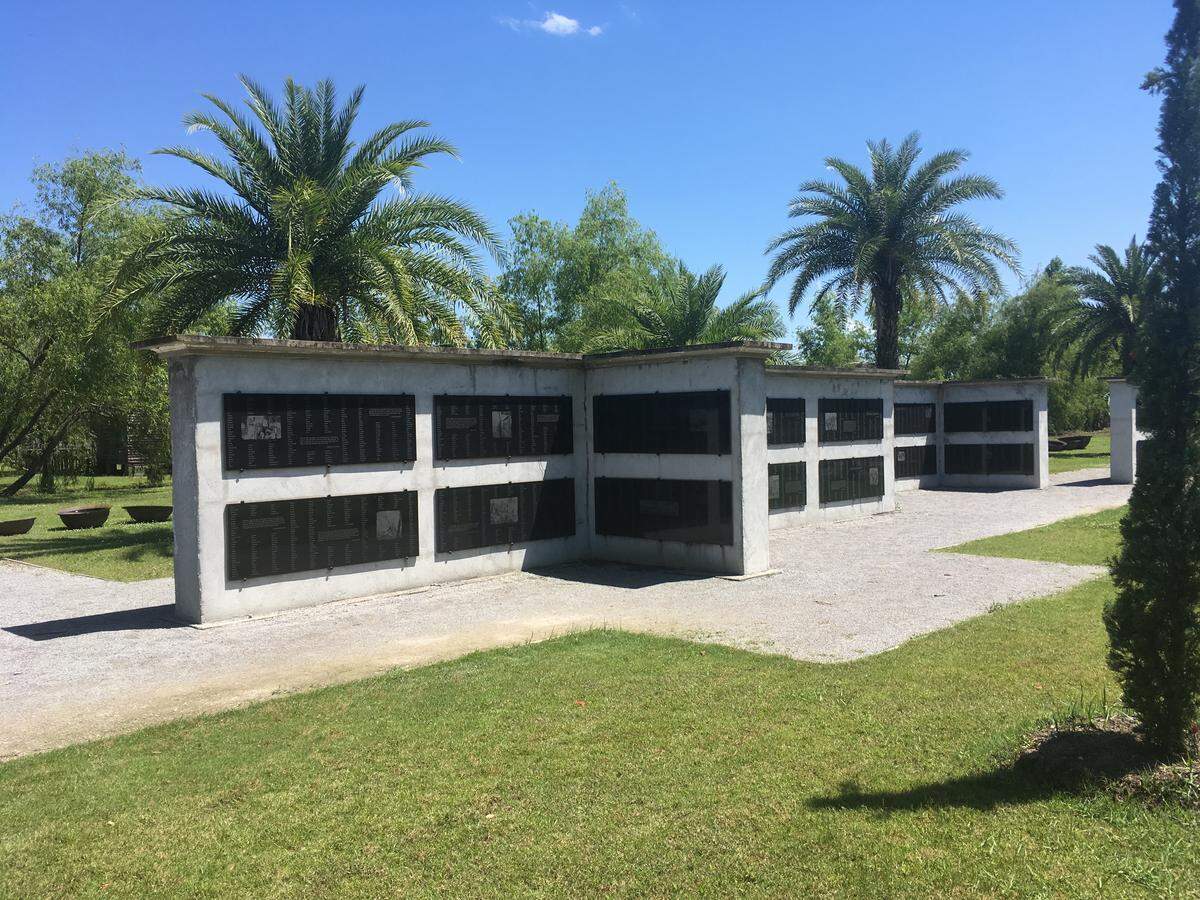
It’s a grim history, however the Whitney Plantation is not about guilt but about honoring the individuals who were enslaved there by telling their stories and those of people enslaved in this country. Ibrahima Seck, a member of the history department of University Cheikh Anta Diop of Dakar in Senegal has done extensive research on the slave trade and cultural connections between West Africa and Louisiana and is the director of research at the plantation. More than 350 individuals who were enslaved at the plantation have been identified by name, often through legal records in which they were listed as as assets of the property owner.
Another rich source of information that brings individual stories to life are interviews conducted in the 1930s of people born into slavery by the Federal Writers’ Project. They are all childhood memories since by the 1930s no one who had experienced slavery as an adult before the Civil War was still alive.
As a ticket, each visitor receives a card on a lanyard with the name of and a quote from a person who had been enslaved there.
Mine was Ellen Broomfield, interviewed when she was 86: “There were 19 children in our family an’ we had to work as soon as we were big enough. I use to plow, it was hard.”
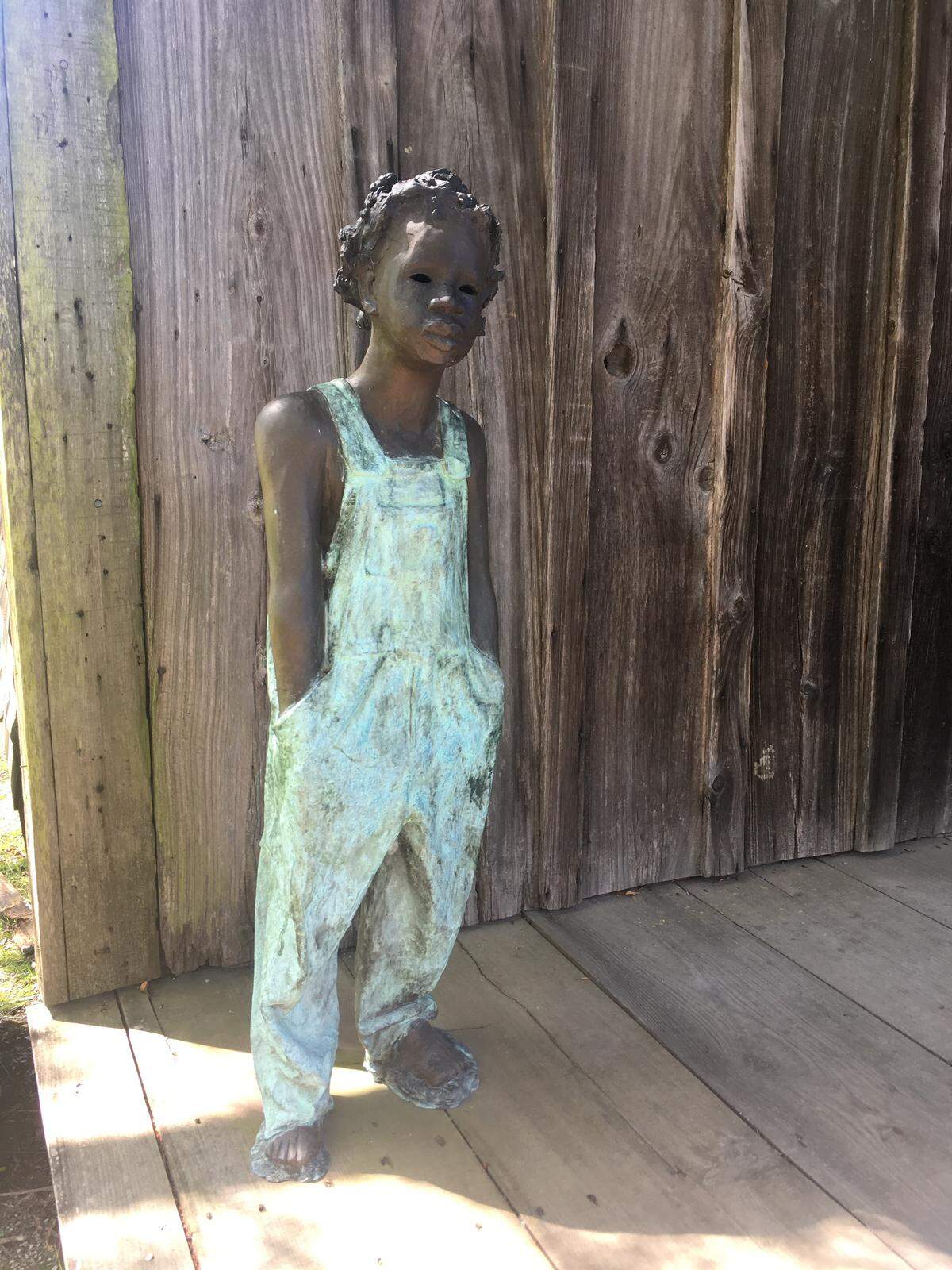
One of the children enslaved at Whitney Plantation was a mulatto named Anna who was impregnated by Antoine Haydel, the brother of her mistress. Their son, Victor Theophile Haydel and his wife Celeste, the daughter of the enslaved cook Francoise by the mistress’ brother-in-law (as the Whitney site explains, “refusing to engage in sexual relations with a white man was not an option available to either of these women”) were the forebears of a clan of black Haydels who became prominent in Louisiana business and politics. Among them are Ernest Morial, who became the first black mayor of New Orleans, and his son Marc, who also served as mayor and is now the president of the National Urban League.
The tour lasts 90 minutes but visitors should allow time to study the excellent exhibit on slavery in Louisiana in the visitor’s center and sort through the books on slavery, including several that contain excerpts from the Federal Writers’ Project interviews. But most of all they should allow time to wander the grounds and walk in the steps of the people who built but never enjoyed tremendous wealth.
Telling Kentucky’s slavery stories
Slavery existed in Kentucky as well as Louisiana before the Civil War and the Emancipation Proclamation in 1863. People interested in learning more about those experiences have some options in Central Kentucky.
Camp Nelson National Monument in Jessamine County, built as a Union depot, became a destination for people escaping enslavement when African Americans were allowed into the Union Army in 1864. Thousands of slaves went there to join the Union Army and gain their freedom. Many of their families came as well and the story of these refugees and soldiers is told in the visitor’s center there. Additionally, the African American experience there has been the subject of archaeological and other studies.
One of the slaves who arrived at Camp Nelson was a man who walked the 15 miles from Waveland in southern Fayette County. Although born in Virginia, most of his approximately 65 years to that point had been spent enslaved by the Bryan family at Waveland. Essex Harrison (he took that last name when he joined the Union Army in April 1865). Harrison’s history was uncovered by a class at the University of Kentucky working with Professor Amy Murrell Taylor. Waveland now includes an exhibit on that research in a building adjoining the main house that was used as a kitchen and a slave quarters.
To learn more:
The Whitney Plantation web site has abundant historical information as well as information about planning a visit: whitneyplantation.com
The New Yorker has produced an excellent short video on the Whitney Planation: newyorker.com/culture/culture-desk/telling-the-story-of-slavery
National Geographic published an in-depth piece about the Whitney Plantation: nationalgeographic.com/travel/intelligent-travel/2016/02/01/the-plantation-every-american-should-visit/
The New York Times recently wrote about efforts to interpret historic sites through the lives of enslaved people: nytimes.com/2019/06/26/travel/house-tours-charleston-savannah.html