
Colombian port city of Cartagena lives up to its reputation and its Hollywood image
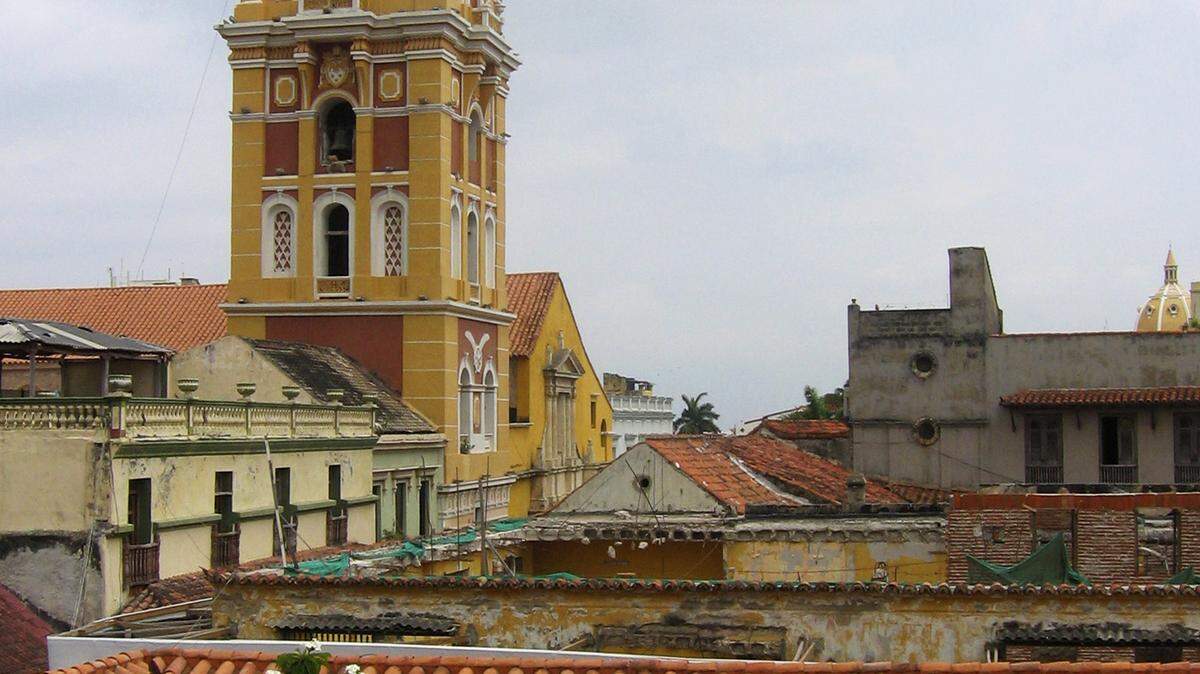
CARTAGENA, Colombia — The square in front of San Pedro Claver Church was lined with chairs that were filling up rapidly with people, some dressed in formal evening attire, others in casual resort wear more fitting for the tropical climate.
On a makeshift stage, the orchestra was tuning up. Floodlights bathed the plaza, giving it a theatrical glow, and a hum of anticipation made its way through the audience. But when the maestro raised his baton, the crowd fell silent, as did the lines of spectators, in some places as many as 10 deep, standing in the street outside the barricades.
For the next hour, those in the seats and those who were standing were united in a shared appreciation of the classical strains of the City of London Sinfonia.
During the next four days, I would be treated to more of the same — concerts by some of the world's most renowned musicians and singers in some of Cartagena's most atmospheric locations, including the Baroque Heredia Theater, an architectural jewel, and the candlelit chapel of the former Santa Clara convent, now the city's most luxurious hotel. The occasion was last month's nine-day Festival Internacional de Música, a veritable smorgasbord of 30 concerts (10 of which were free) and master classes taught by some of the world's foremost musicians and conductors.
Now in its fifth year, the festival, privately financed by the Salvi Foundation, has raised money for the musical education of hundreds of the city's gifted children, and brought in musicians and music lovers from around the world to this UNESCO World Heritage city.
Five years ago, the idea of putting Colombia on your list of "must-see" places seemed unlikely, unless perhaps you were a DEA agent. Aside from Juan Valdez and his coffee, many Americans' knowledge of Colombia was confined to the violence-prone drug cartels operating in Medellín and Cali, and the leftist rebels hiding in the dense jungles.
Today, the country's drug culture has migrated north to Mexico, and what remains of the rebel movement mostly communicates via Facebook and Twitter rather than with AK-47s and Kalashnikovs. Because of this, the high-end publication Travel and Leisure magazine is touting Colombia as a different kind of hot spot.
I'd like to think I was ahead of the trend. I've longed to visit Cartagena since I discovered the novels of Gabriel García Márquez. The unnamed Caribbean seaport that is the setting of his Love in the Time of Cholera is based on Cartagena, where the ailing writer maintains a home. My desire was reinforced after seeing the 1984 Michael Douglas-Kathleen Turner film Romancing the Stone. The exotic lure of the city was just too compelling to resist.
I finally made it, and I was not disappointed.
On the Caribbean coast of Colombia, Cartagena's Old Town (granted UNESCO status in 1984) — with its candy-colored buildings, blossom-festooned wrought-iron balconies, palm-filled squares and cobbled streets — is a combination of Santo Domingo; Old San Juan, Puerto Rico; and New Orleans' French Quarter. Like them, it is torrid, sultry and filled with color, tradition and history. Also like them, it is best explored on foot.
Old Town is surrounded by the fortified walls that protected the city, one of the wealthiest in the Caribbean during the 16th and 17th centuries, from the pirates and corsairs who routinely plundered Spanish ships that were taking gold and other precious cargo to Spain.
Sadly, among the cargo coming in to Cartagena were slaves, who were sold in what is now called the Plaza de los Coches, or Square of the Coaches. The name came from the coaches entering through the nearby Puerto de Reloj, or Clock Gate. The gate, which is still there, was the original entrance into the walled city, and the clock, visible for miles, remains a symbol of Cartagena.
From the Square of the Coaches, it is an easy walk to San Pedro Claver Church. The yellow house next to the church once was a sanctuary, and it was here that St. Peter Claver baptized thousands of slaves.
Of course, any visitor to Old Town will want to stroll on the wall's ramparts, among the finest examples of military architecture of the Spanish colonial period. The walls stretch for seven miles, and along one section, you can see the cannons that the garrisons trained on the sea approach. They provided protection against invaders including England's Sir Francis Drake, who, on one of his forays, partially destroyed the tower of Cartagena's main cathedral.
Today, the 16th-century cathedral looms over the Plaza de Bolívar, an oasis of palm and banana trees, surrounded by elegant colonial buildings. The plaza, a popular gathering spot, is anchored by a statue of Simon Bolívar, who liberated Colombia, Bolivia, Ecuador and Venezuela from Spanish rule in the early part of the 19th century.
I made my way to the plaza every day just to sit for a while; listen to the soft tinkling of the four fountains; and watch the elderly men playing chess on makeshift boards, vendors sell jewelry and Coca-Cola, strolling musicians, and artists setting up their easels.
Another favorite spot was Santo Domingo Square, facing its namesake church. With its statue of Reclining Woman by Colombian artist Fernando Botero and its outdoor cafés, it proved the perfect place to stop for a cold beverage and a respite from the sweltering heat of a morning's sightseeing.
A different way to see historic Old Town is on a carriage ride, especially at night, when the squares are filled with revelers and the tropical moon casts a silvery sheen on the darkened streets. Don't be surprised if an entrepreneurial young caballero toting a guitar hops aboard the carriage. He probably will have a repertoire of ballads that he will happily play and sing — at a dollar a ballad, according to my local companion. Cheeky, yes, but charming.
It's tempting to spend all your time exploring the treasures of Old Town, but one thing you should not miss is a visit to Convento de la Popa. High on a hill overlooking the city, the 400-year-old monastery is famous for its statue of the Virgin of Candelaria, commemorating an apparition of Mary that first appeared on the island of Tenerife. Each year on Feb. 2, a procession of the faithful, holding candles, makes its way up the steep hill to honor the virgin on her feast day.
Before I knew it, my time in Cartagena was over, and I hadn't even made it to the Emerald Museum (Colombia is the world's leading producer of high-quality emeralds); the Boca Grande area, with its luxury hotels, shops and nightclubs; or the coral reefs of Islas del Rosario National Park. I've decided that I'm going back, but first, I'm off to watch Romancing the Stone again.
This story was originally published February 20, 2011 at 12:00 AM.