
Shakespeare's ghost looms large over his hometown, Stratford-upon-Avon
STRATFORD-UPON-AVON, England — I settled back into my seat, eagerly anticipating the evening's performance of King Lear at the venerable Royal Shakespeare Theater. As the play began, Lear strode out, resplendent in glittering gold robes, attended by his three daughters, similarly attired in gowns of Elizabethan vintage. Good, I thought: Shakespeare as it's meant to be.
That thought was quickly dispelled when the army of the Duke of Cornwall marched across the stage, decked out in what appeared to be World War I-era German uniforms. By the time the Duke of Gloucester staggered onto the scene, wearing a three-piece pinstripe suit, his tie askew, I was in despair.
Where Shakespeare is concerned, I'm a purist and not happy with the trend toward making the bard "relevant" to today's audiences. Shakespeare's "mad men" dressed up like TV's Mad Men just doesn't cut it with me.
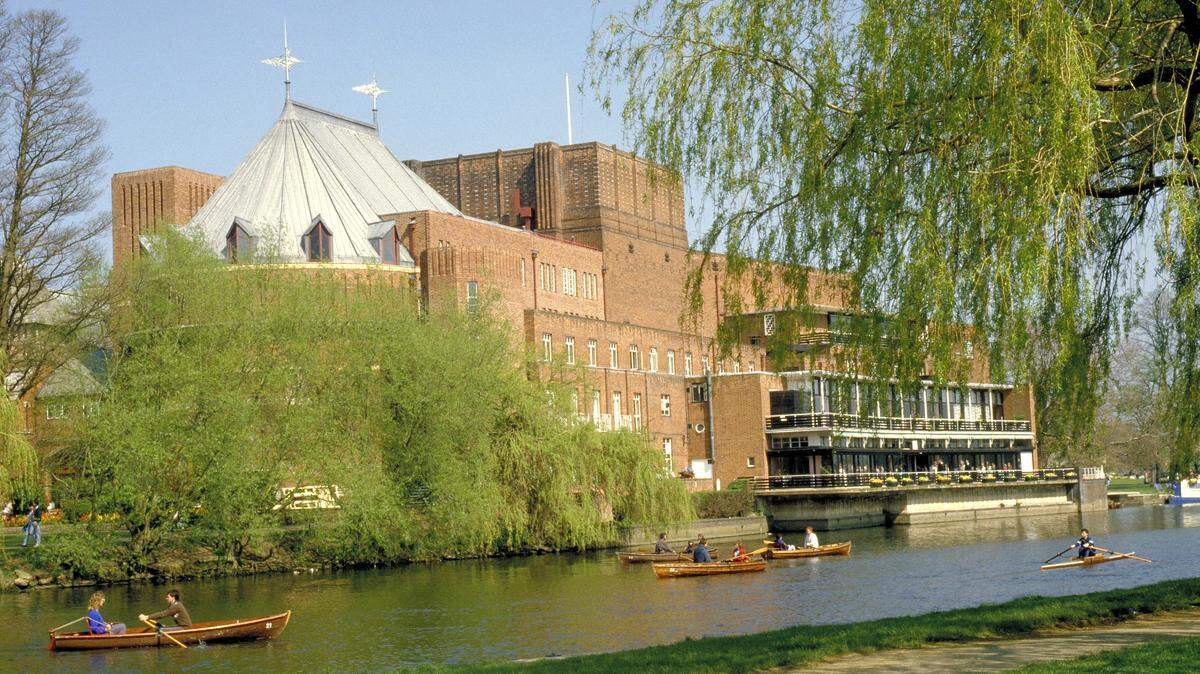
I am, however, delighted with the newly spiffed-up theater itself. After a four-year, multimillion-dollar refurbishment, it was re-opened earlier this month by Queen Elizabeth II, just in time to celebrate the Royal Shakespeare Co.'s 50th anniversary (although there has been a theater here since the 1930s). During its illustrious history, it has seen Laurence Olivier and Vivien Leigh serve as artistic directors and every important British stage actor tread its boards, including Richard Burton as Othello; Ian McKellan and Judi Dench as Macbeth and Lady Macbeth; Kenneth Branagh as Hamlet; Daniel Day-Lewis as Romeo; and Helen Mirren as Cleopatra. For theater buffs, this is hallowed ground indeed.
Even if you don't see a play in the Bard's hometown (which would be a tragedy of Shakespearean proportions), you can tour the theater complex: the Main and Swan Theaters; the iconic landmark Tower, with its views over the River Avon and the Warwickshire countryside; and the elegant Rooftop Restaurant, overlooking the Bancroft Gardens. The renovation of the theater complex is proof that you can create something new and retain the fabric of what came before.
Shakespeare's realm
Stratford-upon-Avon is a lovely town in its own right, but it's the Bard who creates the buzz. Visitors can devote several days to making the obligatory stops: his step-grandmother Mary Arden's farm; the thatch-roofed cottage that belonged to his wife, Anne Hathaway; Hall's Croft, where his daughter Susanna lived with her physician husband; Holy Trinity Church, where he's buried; and of course, the house where he was born in 1564.
Now administered by the Shakespeare Birthplace Trust, the latter provides a fascinating step back in time to when Elizabeth I was on the throne, the bubonic plague was the scourge of the countryside, Britain was emerging from the Dark Ages, and the world was getting ready to welcome a literary genius.
Visitors can tour the house and gardens, see the bed where Shakespeare was delivered and visit the glove-making shop where he worked alongside his father before decamping to London to begin his stage career. The trust has kept it so faithful to the original house that one would not be surprised to see the playwright himself pop in.
Even if the ghost of Shakespeare doesn't, it's likely that someone else will. In the gardens, I came across Oberon delivering his speech to Puck from A Midsummer Night's Dream, or rather a costumed actor from a troupe that performs pop-up Shakespeare around town. (Later that afternoon, I saw Hamlet, skull in hand, doing his "Alas, poor Yorick" routine on the High Street.)
Hard-headed pragmatists may theorize all they wish that the poems and plays, thought to have begun with The Two Gentlemen of Verona in 1590 and ending with The Two Noble Kinsmen in 1614, might have been written by someone else. However, standing in the house where he was born, it's hard to imagine anyone but Shakespeare himself being the author of the vast body of work.
Although "the play's the thing," in Stratford-upon-Avon, there are many non-Shakespearean attractions to tempt the visitor. Not far from the town are the ruins of Kenilworth Castle, an impressive pile of red-gold stones sitting atop a low hill surrounded by marshes. Immortalized by Sir Walter Scott in his novel of the same name, Kenilworth is arguably the most historic castle in Britain. It was built in the 1120s, and there was hardly a century when it wasn't the scene of great drama. In 1266, the six-month Siege of Kenilworth Castle became the longest in English history, and it was a strategic outpost for the Royalists under King Charles I during the civil war in the 17th century.
However, the castle is most famous as the home of Robert Dudley, Earl of Leicester, a favorite of Queen Elizabeth I. In 1575, Dudley invited the queen (who brought an entourage of 400 courtiers and staff) for a three-week visit in the hopes of persuading her to marry him. Instead, he nearly bankrupted himself throwing lavish entertainments and even having a secret knot garden planted solely for the queen's viewing. Dudley was unsuccessful in winning Elizabeth's hand in marriage, but he did leave a legacy for modern visitors. The gardens, lost for 400 years, were recently re-discovered and re-planted by the National Trust.
Country houses galore
The castles and manor houses of the English countryside are without peer, and Warwickshire has more than its share. Most visitors head straight for Warwick Castle, for good reason. Towering above the River Avon, it is the perfect example of a medieval castle (built by William the Conqueror in the 11th century), and it was home to the powerful Earls of Warwick, one of whom, Sir Richard Neville, was known as "the Kingmaker."
However, three other houses are worth a visit, each offering a different experience. At 16th-century Coughton Court, visitors can trace the history of the powerful Throckmorton family, whose fortunes waxed and waned during the reigns of Mary I, a Catholic, and her Protestant sister, Elizabeth I.
The lavish dining room, salon and drawing room are testament to the family's favored position during Mary's rule, while the "priest holes," hiding places for the clergy, reveal the danger of being Catholic after Elizabeth's ascension to the throne. Coughton Court was again the center of intrigue when it was discovered that secret meetings held at the house led to the infamous Gunpowder Plot in 1605, in which Catholic conspirators planned to blow up the Houses of Parliament.
Less tumultuous but equally fascinating is Ragley Hall, the imposing Palladian mansion that is home to the Marquis of Hertford and his family. The tour, by one of the marquis' staff, a delightful lady named Sylvia, took us from one jaw-dropping room to the next — from the magnificent Baroque Great Hall, with its ceiling medallion of the Roman goddess Minerva, to the Dining Room, with its daffodil yellow silk walls and table set for 24 guests, to the elaborate bedroom especially designed for the Prince Regent upon his visit in 1796.
Everything about Ragley Hall is opulent with a capital O, which makes the origin of its name all the more funny: Ragley, a word dating back to Saxon times, means "rubbish dump."
Compton Verney, a spectacular 18th-century mansion situated on a lily-dappled lake, isn't your typical country estate. It's a magnificent art museum. It offers collections as diverse as Chinese bronzes, British portraiture and Neapolitan art, but it also has the largest collection of British folk art in the United Kingdom.
History, heritage, houses, and of course, Shakespeare, make Stratford-upon-Avon a must for every Anglophile.
This story was originally published March 20, 2011 at 12:00 AM with the headline "Shakespeare's ghost looms large over his hometown, Stratford-upon-Avon."