Safe water for a thirsty world: How a Louisville nonprofit aims to meet global demands
During college at Belmont University, Mark Hogg went on a mission trip to build a dam in what is now Burkina Faso, a small, land-locked country in western Africa.
The 20-year-old and his fellow college students drove five hours from civilization to a remote village where they spent long hours digging ditches and mixing concrete to make a bigger dam so rains could provide more water for people. It was a culture shock.
“People were bringing their cattle, goats and sheep there to water them,” he remembered. “They brought their children to bathe and they, of course, brought containers to fill. The children would play in the filthy water next to the animals, and it was a horrible thing to learn what was happening to people in that community because of the water.”
Early in the trip, Hogg said he struggled to sleep after he heard an eerie drum beat at night.
“I got up the next morning and I said, ‘What was all that about?’” he said. “They said that drumbeat indicated when a child had died in one of those little communities. That drumbeat happened too many nights.”
The sound haunted him.
“I couldn’t figure out why people in the world were in situations like this where they had to live and try to survive with this kind of water and health conditions,” he said.
That experience became the driving force in Hogg’s life and led him to found WaterStep, a nonprofit organization in Kentucky whose mission is to provide safe water to communities in developing countries and respond to water crises after natural and man-made disasters – tornadoes, floods, and even war – both at home and around the world.
Through technology, innovation and manufacturing in the Bluegrass state, WaterStep teaches people how to use salt, nearly any source of water, and a 12-volt v DC power source to make safe drinking water for the long term.
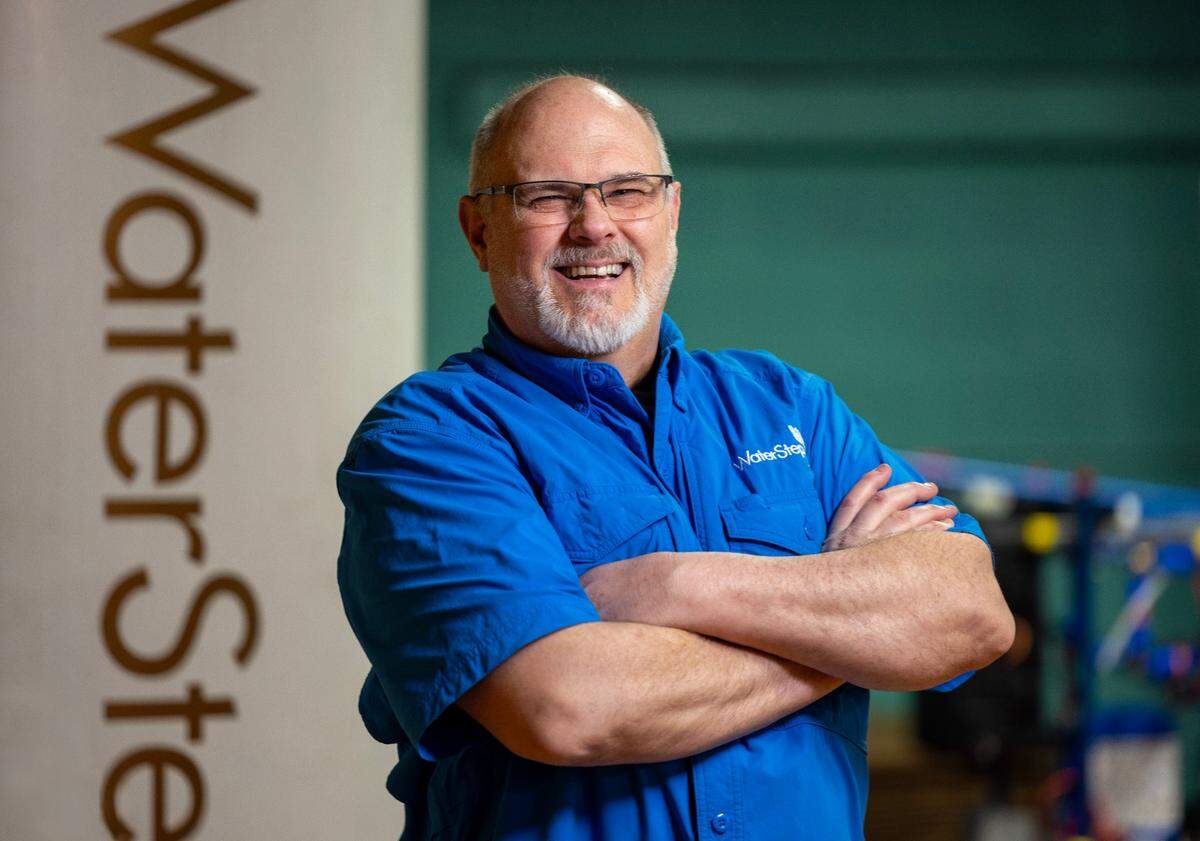
WaterStep’s system – training, patented technology and innovation – is simple and sustainable and allows communities to affordably provide safe water and disinfectant for themselves, Hogg said.
To date, WaterStep has completed more than 5,000 projects and has impacted more than 15 million people in 72 countries.
But that impact didn’t happen overnight.
“I’m so proud of what we’ve done,” Hogg said. “But it has taken a long time to get here, and we have so much left to do.”
‘This gnawing in me’
When Hogg left Burkina Faso, he didn’t realize how big the world really was.
“I left there with this gnawing in me,” he said.
A natural caregiver, Hogg’s goal was to go into ministry. After graduation, he moved in 1985 to Louisville — where WaterStep now has its headquarters — to join the seminary and started a remodeling company to pay his way.
After seminary, Hogg started as a youth minister at Watkins Memorial United Methodist Church. It was there he understood the power of community. He and his wife, Marcia, founded a service organization in 1995 in the basement of another small non-profit.
“We wanted to help people,” he said. “We wanted to be a part of something bigger than I was. We wanted to work with a community of people who were passionate.”
He had experience in missions, but he had no experience as a plumber, an engineer or a technical expert. He didn’t know how to solve water problems around the world. He just hoped his dream of changing people’s lives with safe water would one day come.
It was during a mission trip in 2001 when Hogg took 165 people to Kenya, Brazil and Costa Rica when he was introduced to a chlorine generator, which took contaminated water, salt and a 12-volt DC power source, like a car battery, to sanitize the water.
It “changed everything” for Hogg.
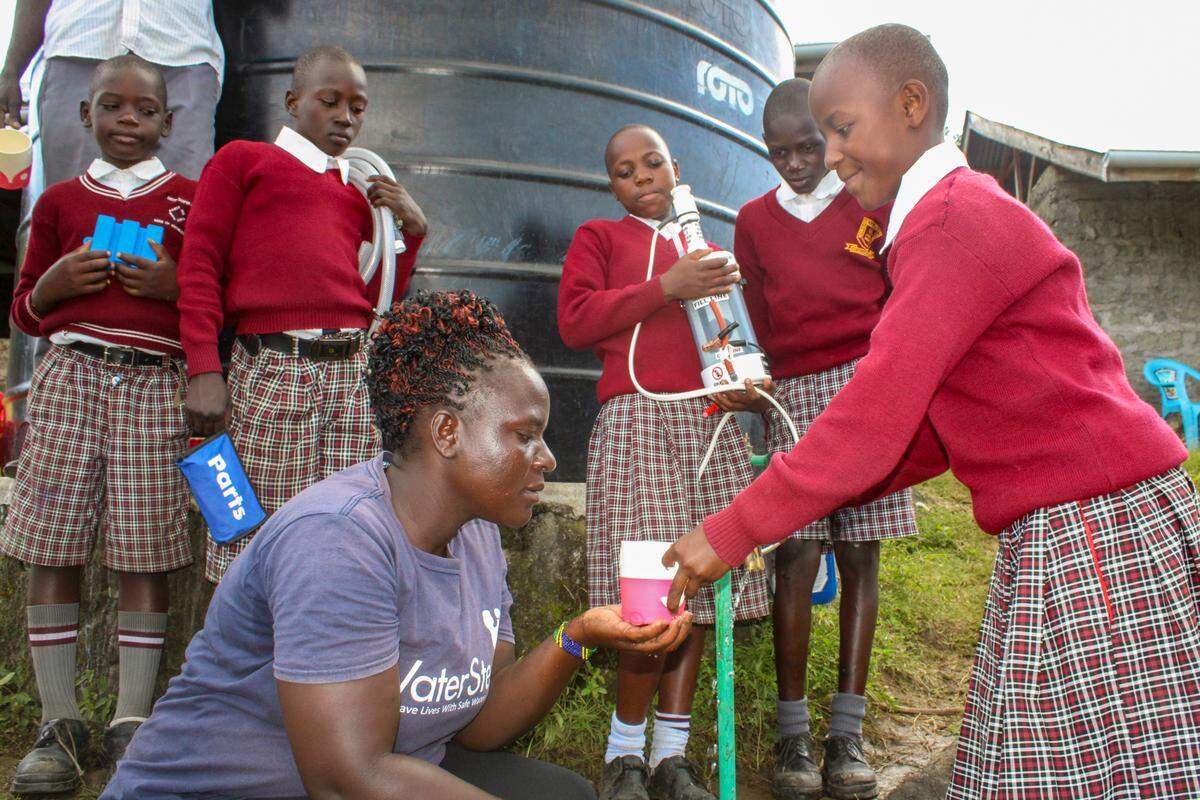
For the next eight or nine years, Hogg and his team it to other countries and taught people how to use it. Eventually, they created their own that was more simple and could be scaled.
Today, WaterStep’s ChlorineGenerator produces up to 10,000 gallons of safe water per day and is effective in combating cholera and other waterborne diseases. It’s even strong enough to kill Ebola.
Since 1995, WaterStep has grown from a small service organization to an international leader in safe water innovation. Hogg’s small office in that old basement to a 36,000-square-foot training and manufacturing facility in the heart of Louisville that reaches far beyond the city – to Africa, Latin America, and Southeast Asia.
Building an international team
For years, Hogg, his wife, and a small team traveled across the world to train people, but it was expensive and time-consuming. So, the decision was made to develop field consultants who understand the needs of their own communities and cultures abroad.
With the help of WaterStep staff in Louisville, more than 100 field consultants now work in countries where communities, hospitals, orphanages and schools need safe water and implement projects there.
Jerald Malamba has been a field consultant for WaterStep in Tanzania since 2020.
“I was born out of wedlock, and I sometimes was raised in an orphanage,” he said. “I really went through a very, very unpromising life, so I really know the kind of life situation that people go through, especially those who are in the villages.”
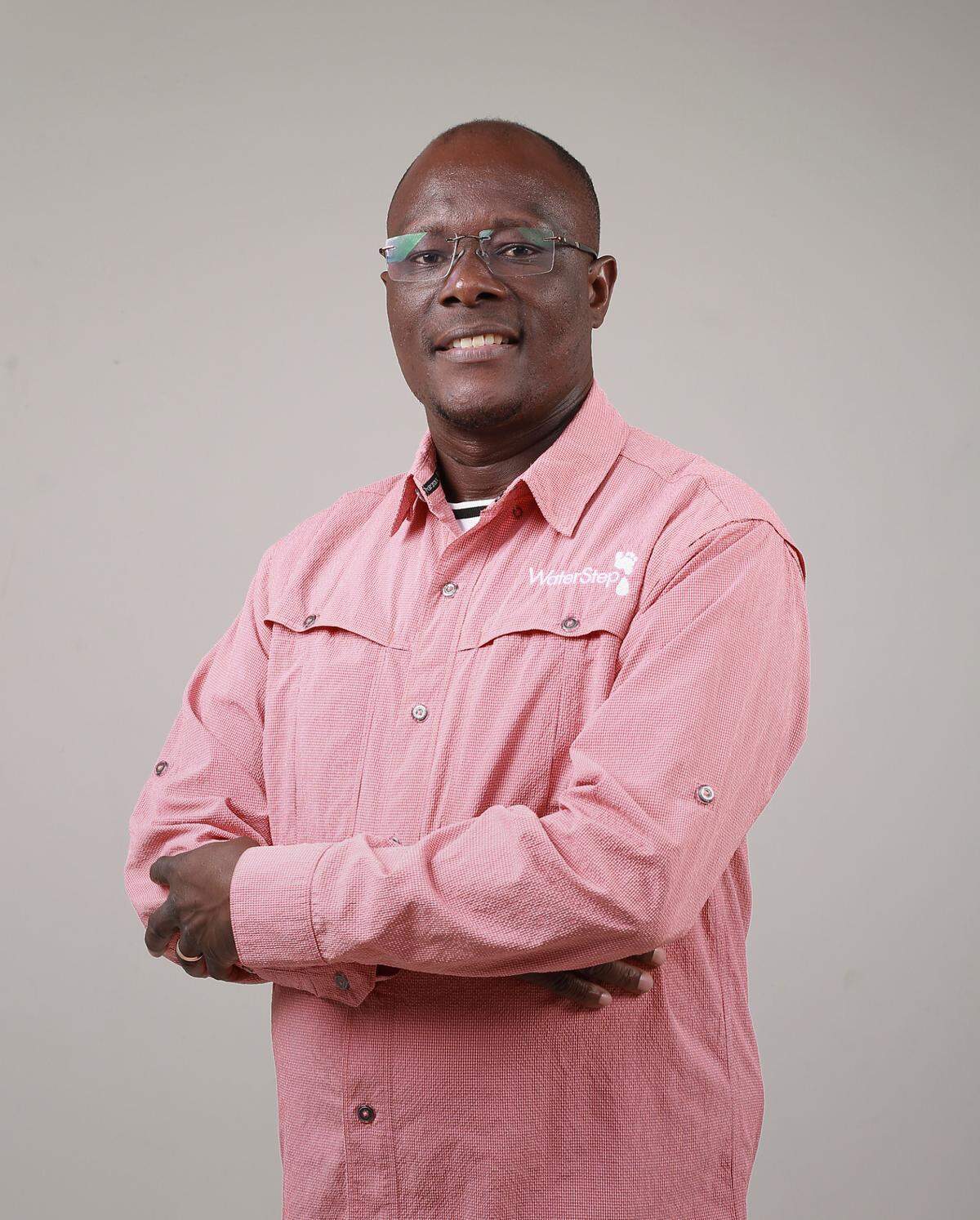
His team has installed safe water systems in schools, villages and health centers, he said.
“We also run programs for rainwater harvesting (and) we do the water purification and sanitation education,” he explained.
WaterStep’s projects have significantly reduced waterborne diseases and improved school attendance because children aren’t sick with diarrhea.
“We use a combination of quantitative and qualitative methods, including health statistics, surveys and interviews so we can track and see the reduction of waterborne diseases in the places we serve,” he said.
“Surely, I can tell God is working.”
WaterStep is local, not just global
Though WaterStep is a household name in countries like Kenya where the organization has implemented safe water systems in nearly every prison in the country, the safe water leader also helps Kentuckians, too, when it comes to disaster relief, Hogg said.
But it didn’t start in the commonwealth.
In 2009, WaterStep began to respond to disasters after an earthquake hit Costa Rica.
“We showed them the equipment we use to make water safe, and they began to weep because they just had some bottled water and they’d run out quickly within a couple of days,” Hogg said.
“We realized, for many years, we’d been doing this … in developing countries to help them be able to use these tools for health, for economic development, etc.,” Hogg explained. “(We said), ‘Oh my gosh, these tools can be used in a disaster.’”
Then, in 2011, a community crisis in Louisville sparked the need for a safe water backup. A 48-inch main water line ruptured, which forced all of downtown on a boil advisory, Hogg said. The city was 24 hours away from having to move inmates from the detention center to hotels.
Fortunately, that didn’t happen.
“They said, ‘We got the water back on, but we can’t be there again,’” Hogg said. “The city proposed WaterStep, in partnership with the U.S. Environmental Protection Agency (EPA), come up with a project that could help in situations like that.”
That partnership created the WOWCart (Water on Wheels), a portable mini-water treatment system equipped with the ChlorineGenerator and a BleachMaker, a device that makes medical grade bleach, which can be diluted for use as a general disinfectant.
The WOWCart has the potential to create 10,000 gallons of safe water a day, which means it can be used for food trucks, shower trailers, for first-responders, and for the general public to fill containers with safe water. It eliminates the need for bottled water, which isn’t helpful for cooking or taking a shower, Hogg said, and is bad for the environment.
“We took everything we knew about water and disasters, and we put it in the size of a hotel cleaning cart,” he said.
Demand for the organization’s programs and equipment has exploded. WaterStep has responded to more than 30 disasters, including the aftermath of the tornado in western Kentucky in 2021 and the flooding in east Kentucky in 2022.
And for the past six weeks, WaterStep’s equipment has provided more than 40,000 gallons of safe water to residents in Asheville, North Carolina, following the destruction of Hurricane Helene.
“This equipment really is miraculous,” Hogg said.
“And it’s not just for first responders and governments. It can help anyone anywhere – in jails, community centers, nursing homes, private businesses. Anyone, really, who needs safe water or wants to be prepared in case of a boil water advisory or a disaster like a tornado or flood.”
Hogg often thinks about his time in Burkina Faso when he was just 20. He has never been back, but he said he wonders what happened to the people he met and how many others like them – more than 2 billion today – still don’t have access to safe water.
It shocks him after all these years.
“Here in Kentucky, you really don’t think about having safe water – until you don’t,” he said.
“You turn on the faucet, flush the toilet, wash your clothes, take a hot shower. Then disaster strikes, and it’s the first thing you worry about. We want to take that worry away, not just here but all over the world.”
This story was originally published November 14, 2024 at 5:00 AM.