
Central KY leaders held an economic development simulation. Here’s what I learned
About 30 city leaders from across Central Kentucky gathered Monday in a small Winchester community college lecture hall to urge businesses to move to their communities.
But the cities weren’t real, and the company decisions were hypothetical. It was all practice.
The event, an economic development simulation hosted by Commerce Lexington, gave city leaders a chance to replicate and learn what kinds of pitches appeal to businesses.
Commerce Lexington invited me to participate in the event, too. So I joined county judge executives, directors of industrial development corporations, the mayors of Frankfort, Versailles and Nicholasville and other elected officials on a team that sought to bring high-paying jobs to our fair (and fake) city.
Commerce Lexington has hosted several similar events, inviting industry professionals, Kentucky Realtors and members of Leadership Lexington to participate in simulations that aim to make it easier to understand what it takes to improve a city.
The principles of Monday’s exercise highlighted what’s already in Commerce Lex’s competitiveness plan. The seven-pronged approach aims to increase job, wage and gross domestic product rates, attract and retain young professionals, secure state and federal funding, and advocate for policies that make regional collaboration easier.
We split into six teams at the new Bluegrass Community & Technical College Winchester - Clark County campus: three companies and three cities. Each company aimed to pick the best city for their project, and each city tried to find the best company to welcome to their community.
Here are some of my main takeaways from the event:
- It takes a savvy group of people to court the right business. To get a deal done, it takes more than one person who knows what space is available and how much it’s selling for. As we talked through our strengths and weaknesses as a city with visiting companies, we had to market our assets, which went beyond commercial real estate, and understand our community’s resources as being valuable to multiple industries at once.
- Long-standing relationships with stakeholders across the region help deals get done. Near the end of the day, the group talked about how some cities immediately know when a business isn’t meant for the community. But knowing your neighbors — especially their space availability and incentive packages — might mean a company still picks Kentucky over another state.
- Companies, businesses and industry leaders usually already know what they want. Cities are working to satisfy immediate needs for companies searching for specific square footage or a certain kind of labor market. Incentives and other bonuses are just the icing on the cake.
- Often, the better play as a community is to determine when to make the right bid. Knowing when a place is ripe for development is just as important as picking what that development is going to be. City administrators sometimes forget that when deals fall through, the ingredients are still there and can be repackaged.
During the simulation, companies had a chief executive officer, chief financial officer, human resources representative and site selectors.
The C-suite was responsible for picking the most cost-effective location and evaluating whether a city could keep up with productivity and profitability margins. HR determined the availability of labor by looking at wages and education centers, and then tried to glean which site would provide the best quality of life for employees.
Cities had a mayor, an administrator and an economic development team. The mayor corralled the administrator who was responsible for making sure a company’s needs would be met. Members of the city’s economic development team, of which I was a part, tried to determine whether the company was the best fit.
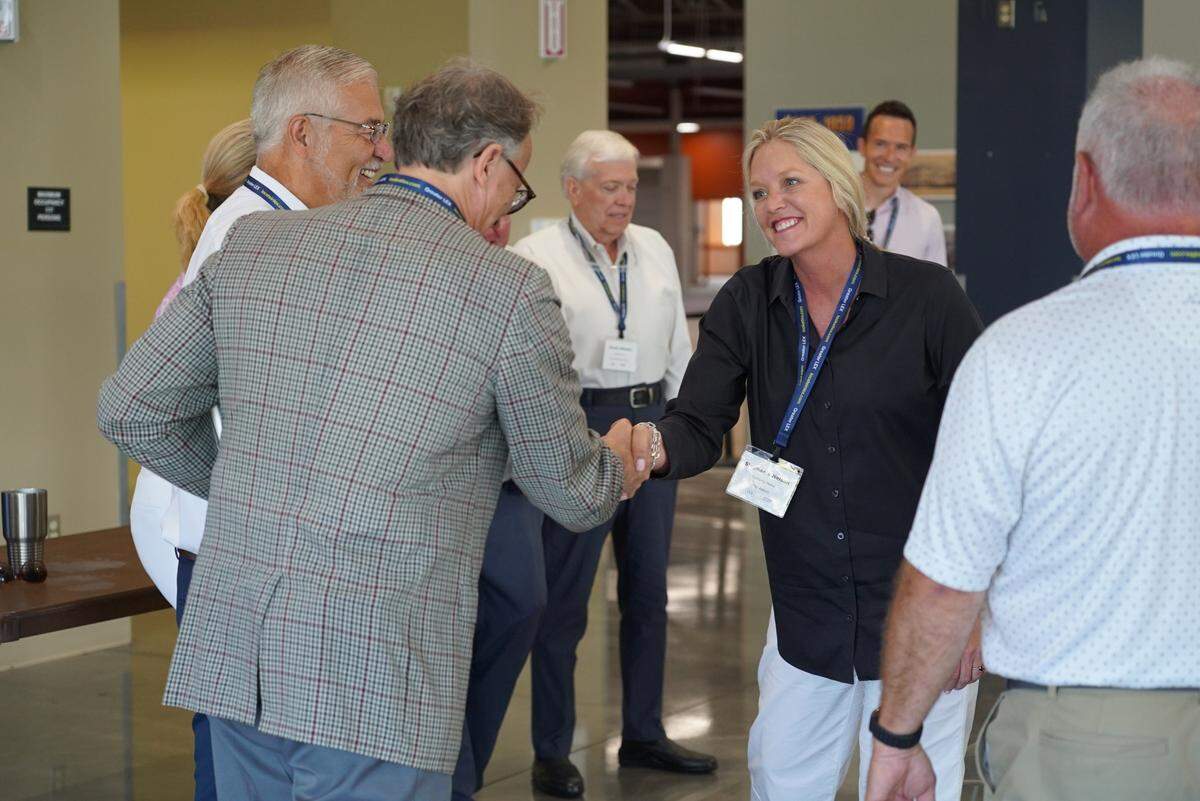
Before the session, we received demographic information about our city and other details like how close it was to interstates and airports, what kind of site opportunities existed, and how much they cost per acre. We were also provided with the cost of doing business in our city, like the average wage and union status of existing industries.
All of those details, plus a list of education resources and positive attributes of the city’s quality of life, led us to quickly come up with a list of strengths and weaknesses to pitch to each company as they gave an overview of their relocation and/or expansion project.
After those initial meetings, “breaking news” was announced about each team. It had leaked to the press that one of the companies visiting the region was also being courted by a town in Tennessee and had been offered more than $1 million in tax incentives.
Another headline said unhappy residents were beginning to voice concern about environmental impacts from increased manufacturing operations.
After the news broke, my group returned to our “city” and opened an envelope with our incentive chips: cards with varying dollar amounts for tax credits and grants to support training and infrastructure.
As a city, we decided to rank the companies by best fit. Then, we allocated the incentive chips based on previous interviews and welcomed each company back to the bargaining table, where we answered more questions and detailed what we were willing to offer.
Finally, the companies met separately to make a final site selection before announcing to the entire group where they had decided to put their project.
.JPG)