
What happens to our bodies in space? A KY-based experiment wants to know
AI-generated summary reviewed by our newsroom.
- Space Tango sends bioscience experiments to ISS for medical research in microgravity.
- AVATAR study aboard Artemis II uses tissue chips to track astronaut cell responses.
- Data from orbital and lunar missions aims to shape health protocols for deep space travel.
Twyman Clements has two offices: one in Lexington, and the other in space.
From a Lego-clad workspace off Winchester Road reminiscent of a high school science classroom turned robotics startup, Clements and his team are engineering experiments to be carried by spacecraft to the International Space Station.
There, automated systems are collecting data from bioscience missions in the unique environment, miles above the Earth’s surface. The tests use the effects of microgravity, where the force of attraction is significantly reduced, to work toward medical advancements under the condition of near weightlessness.
Their newest study, set to travel around the moon and back, seeks to understand what prolonged time in space does to humans.
“We kind of play Legos, and then send it into space,” said Clements, president and cofounder of Space Tango, the Lexington-based aerospace research and development company. “But we’re on the cutting edge of both research and autonomy. And I think that people should know this is happening, and that you can do it in nontraditional areas.”
Space Tango, born out of Kentucky Space and the Kentucky Science Technology Corporation, has been at the ready since 2014, the same year NASA’s Orion completed its first flight test, and just after CubeSats became commercially produced.
Revolutionary at the time, CubeSats are small, low-cost satellites for educational and scientific missions in the region around earth between 100 and 1,200 miles above the planet’s surface called low earth orbit.
Lexington native Scott Hubbard, known for restructuring NASA’s Mars Program while working as director of the agency’s Silicon Valley-based Ames Research Center, was part of motivating Space Tango to form in the first place. In 2006, he introduced Kris Kimel, then-president of the Kentucky Science Technology Corporation, to the CubeSat which hadn’t been produced in large quantities yet.
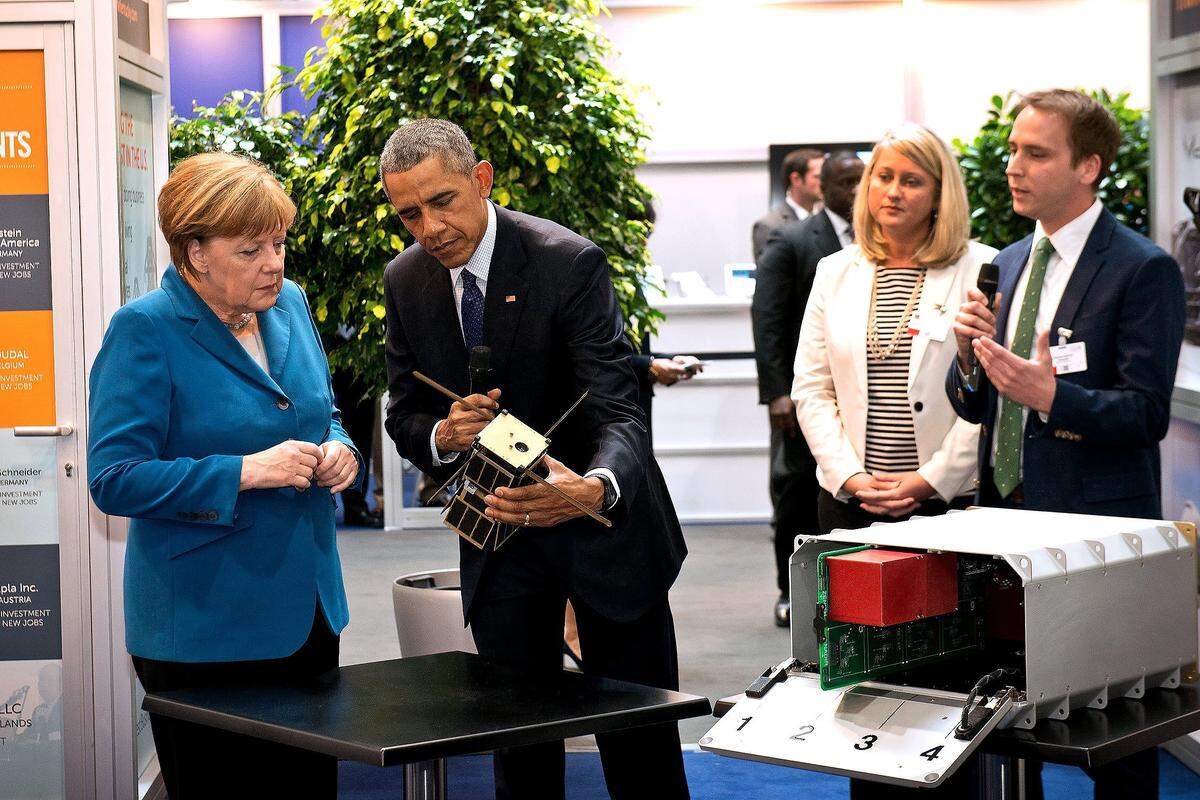
“We kind of decided, ‘This is an opportunity for us to do something that not everybody else is doing and do something really cutting edge in Kentucky,” Kimel said. “So, we decided to create a nonprofit company called Kentucky Space to build CubeSats.”
In the early days, the nonprofit launched high-altitude balloons and suborbital flights before sending CubeSats into space, some aboard NASA’s Space Shuttle.
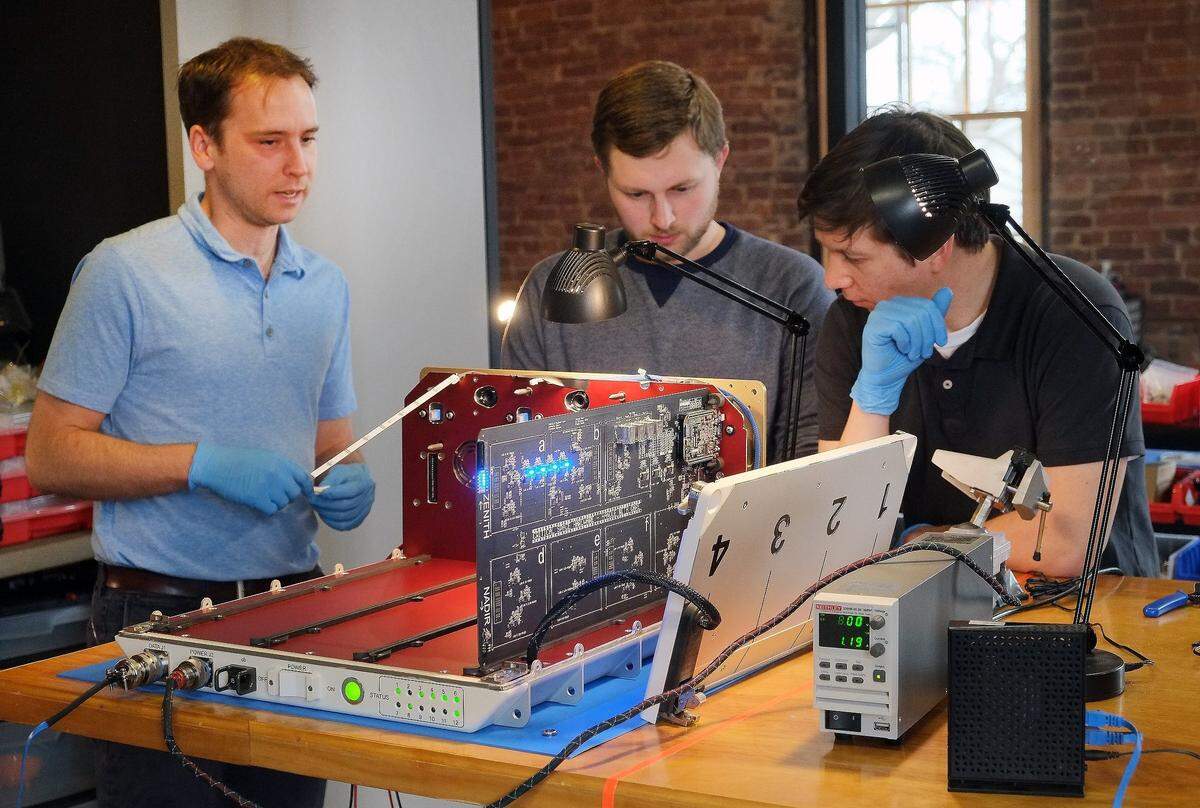
Then, NASA took an interest in taking the same technology to the International Space Station. Kimel co-founded Space Tango with Clements to take on the challenge.
“While we were doing that, it was starting to get a reputation as kind of this rogue group in Kentucky that was doing some really interesting things,” Kimel said. “At that time, there were very few people working on this level.”
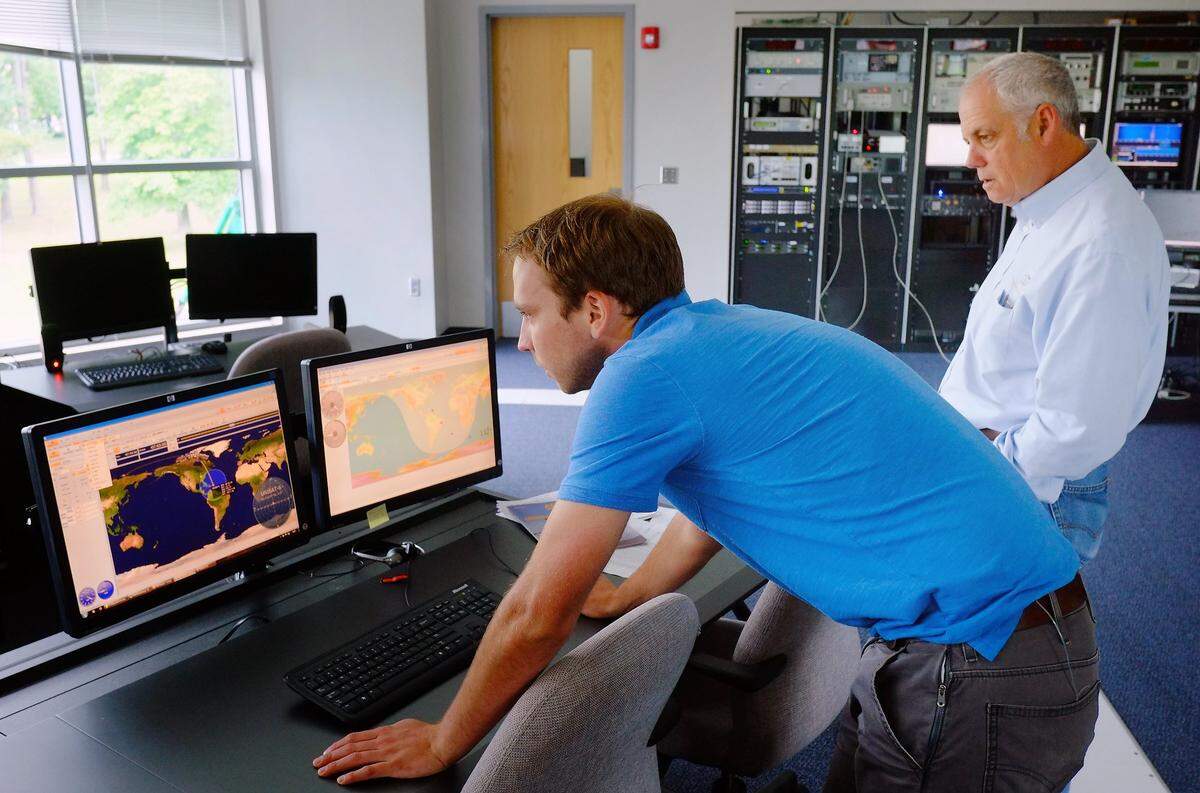
Clements, who worked as an intern for Kimel while studying at the University of Kentucky and then was one of Kentucky Space’s first space systems engineers, said Space Tango was a huge step from where the science started.
“Our ambition is to be the enabler to build things in space and bring them back, since you can use that unique environment (of microgravity),” Clements said.
Space has been revolutionary for myriad studies of science. Without the presence of gravity, heat doesn’t rise, oil and water don’t separate, muscle mass decreases and there are higher levels of radiation.
In almost 300 experiments sent to the International Space Station, Space Tango has aided in many bioscience investigations, including understanding the conditions of space and making advancements in medicines to bring back to Earth.
The team has tried growing new cells in space. Other experiments have sought to better understand flow chemistry — when chemical reactions happen in a continuous stream.
When flow chemistry is automated, reactions are faster, and that’s when it can be used in the production of pharmaceuticals.
Another experiment is testing artificial retina manufacturing. During the process, layers of protein are deposited onto each other. In the conditions of space and microgravity, where nothing settles, the hope is that the layering will be more uniform than what can be achieved on earth.
“If you’ve got a cell, it has a very different microenvironment. And so, the first thing is really for researchers to understand that,” Clements said. “The second part is to try to use as much stuff that’s already been developed, because if you wait for new things to be developed, it can really make a project expensive and the wait is a lot longer. And then the final thing is, really, how do you interpret the information?”
But there are a lot of unknowns about space, and there’s much that hasn’t been developed yet, Clements said. As space flight transforms, the industry pushes further and further into deep space, and stays in orbit for longer periods of time, science has to change with it.
“You can simulate zero gravity for a few seconds,” Clements said. “You can do a drop tower, you can do the vomit comet, but you get 10 seconds maybe. So, the only way for anything long duration is to go to orbit.”
On Artemis II, Space Tango is running a tissue chips investigation. Also called organ-on-chips, cells from human organs are placed in microchannels etched into a system about the size of a USB drive.
.jpeg "IMG_6996 (1).jpeg")
In the experiment, called A Virtual Astronaut Tissue Analog Response, or AVATAR, the chips will hold bone marrow cells from Artemis astronauts as they steer a 10-day flight around the moon next spring.
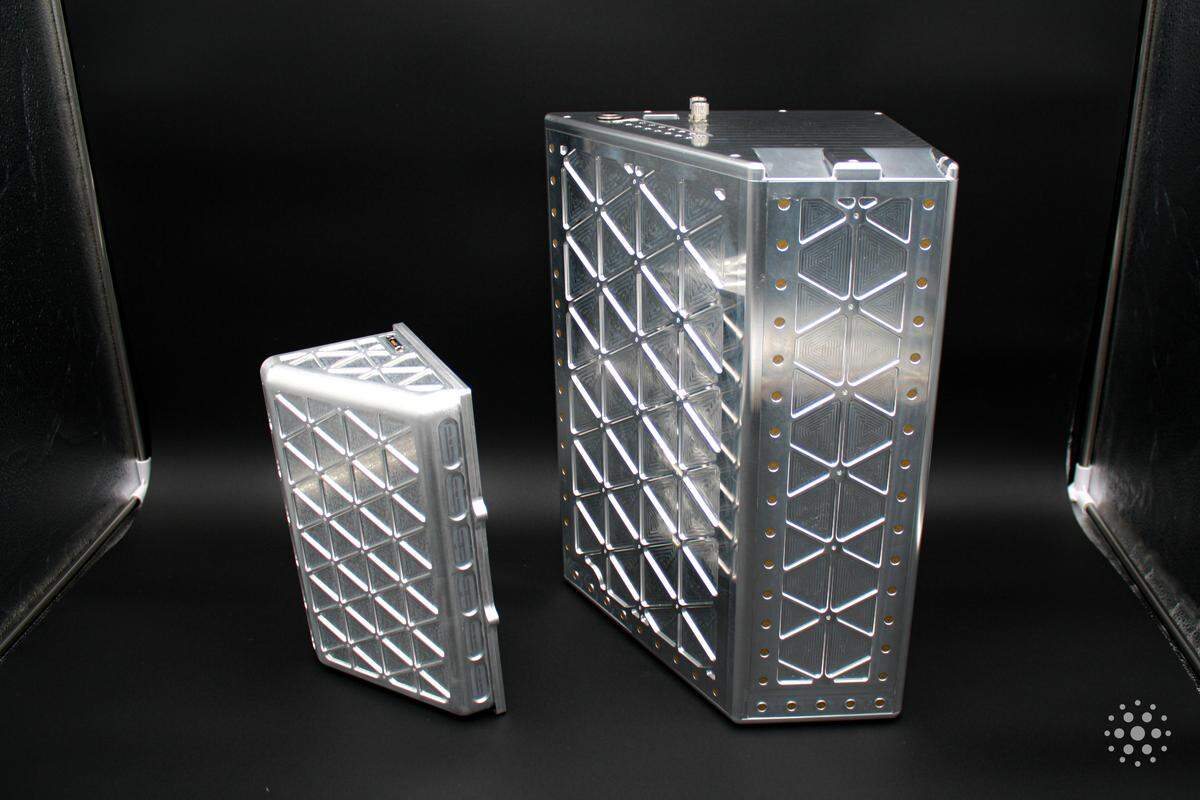
The data gathered from the chips, combined with previous studies, are anticipated to give NASA more insight into what microgravity does to the human body and how the agency can work to protect its astronauts as space exploration expands to longer stays on the moon and trips to Mars.
“For NASA, organ chips could provide vital data for protecting astronaut health on deep space missions,” said Lisa Carnell, director of NASA’s Biological and Physical Sciences division. “As we go farther and stay longer in space, the crew will have only limited access to on-site clinical healthcare. Therefore, it’ll be critical to understand if there are unique and specific health care needs of each astronaut, so that we can send the right supplies with them on future missions.”
AVATAR will be the first program to use tissue chips past low earth orbit, said Space Tango Chief Technology Officer Gentry Barnett.
“This isn’t just about hardware,” Barnett said. “It’s about enabling science wherever we go in space.”
This story was originally published September 29, 2025 at 5:00 AM.
.JPG)