
Ford adds 100 jobs at Kentucky Truck Plant to increase F-Series production
AI-generated summary reviewed by our newsroom.
- Ford commits $60 million and 100 jobs at Kentucky plant to boost F‑Series output.
- Kentucky Truck Plant to produce over 5,000 extra trucks annually after speed-up.
- Ford expects $1B hit from Novelis fire but posted record $50.5B Q3 revenue.
Ford Motor Co. is looking to its Kentucky Truck Plant to make up for revenue and production volume losses following a fire that temporarily took out its aluminum supplier.
The automaker is committing $60 million for training at the truck plant in Louisville and adding 100 new positions for F-Series Super Duty assembly. The Kentucky Truck Plant already employs more than 8,700 people.
Ford aims to increase production volume by more than 50,000 trucks in 2026. The investment and additional jobs in Kentucky to support a speed increase on the assembly line mean the plant will make more than 5,000 trucks per year.
“The people who keep our country running depend on America’s most popular vehicle — F-Series trucks — and we are mobilizing our team to meet that demand,” Ford COO Kumar Galhotra said in an Oct. 23 news release. “As America’s leading auto producer, we will work with the UAW and our suppliers to quickly increase output at our F-Series plants in Michigan and Kentucky.”
The Dearborn Truck Plant in Michigan will assemble more than 45,000 additional F-150 gas and hybrid trucks next year with a new, third crew of 1,200 employees. Another 170 workers at a stamping plant and manufacturing plant will support the increase.
The additional vehicles are anticipated to cover for revenue losses of at least $1 billion the automaker projects it will take following a September fire at the Novelis aluminum plant in New York.
“We are working intensively with Novelis and others to source aluminum that can be processed in the cold rolling section of the plant that remains operational while also working to restore overall plant production,” said Ford CEO Jim Farley. “We have made substantial progress in a short time to minimize the impact in 2025 and recover production in 2026.”
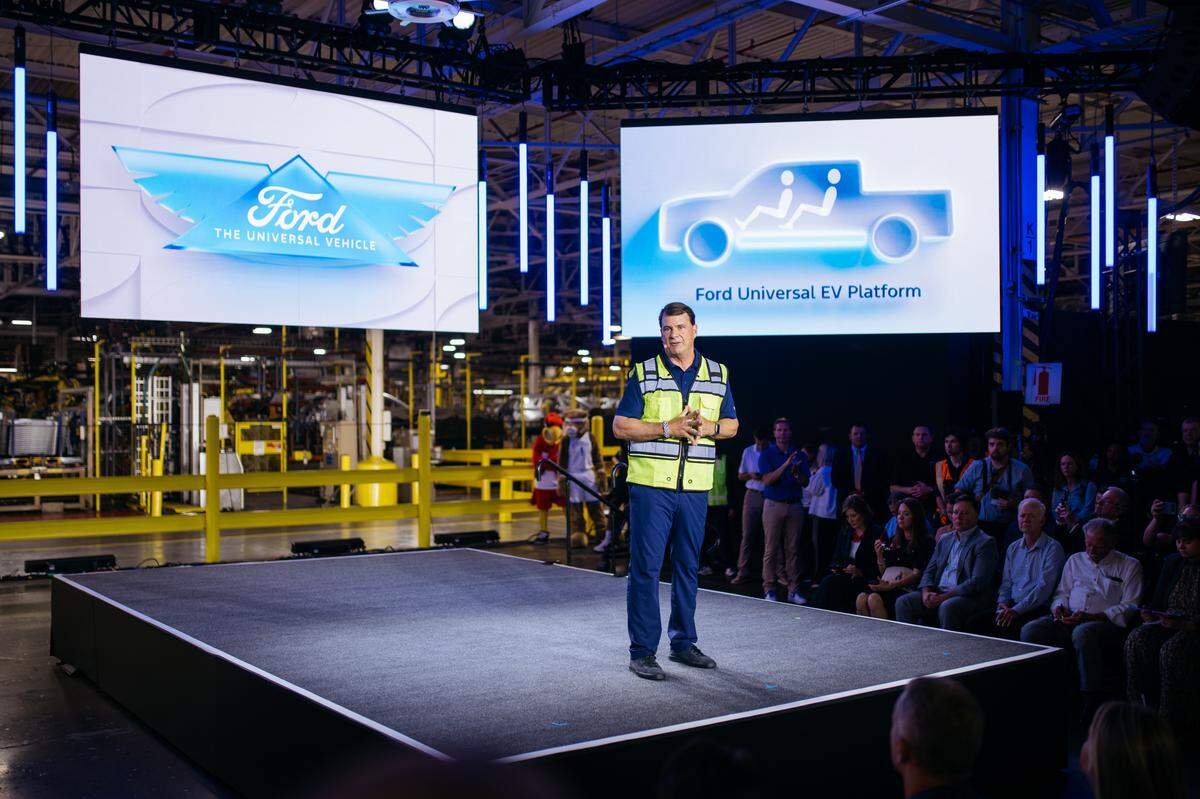
The fire continues to limit Ford’s supply of the material it uses in many of its vehicles. Production of the Ford Expedition and Lincoln Navigator at the Kentucky Truck Plant were temporarily paused Oct. 14 following the fire.
While production of vehicles has slowed, Ford officials said Thursday afternoon during their third-quarter earnings call they anticipate the aluminum plant to be up and running in early December.
There are enough vehicles coming out of the Kentucky Truck Plant to meet consumer demand, they said, and the fire has not delayed the start of assembly of an electric truck at the nearby Louisville Assembly Plant.
Aside from reporting it would take a $1 billion hit from the aluminum plant fire, Ford officials said during their earnings call, the third quarter was the second consecutive three-month period of record revenue.
In July, August and September, the automaker brought in $50.5 billion in revenue, a year-over-year increase of about 9%. Impact from the Sept. 16 evening fire will show up in the automaker’s fourth-quarter earnings report.
The earnings report also said the company had a net income of $2.4 billion, about $1.5 billion more than the same quarter last year. It also reported its adjusted earnings were $2.6 billion, about the same as they were in 2024.
The company reported it took a $700 million hit related to tariffs in the third quarter, less than what it reported during the preceding three-month period. Earlier this month, Farley mused the company’s tariff-related bill would climb to $2 billion total by the end of 2025.
The automaker imports wiring, fasteners and other parts from a number of suppliers around the world and is paying more in taxes than its foreign rivals that are only paying a fee to ship their cars to the U.S., it said.
During July, August and September, Ford sold 545,522 vehicles, an increase of more than 8% in sales compared to the same quarter last year. About 15% of sales, or 85,789 vehicles, were Ford’s hybrid and EV models.
Federal incentives for electric vehicles expired Sept. 30. The automaker said it would continue to allow its customers to apply for the same $7,500 credit but walked back the program in favor of other payment plans and financing packages.
Farley has warned EV sales will drop significantly and take up less of the market.
.JPG)