
Ky. bourbon business isn't just a splash in the pan
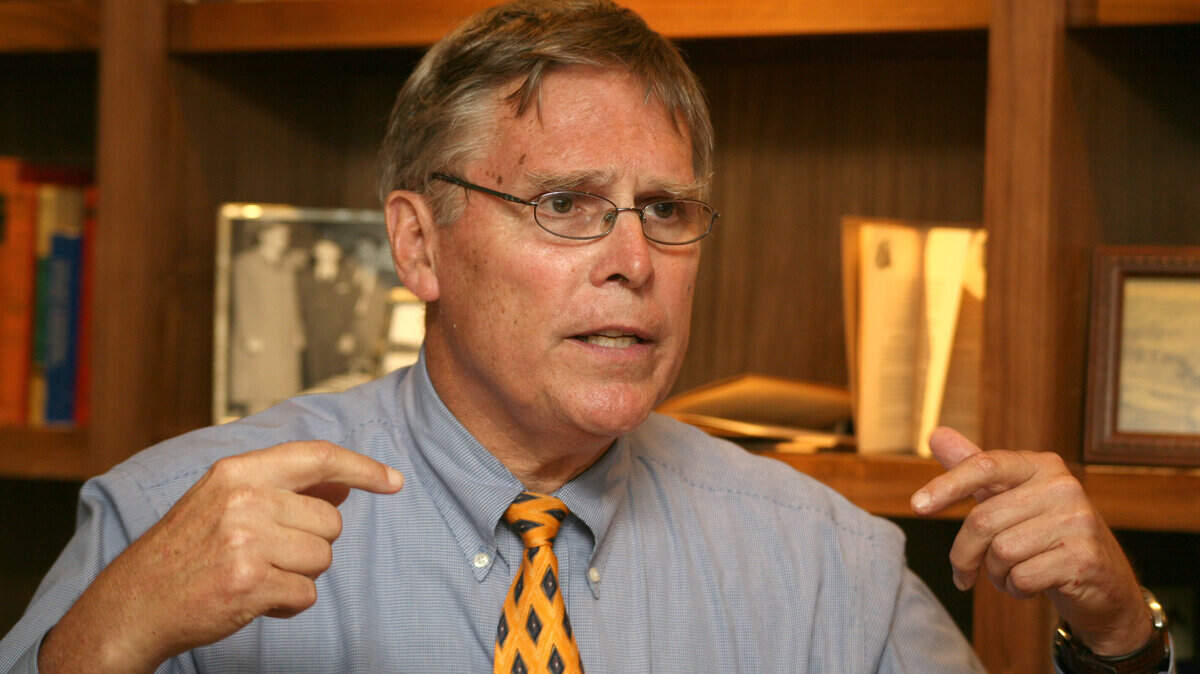
Before the Alltech FEI World Equestrian Games begin later this month, there will be a big celebration of another Kentucky signature industry.
The annual Kentucky Bourbon Festival begins Tuesday in Bardstown with events every day through Sunday. Last year, the festival attracted 55,000 people from 43 states and 13 foreign countries. An even bigger crowd is expected this year.
Bourbon is on a roll. While Kentucky manufacturers overall cut 20 percent of their jobs during the past decade, distillery employment grew 6 percent, according to an industry study published early this year. Nineteen distilleries in eight Kentucky counties employ more than 3,200 people.
Kentucky distilleries are expanding to meet rising worldwide demand for bourbon. Just last month, Heaven Hill Distilleries in Bardstown announced a $4.2 million project to build two new barrel storage warehouses.
Thanks to Kentucky's central location, distillers of other drinks are shipping more of their product to bourbon distilleries here for bottling, which is creating additional jobs.
Bourbon's popularity is splashing over into the rest of Kentucky's economy, too, thanks to the Kentucky Bourbon Trail. The six distilleries that offer tours as part of the promotion organized by the Kentucky Distillers Association recorded more than 400,000 visits last year, and expect to shatter that record this year, said association president Eric Gregory.
Although no longer an official part of the Bourbon Trail because of a dispute with the distillers association, the huge Buffalo Trace Distillery in Frankfort also has seen tour attendance skyrocket.
Bill Samuels, president of Maker's Mark Distillery in Loretto and perhaps the industry's best marketer, isn't surprised. He said his off-the-beaten-path distillery in Marion County had 13,000 visitors in July, and they spent $300,000 in the distillery gift shop. "It's not a big profit center, but it does allow us to give visitors a first-class experience," he said.
As a student at the University of California at Berkeley in the early 1960s, Samuels said he saw how tourism began in California's Napa Valley wine country. Since then, it has blossomed into a huge economic engine for that state.
Samuels thinks the Kentucky Bourbon Trail has similar potential. "It could become the most important new tourist attraction in the middle part of the country," he said. "And without any state incentives."
Samuels thinks it is time for communities near Kentucky's distilleries to capitalize on the Bourbon Trail with new festivals, restaurants, bed-and-breakfast inns and other hospitality businesses.
What made Napa Valley tourism take off was when local chambers of commerce and public officials got behind the effort. "We need that same kind of community leadership to make it happen here," Samuels said.
"A signature industry ought to be able to be leveraged for the benefit of the people of Kentucky," he said. "And the spirits industry is in a position to do that."
As with the horse industry, though, Samuels worries that Kentucky could lose out on a lot of economic growth because it has taken the bourbon industry for granted, punishing it with high taxes and onerous sales restrictions. Those have been driven largely by opportunistic politicians and anti-liquor church folk.
Kentucky now has the nation's second-highest liquor taxes. More than half the cost of a bottle of bourbon bought in Kentucky is federal, state and local taxes.
How is that hurting economic growth? For example, Samuels said, only two of the nation's 16 recent startup spirits distilleries are in Kentucky, largely because this is the only state with an ad valorem tax on spirits aging in warehouses.
Kentucky produces 95 percent of the world's bourbon now. "But if we don't do something about that ad valorem tax, it's going to be a hell of a lot less than 95 percent," he said.
This story was originally published September 13, 2010 at 12:00 AM with the headline "Ky. bourbon business isn't just a splash in the pan."