
Taste for American food in China becomes another fight over intellectual property
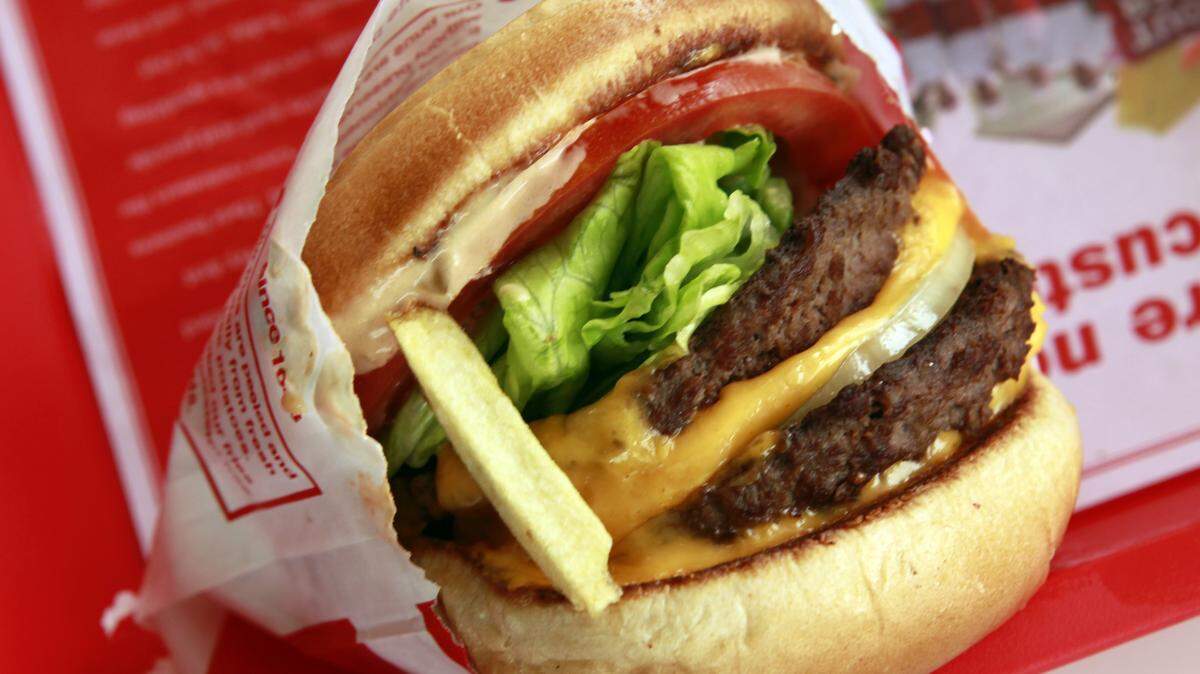
LOS ANGELES — Millions of Chinese have come to love Big Macs and Whoppers. So when a California-inspired chain put up signs in Shanghai announcing the coming of the Double-Double, burger lovers rejoiced.
The same can't be said of In-N-Out.
The California burger chain with the cult following doesn't operate any stores in China. So its owners were miffed to see a red-and-yellow doppelganger called CaliBurger laying claim to its signature burger, touting "Animal Style" fries topped with cheese, special sauce and onions, and thick shakes in palm-tree-print cups.
Enforcing its intellectual property rights half a world away might seem a challenge for privately held In-N-Out. But it turns out CaliBurger's founders were Americans with offices in Diamond Bar, Calif.
They agreed to tweak CaliBurger's menu and décor after In-N-Out filed suit in U.S. District Court in Santa Ana, Calif., for trademark infringement and counterfeiting. In-N-Out wouldn't comment on the settlement except for a statement saying "the matter has been resolved."
But in Shanghai, where CaliBurger opened its first branch last month, some of the restaurant's employees aren't shy about the source of their inspiration. Jonathan Wong, CaliBurger's chef de cuisine and director of training and development, is a former manager at an In-N-Out store in Northern California.
"The model was In-N-Out," said Wong, 28, a native of Hercules, Calif.
Still, CaliBurger has made some tweaks to the In-N-Out formula that even some Southern California die-hards might find an improvement: booze and babes.
The Shanghai restaurant serves California wine and vanilla shakes spiked with bourbon. And its mascots are leggy, mostly Western models "as golden as the California sun" who represent the company at events in China, according to the CaliBurger Web site.
The burger battle is just the latest skirmish over intellectual property in China, where pirated movies and merchandise are giving way to knockoff services and retail businesses.
Photos of a fake Apple store in southern Yunnan province went viral on the Internet last year. Global restaurant chains have become popular targets as well. Major Chinese cities are filled with knockoffs such as Dairy Fairy, Pizza Huh and Jambo Juice. Then there's OFC, or Obama Fried Chicken, a restaurant in Beijing that was threatened with legal action by KFC, which has zeroed in on China as a major market.
Executives at CaliBurger, which is now part of a holding company based in the Cayman Islands, figured Chinese fast-food lovers were ready to step up to made-to-order burgers.
"In Asia, which has fast-growing economies ... we saw more opportunity for a higher-end, premium brand," said John C. Miller, a Los Angeles native and one of the chain's three co-founders.
Miller and CaliBurger executives wouldn't comment on the feud with In-N-Out. But the spat began last year when CaliBurger began building its outlet in Shanghai. It placed English-language signs reading "Enjoy a Double-Double" and "Messier is Better/Animal Style" over its future home but didn't mention the company name.
No matter. Photos of the signs soon began circulating on the Web, and speculation started flying about In-N-Out going global.
It wasn't — not yet anyway. Long a regional chain, In-N-Out didn't venture beyond California until 1992 when it opened in Las Vegas, which remained its only out-of-state location until 2000. The chain now has more than 250 restaurants in California, Arizona, Nevada, Utah and Texas. It has no stores outside the United States.
Protecting its image is nothing new for In-N-Out, which has been quick to take legal action against U.S. copycats. A Maryland chain called Grab-N-Go Burger agreed to change its red-and-yellow logo after In-N-Out sued last year for trademark infringement.
This story was originally published February 21, 2012 at 12:00 AM with the headline "Taste for American food in China becomes another fight over intellectual property."