
Successful 'jockey school' expanding to include horseman training
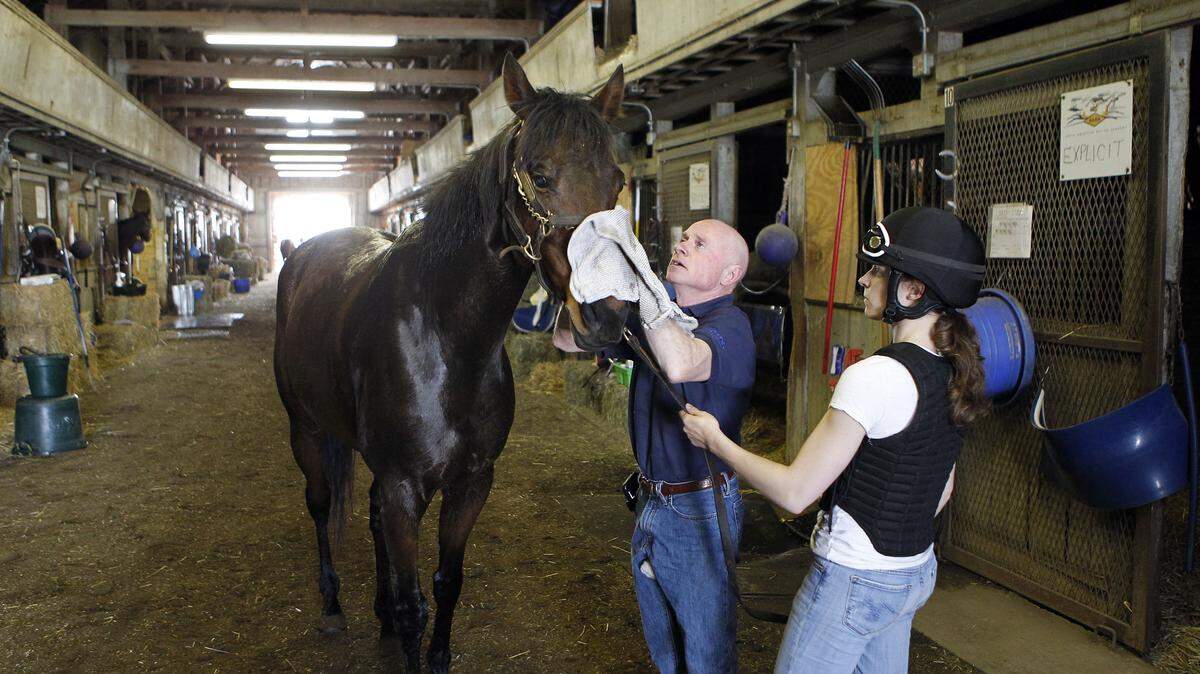
As a little girl, Jessica Edstrom dreamed of working with horses. But her childhood as a "military brat," traveling from base to base, didn't give her much opportunity to ride.
Once she settled in Minnesota, she went looking for horses.
She found them at Canterbury Park racetrack, where she got a summer job as a "hot walker." But she really wanted to ride.
Edstrom researched the newly opened North American Racing Academy in Lexington, the "jockey school" founded in 2006 by famed rider Chris McCarron.
It looked like exactly what she needed, but it took her three years to work up the nerve to apply. Even after she interviewed in 2010, she thought she wouldn't have a shot because of her lack of riding experience.
She got in. Her dream was coming true — but Edstrom quickly realized there was a problem.
"It went really well at first, but ... I realized the other students were progressing faster," Edstrom said. Her problem: no brakes.
"I just had to realize I wasn't comfortable yet — not with going fast but with being able to stop," Edstrom said. "But I didn't want to let go of the opportunity to work in the racing industry. I'd worked on a racetrack for two years and knew that's where I wanted to be."
After a lot of soul searching during her winter break, she returned in January to classes at the Thoroughbred Training Center on Paris Pike with a decision.
"I had to own up to the fact I wasn't going to be a jockey," Edstrom said. But her teachers convinced her that the other career path — that of a professional horsewoman — could still work for her.
Edstrom threw her heart into learning how to be an assistant trainer, with an eye to one day striking out on her own.
"I came all this way, and spent a lot of money. I wasn't going to walk away from what could be a very fulfilling career," she said. "Within the first month, I really found where I wanted to be."
The kinds of things that many jockeys might find tedious — dealing with owners and employees, juggling finances, getting to know horses through daily hands-on work — are now stuff she welcomes.
Edstrom is really off to the races. After shadowing an assistant trainer last fall at Keeneland, she was offered an internship with Graham Motion, trainer of 2011 Kentucky Derby winner Animal Kingdom.
She has been working with his string in Florida and plans to follow the horses to Kentucky early next month for Keeneland.
It's been a priceless opportunity to learn the business from the best, she said. "It is such a really unique program," Edstrom said of NARA. "Chris (McCarron) knows everybody who is anybody, and you get such a head start even before you get a job."
That's the kind of success that new director Remi Bellocq, former chief executive officer of the National Horsemen's Benevolent and Protective Association, hopes the NARA program can have more of.
Now affiliated with the Bluegrass Community and Technical College, the riding academy is branching out to become a work-force development school for racing and breeding farms.
"There is a high demand for trained, skilled workers, especially with immigration issues being what they are," Bellocq said.
So the 54 students currently enrolled in the "jockey school" will be prepared to be everything from exercise riders to grooms, with new emphasis on horsemanship skills, racehorse care and barn management.
The NARA now will offer a one-year Exercise Rider and Racehorse Care and Training certificate program in addition to the current two-year associate degree for jockeys or horsemen.
"For some kids, a four-year degree may not be practical or possible," Bellocq said. "This is a wonderful program here, but we're still kind of a best-kept secret."
Bellocq said he is working on ways to incorporate classes for high school students. This summer and fall, the riding academy will partner with Locust Trace Agriscience Farm, which is operated by the Fayette County Public Schools, to offer courses to recent high school graduates interested in horse racing and breeding.
Bellocq also said that NARA is exploring a partnership with Paul Laurence Dunbar High School for students to take dual-credit classes. And he's working to set up a mentorship "master class" this fall at Keeneland.
The jockey school, still led by McCarron, has had great success. Since 2006, jockeys who completed the program have ridden in more than 11,000 races and earned more than $16 million. Graduate Ben Creed has earned more than $3.8 million and was leading rider at Turfway Park.
Now, with students like Edstrom leading the way, the academy may become a work-force development powerhouse, with students landing jobs at top racing stables, or leading sales agencies and breeding farms. A big secret to the school's success has been earning internships with top trainers such as Motion, Todd Pletcher, Steve Asmussen, Jonathan Sheppard, Ken McPeek and Richard Mandella.
But the best part of the alternative pathway might be the compromise.
"I still get to ride. I ride the pony to take the horses out," Edstrom said. "My one regret was that I wouldn't get to ride anymore."
Now she says she's got the best of both worlds: a career in horses and riding without the pressures of being a jockey.
"It takes a lot of guts, a lot of nerve, a lot of stubbornness to be a jockey," she said. "I'm so much happier not being nervous."
This story was originally published March 26, 2012 at 12:00 AM with the headline "Successful 'jockey school' expanding to include horseman training."