
Tom Martin Q&A: Alltech's Deirdre Lyons talks about being a 'catalyst' for jobs in Eastern Kentucky
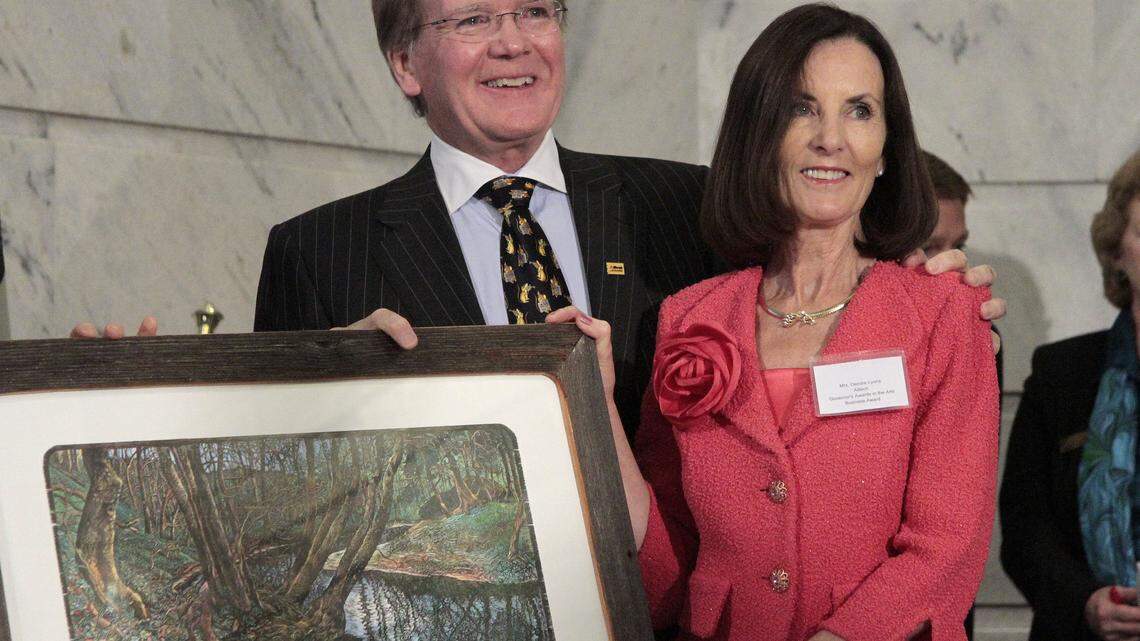
Deirdre Lyons is co-founder with her husband Pearse of the global animal nutrition and health company Alltech, based in Nicholasville and operating in 128 countries. She's spearheading the company's efforts to deliver innovation and jobs to Eastern Kentucky.
Tom Martin: What is motivating Alltech's expansion into brewing and distilling and aquaculture and poultry production in Eastern Kentucky?
Deirdre Lyons: We've always somehow been involved. Pearse is a biochemist; his Masters and PhD actually are in brewing and distilling. Fermentation is the basis of a lot of our nutritional additives. And we've been very involved with aquaculture and indeed feeding chickens for a long time. Most of our research is based on helping farmers find solutions to problems that they may have.
Martin: What attracted you to Eastern Kentucky and why Pikeville?
Lyons: Over the few years we've developed a really good relationship with the University of Pikeville ... Pearse had an innovative competition to find jobs for Eastern Kentucky and this competition was opened to university students throughout the state. It was to open up ideas from students to find ways to create jobs in Eastern Kentucky. In the first year we ran it, we had four universities compete, and this last year we had nine. The students put together their own teams consisting of maybe an engineering student, a marketing student, a finance student, and a scientist and they had a mentor. And so, it was very interesting to go and hear the presentations.
Martin: And did any working ideas emerge from that process?
Lyons: Yes. The aquaculture was one of them and of course we had the knowledge so that was an easy one. We've talked about producing honey, beehives on Eastern Kentucky mountaintops. We've talked about organic gardening. These are all concepts that are still in the development stages. So, it's really just the beginning of what might happen.
Martin: You're a native of Ireland; do you observe similarities between the cultures and the characters of Ireland and Eastern Kentucky?
Lyons: Absolutely. First of all, Ireland's biggest export is her people and I think Eastern Kentucky is also her people, so there's common ground there. The music heritage, too. The music in Eastern Kentucky is very similar — in fact, I think it's based on a lot of the Irish and Scots coming to Eastern Kentucky. But also the friendliness of the people; everybody's willing to help you and very open, so we enjoy that.
Martin: Let's talk about these projects that you have going on in the Pikeville area. First of all, how many jobs will be created?
Lyons: For the brewery distillery our anticipation is between 35 and 40 jobs, and that will include guides for tours through the distillery and brewery. Our hope is that we would be part of the Bourbon Trail. That would be a huge draw for Pikeville and it could open up many other things in downtown Pikeville.
Martin: The distillery itself will be in downtown Pikeville?
Lyons: It will be right on the Main Street backing up to 2nd Street.
Martin: And what will it look like?
Lyons: It will look very similar to our Town Branch distillery in Lexington. There will be glass walls so people will be able to see the pot stills and be excited to maybe go in and take a tour.
Martin: What spirits will be produced there?
Lyons: We'll produce a bourbon and a moonshine. And right now we're thinking the bourbon will be called Dueling Barrels Bourbon. We're not sure about the moonshine, we're still thinking of some ideas.
Martin: Okay. Let's go over to Marion Branch, which is an industrial site located on a reclaimed mountaintop removal site outside of Pikeville; that's where you're going to locate the poultry and the aquaculture operations?
Lyons: That's our intent. It's very, very flat. There's 1,000 acres up there, but only 298 are builder-ready. Our hope is to have 50 acres. Initially we thought we'd have 30,000 chickens in our poultry unit but now we're looking at 100,000. And this will create 30 jobs to begin with. But then the other jobs would be sales and marketing, packaging, distribution, transportation; so we're not sure yet how that will play out, but we see many more jobs than the initial 30.
Martin: Is the site ready or are there additional issues that have to be considered?
Lyons: It's not ready. There's a lot of planning to be done. We're doing our due diligence as regards the soil sampling, the amount of water that we will need, how we'll get up and down the mountain because we're waiting on a road and a bridge to be built. If we have to use the road that's there now, we anticipate an additional 30 percent to our building cost, so we'd rather have the road and bridge first.
Martin: Governor Beshear announced earlier this summer some state funding to make a road and bridge possible. Do you see that going forward?
Lyons: Oh, yes. I believe they're going to start working on the road aspect in October. The bridge is still in development stages and I don't believe that will be ready to start for about three to four months.
Martin: In announcing these plans, you outlined the company's goals to be environmentally friendly and to operate these endeavors in a sustainable way. How will you meet those goals?
Lyons: We have a philosophy we called the ACE Program, and basically it's friendly to the animal, the consumer, and the environment. In fact, we've just received an international Gold Standard accreditation for how we treat our animals. For instance the egg production: the hens won't be in cages, nor will they be cage-free. They'll be free-range, which means that there will be a lot more space allocated per hen and they'll be free to go and come as they please inside or outside. And that's a whole lot different than just having battery-cage hens or just cage-free which gives them I think 18 inches per hen. And we take great care to protect the environment. We don't use antibiotics, we don't use hormones, we don't use pesticides, everything we do is natural, based on the yeast fermentation process.
Martin: Dr. Lyons just celebrated his 70th birthday and I'm wondering, is there something of a legacy involved here?
Lyons: I think so, possibly. You know we always say we can only eat one dinner every day and you can only live in one house at a time. And so, we have decided to share our success and for years we have been listening to the rest talk about Eastern Kentucky being so poor, the "war on poverty" and so on, but nobody ever does anything. Lots and lots of talk, but nothing ever happening. So we decided why not go to Eastern Kentucky and start something, be the catalyst for others to follow and hopefully to encourage others to come in and be part of it and change the lack of jobs happening there.
It's the same thing in Ireland. Ireland was an agricultural country and became a tourist attraction and then throughout because of troubles in Ireland lost all that and again it went in cycles; see the same thing in Eastern Kentucky. So we want to change that and somewhat if we can improve that so there is a higher level of expectation for ordinary folks. So that would be maybe the legacy.
This story was originally published September 21, 2014 at 8:57 PM with the headline "Tom Martin Q&A: Alltech's Deirdre Lyons talks about being a 'catalyst' for jobs in Eastern Kentucky."