
Family owned and operated Lockmasters has a history of providing security for customers, employees
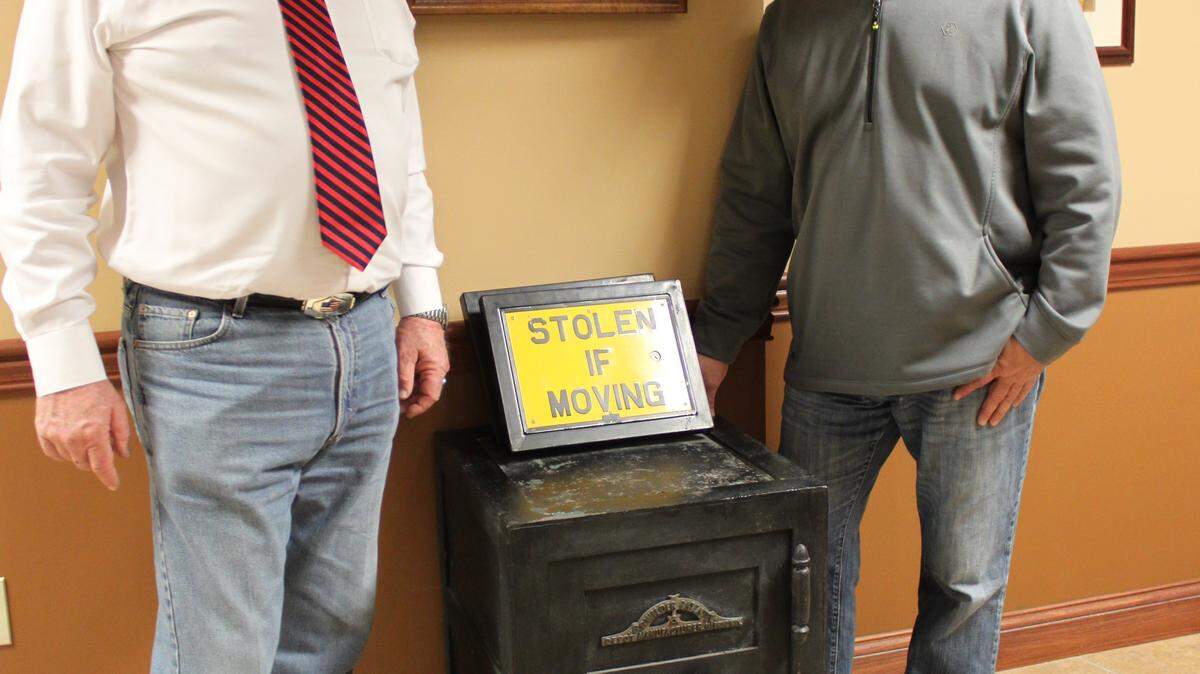
The fact that there's a family-owned company in Nicholasville with an impressive lock museum in its lobby for all to see might come as a surprise to anyone unfamiliar with the industry.
But there it is on the south side of town, just down from the fire station: the Museum of Physical Security and the Harry C. Miller Lock Collection, home to glass cabinets of prototypes and first-evers filled with tumblers, dials and faces with ornate finishes. In other words, unnerving examples of metalwork and ingenuity that date back to the 14th century, when people seemed to have a lot more time.
The museum, it turns out, is just one part of the equally impressive story of the company that owns the museum, Lockmasters. It's an epic family tale, as intricately woven as the detailing on a 1680 Johannes Wilkes brass chamber lock, with spinoffs, prequels and chapters that can be read only by those with a high security clearance. Like a Russian novel, it requires a glossary to keep the names straight.
The companies they keep
Officially, the Lockmasters story begins 60 years ago.
"Is it 60 years?" asks Clay Miller, Lockmasters' current patriarch, who is more acutely aware of his own years. "You may not believe it, but I was young once," says Clay, 70, who in his spare time likes to race antique cars very long distances and care for primates at a rescue center he and his wife set up.
Clay is a son of the original patriarch, Harry C. Miller, grandson of John C. Miller, and father of Mark Miller, all of whom play leading roles in Lockmasters' saga. But he is also brother to Benson Miller and uncle to Benson's children Chad Miller and Katie Willie (formerly Miller) who own a separate $20 million Nicholasville company called LockNet that had its origins in Lockmasters.
And Clay is nephew to Jim Taylor and cousin to James Taylor, who own Bull's Eye, a $4 million Lexington company that deals in safe-deposit locks. Does that leave anyone out? Probably.
The break room at Lockmasters doubles as a museum annex lined with displays of vintage keys, handcuffs and related paraphernalia. At a table with his son Mark and employee Deanna DeBorde, Clay Miller sits down to explain how Lockmasters became what it is today: a $30 million conglomerate that's part top-secret R&D, part wholesale distribution of locksmith tools, part training facility and part museum.
An abridged version might go something like this:
Diebold and de restless
Back in the days of the Dillinger gang, Clay's grandfather John C. Miller worked for the Ohio safe company Diebold erecting bank vaults around the country with his sons Harry and James. The late 1930s found them in Washington, installing vaults in the National Archives, which led to other government work. Soon, Granddad and sons had settled in the D.C. area, where Granddad founded a company called Safemasters, setting an entrepreneurial example for his children.
By then Clay's dad, Harry, had determined that his interests tended more toward opening safes than installing them, and he didn't need to scrub his fingertips with sandpaper to do it.
"Dad was quite adept at manipulation," says Clay, understating the facts just a bit: Harry Miller came to be one of the world's experts in manipulation, otherwise known as the art of opening a locked safe without leaving a trace.
Harry started his own company and worked for the government during the war years as an adviser.
"He showed security people in our country that he could open any locks they had," says Clay. It wasn't long before Harry — who began collecting locks in order to study them — had developed a lock that was patented as manipulation-free. In other words, it couldn't be surreptitiously picked, cracked or compromised by anyone. That is, until someone finally could figure out how.
"The attraction of our little industry," says Clay, "is that unlike making shoes or socks," or clocks or screws, "the instant I sell the first one, someone is trying to figure out how to break it."
Harry looked around for somebody to produce his Manipulation Free Combination Lock, which led him to Sargent & Greenleaf, a long-established manufacturer. The lock sold so well that Harry was able to buy S&G. It's the "rags to riches" chapter of Lockmasters' story.
At S&G, Harry decided it was time to share his knowledge with other locksmiths. "Manipulation was not a widely known art at that time," says Clay. So Harry and two others start offering correspondence classes for people in the industry.
And long story short, it was the popularity of those classes that led Harry, along with S&G's Jim Taylor and another man, to establish Lockmasters in 1955.
It's been growing and evolving ever since.
The key to succession
Leaving the break room, Clay stops at a wall filled with plaques for the dozens of patents the family has received, including ones for a foldaway ironing board and a self-igniting propane torch.
Clay began his apprenticeship around the time he could walk but has been on the company payroll since the early 1960s. His accomplishments include a patent for an electronic, self-powering lock that secures 1,600 man-doors and 20,000 classified containers at the Pentagon. Updates on that are part of his current, top-secret work.
What does he consider his greatest achievement? He shrugs. "I don't think in those terms," he says. "My kids," he says finally.
When Clay bought Lockmasters from his father in 1981, it was offering classes in hotel conference rooms, which meant he was driving all over the country to teach manipulation, safelock servicing and drilling. He took stock of the $200,000 business, by then based in Florida, and decided it was time to move it to a more central location. Nicholasville made sense. It was already home to Sargent & Greenleaf, which the Millers had sold several years before.
Now Lockmasters is walking distance from S&G, on Security Drive. The area has become a hub for the physical security industry: brother Benson's company, LockNet, is there, too.
Since moving here, Lockmasters has gone from operating out of a basement and two-car garage to a 22,000-square-foot building that houses the museum, offices and classrooms. Education remains a major focus — a new training facility just opened outside Washington, D.C. The business now includes wholesale distribution of locks, parts and tools, as well as automotive locksmithing. There are 45 employees.
Clay Miller began handing over control of the company to his son Mark in the mid-1990s. Clay retains control of the division for product evaluation and development.
"It gives him an opportunity to stay active" in the industry, says Mark Miller, 52.
Now in its third generation, Lockmasters is distinctly in the minority: Less than 15 percent of family businesses make it that far. And nobody has been left chomping at the bit too long.
"I said, 'Dad, I'm going to want to retire before you do,'" Mark says. "He will work until he can't, just like my grandfather."
Mark has two daughters. If they have an interest in the company, that's great, he says. Mark has a nephew who might someday get on board. "But you have to enjoy getting up and going to work."
Mark's plans for now are focused on growing, not selling. He wants his employees to rest easy and know that at Lockmasters, they're working in a highly secure environment.
This story was originally published February 1, 2015 at 4:55 PM with the headline "Family owned and operated Lockmasters has a history of providing security for customers, employees."